Collard Greens 'Georgia Southern'
Brassica oleracea var. acephala 'Georgia Southern'
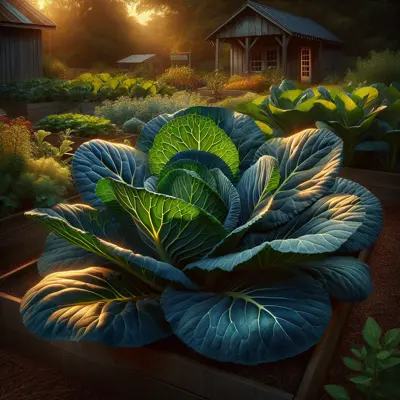
The quintessential Southern collard green variety, prized for its large, blue-green leaves that become sweet and tender after cooking. This heat-tolerant heirloom thrives in hot summers when other greens bolt, and actually improves in flavor after frost. A must-have for traditional Southern cooking and an excellent source of nutrition for the home garden year-round.
Harvest
60-85d
Days to harvest
Sun
Full sun to partial shade
Zones
6–9
USDA hardiness
Height
10-24 inches
Planting Timeline
Showing dates for Collard Greens 'Georgia Southern' in USDA Zone 7
All Zone 7 brassica →Zone Map
Click a state to update dates
Collard Greens 'Georgia Southern' · Zones 6–9
Growing Details
Succession Planting
Georgia Southern keeps producing for months off the same plant, but staggering starts still makes sense because spring plants slow down once daytime highs push past 85°F. Direct sow or set transplants every 3-4 weeks from March through May for the spring run. Then start a second round of transplants indoors in late July — the UGA Vegetable Garden Calendar specifically flags August as the window to start collard, kale, and cabbage transplants for fall harvest, with those plants going into the ground in September.
Fall is the better crop by a stretch. Collards sweeten noticeably after the first hard frost, and established plants carry through to November or beyond in zones 6-9. Don't bother direct-sowing once soil temps are consistently above 85°F; germination drops off sharply and the seedlings that do emerge tend to bolt before they size up.
Complete Growing Guide
Georgia Southern collards distinguish themselves through exceptional heat tolerance and frost-sweetening, making them ideal for Southern gardens where spring plantings often bolt while this variety thrives. Sow seeds in mid-summer (June–July in most regions) for fall and winter harvest rather than spring, capitalizing on the cultivar's preference for cooling temperatures that enhance flavor. Plant in full sun with rich, well-draining soil amended with compost, spacing plants 12–18 inches apart to accommodate their 10–24 inch mature height. While generally pest-resistant, monitor for cabbage worms and flea beetles, especially on young plants—row covers provide excellent protection without chemicals. Unlike tender spring greens, Georgia Southern actually improves after frost, so delay harvesting until temperatures drop for maximum sweetness. A practical tip: begin harvesting outer leaves when plants are 12 inches tall, allowing the center to continue producing, and you'll enjoy continuous yields through winter in mild climates.
Light: Full sun (6 or more hours of direct sunlight a day), Partial Shade (Direct sunlight only part of the day, 2-6 hours). Soil: Clay, Loam (Silt), Sand. Soil pH: Acid (<6.0), Neutral (6.0-8.0). Drainage: Good Drainage, Moist. Height: 0 ft. 10 in. - 2 ft. 0 in.. Spread: 1 ft. 0 in. - 2 ft. 0 in.. Spacing: 12 inches-3 feet. Growth rate: Medium. Maintenance: Medium. Propagation: Seed, Stem Cutting. Regions: Coastal, Mountains, Piedmont.
Harvesting
Harvest Georgia Southern collard greens when the blue-green leaves reach 8 to 10 inches long and feel tender but still firm to the touch; they should display a slight waxy coating characteristic of this variety. For continuous harvests throughout the season, pick outer leaves individually once plants reach 10 to 12 inches tall, allowing the central growing point to produce new foliage. Alternatively, cut entire plants 2 to 3 inches above soil level for a single harvest that encourages regrowth. Timing your main harvest after the first frost maximizes sweetness, as cold temperatures convert starches to sugars; however, young leaves harvested in summer offer milder, more delicate flavor for those preferring less earthiness.
The fruits dry and split when ripe.
Color: Brown/Copper, Green. Type: Siliqua. Length: > 3 inches.
Garden value: Edible
Harvest time: Fall, Summer
Edibility: The foliage is edible raw or cooked but when cooked can emit an unpleasant odor.
Storage & Preservation
Fresh Georgia Southern collards keep best when stored unwashed in perforated plastic bags in your refrigerator's crisper drawer at 32-40°F with high humidity. They'll maintain quality for 7-10 days, longer than most other greens.
For freezing, blanch clean, chopped leaves in boiling water for 2 minutes, then plunge into ice water. Drain thoroughly and pack in freezer bags for up to 12 months. The thick leaves freeze exceptionally well and maintain their structure for traditional braised dishes.
Fermenting is another excellent preservation method—chop leaves and pack in salt brine (2% by weight) for a tangy, probiotic-rich condiment similar to sauerkraut. Properly fermented collards keep 6+ months refrigerated. You can also dehydrate young, tender leaves for adding to soups and stews year-round, though this works best with leaves harvested before the first frost when they're less bitter.
History & Origin
This variety emerged from the long Southern collard-growing tradition rather than from formal documented breeding records. 'Georgia Southern' represents the accumulated selection work of generations of Southern farmers and gardeners who preserved seeds from plants best suited to the region's hot, humid summers and mild winters. Like many heirloom varieties, its exact breeder and introduction date remain undocumented, though it likely developed through informal seed-saving practices across Georgia and the broader Southeast during the 19th and 20th centuries. The variety reflects the practical knowledge of growers who selected for heat tolerance, cold hardiness, and improved flavor—traits essential for year-round cultivation in Southern gardens and traditional foodways.
Origin: W. Europe
Advantages
- +Large, blue-green leaves ideal for traditional Southern cooking methods.
- +Heat-tolerant heirloom thrives when other greens bolt in summer.
- +Flavor improves noticeably after frost, enhancing natural sweetness.
- +Easy to grow with 60-85 day maturity for home gardeners.
- +Nutritious year-round garden staple requiring minimal special care.
Considerations
- -Susceptible to multiple pests including cabbage worms and flea beetles.
- -Vulnerable to serious diseases like black rot and clubroot.
- -Mature leaves develop earthy, slightly bitter flavor some dislike.
- -Requires consistent pest management to prevent significant crop damage.
Companion Plants
Nasturtiums planted at the bed edges act as a trap crop for aphids — the aphids pile onto the nasturtiums instead of the collards, and you can cut and trash the infested nasturtium stems without losing any food crop. French marigolds (Tagetes patula specifically) have a documented effect on soil nematode populations; NC State Extension points to solid marigold plantings as a cultural management tool for nematode pressure, so a border row is doing real work. Onions and garlic at 6-8 inches away disrupt the host-finding behavior of cabbage worms and aphids through sulfur volatiles. Dill draws parasitic wasps that prey on caterpillars, and since its roots stay shallow, it doesn't compete for the moisture collards pull from the top 12 inches of soil.
Keep tomatoes at least a bed away — they're heavy calcium feeders and will pull that nutrient hard when planted close, and they do best at a pH slightly below the 6.0-7.5 range collards prefer. Pole beans fix nitrogen, which sounds like a bonus, but the resulting flush of soft leaf growth is exactly what draws cabbage worm moths to lay eggs. Strawberries produce allelopathic compounds that suppress brassica germination and slow establishment of young transplants.
Plant Together
Nasturtiums
Acts as trap crop for aphids and cabbage worms, repels cucumber beetles
Marigolds
Repels cabbage moths, aphids, and other brassica pests with strong scent
Onions
Repels cabbage worms, aphids, and flea beetles that commonly attack collards
Garlic
Deters cabbage loopers and aphids, improves overall plant health
Dill
Attracts beneficial wasps that parasitize cabbage worms and aphids
Carrots
Deep roots don't compete with shallow collard roots, helps break up soil
Lettuce
Grows in collard shade, efficient space usage, similar water needs
Spinach
Compatible growth habits, harvested before collards need full space
Keep Apart
Tomatoes
Compete for nutrients, tomatoes may inhibit collard growth through allelopathy
Strawberries
Different water and nutrient requirements, may stunt collard growth
Pole Beans
Can shade collards excessively and compete for nitrogen
Nutrition Facts
Per 100g serving. % Daily Value based on 2,000 calorie diet. Source: USDA FoodData Central (FDC #170406)
Pests & Disease Resistance
Resistance
Good resistance to heat stress and bolting
Common Pests
Cabbage worms, flea beetles, aphids, harlequin bugs
Diseases
Black rot, clubroot, downy mildew, bacterial leaf spot
Troubleshooting Collard Greens 'Georgia Southern'
What you'll see, why it happens, and what to do about it.
Leaves develop V-shaped yellow lesions starting at the leaf margins, with dark brown veins underneath — typically appearing 4-6 weeks after transplant
Likely Causes
- Black rot (Xanthomonas campestris pv. campestris) — a bacterial disease that enters through leaf edges and spreads through the vascular tissue
- Overhead watering or heavy rain that splashes contaminated soil onto leaves
What to Do
- 1.Pull and trash affected leaves immediately — don't compost them
- 2.Switch to drip irrigation or water at the base to stop splash spread
- 3.Rotate collards and all other brassicas out of that bed for at least 2 seasons
Tiny round holes scattered across young leaves, especially on seedlings under 4 inches tall
Likely Causes
- Flea beetles (Phyllotreta spp.) — adults chew small shot-holes and are most destructive on seedlings in warm, dry spells
- Stressed or slow-growing transplants that can't outpace the feeding damage
What to Do
- 1.Cover seedlings with row cover immediately after transplanting and leave it on until plants are 8-10 inches tall
- 2.Apply kaolin clay (Surround) as a physical deterrent if row cover isn't an option
- 3.Side-dress with a balanced fertilizer at transplant — faster growth means the plant outgrows the damage before it matters
Pale yellow patches on the upper leaf surface with a gray-purple fuzzy growth on the underside, appearing during cool, wet stretches
Likely Causes
- Downy mildew (Peronospora parasitica) — a water mold that thrives when nighttime temps stay below 65°F and humidity is high
- Dense planting that traps moisture between leaves
What to Do
- 1.Thin plants to the full 18-24 inch spacing to open up airflow
- 2.Water in the morning only so foliage dries before nightfall
- 3.Remove and bag heavily infected leaves; in serious cases, apply a copper-based fungicide per label directions
Frequently Asked Questions
How long does Georgia Southern collards take to grow?▼
Can you grow Georgia Southern collards in containers?▼
When should I plant Georgia Southern collards?▼
What does Georgia Southern collards taste like?▼
Is Georgia Southern collards good for beginners?▼
Georgia Southern vs Champion collards - what's the difference?▼
Zone-by-Zone Planting Calendar
| Zone | Indoor Start | Transplant | Direct Sow | Harvest |
|---|---|---|---|---|
| Zone 1 | April – May | June – July | June – July | August – September |
| Zone 2 | April – May | June – July | May – July | July – September |
| Zone 11 | January – January | January – February | January – February | February – December |
| Zone 12 | January – January | January – February | January – February | February – December |
| Zone 13 | January – January | January – February | January – February | February – December |
| Zone 3 | March – April | May – June | May – June | July – October |
| Zone 4 | March – April | May – June | April – June | July – October |
| Zone 5 | February – March | April – May | April – May | June – November |
| Zone 6 | February – March | April – May | April – May | June – November |
| Zone 7 | February – March | April – May | March – May | May – November |
| Zone 8 | January – February | March – April | March – April | May – December |
| Zone 9 | January – January | February – March | February – March | April – December |
| Zone 10 | January – January | February – March | January – March | March – December |
Growing Guides from Wind River Greens
Sources & References
External authority sources used in compiling this guide.
See the Methodology page for how this data is sourced, what's AI-assisted, and known limitations.