Red Leaf Lettuce
Amaranthus tricolor
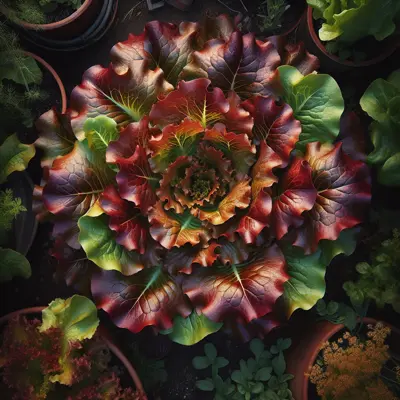
Red Leaf Lettuce is a visually striking heirloom variety with deeply ruffled, burgundy-tinged leaves that add color and texture to salads and plates. Reaching maturity in approximately 50 days, this loose-leaf variety forms open rosettes rather than tight heads, allowing for cut-and-come-again harvesting. Its tender leaves deliver a mild, sweet flavor with no bitterness, making it ideal for fresh eating and culinary applications where delicate texture matters. The distinctive red coloring intensifies in cool weather, and the frilly leaf margins provide appealing visual contrast in mixed greens preparations.
Harvest
50d
Days to harvest
Sun
Full sun to partial shade
Zones
2–11
USDA hardiness
Height
1-5 feet
Planting Timeline
Showing dates for Red Leaf Lettuce in USDA Zone 7
All Zone 7 lettuce →Zone Map
Click a state to update dates
Red Leaf Lettuce · Zones 2–11
Growing Details
Succession Planting
Direct sow every 14–21 days starting around March 1 in zone 7. Keep going through mid-May, then pause — once daytime highs are consistently above 80°F, Amaranthus tricolor bolts and the leaves turn bitter fast. Pick back up with sowings in late August for a fall run, harvesting through October or into November depending on your first frost date. Each round takes about 50 days to full size, so back-calculate from your expected frost and don't start a sowing you can't finish.
Thin to 6–8 inches once seedlings hit 2 inches tall. Leaving them crowded doesn't speed anything up — it cuts airflow, invites Bremia lactucae, and produces a cluster of spindly plants instead of a few that actually fill out.
Complete Growing Guide
Light: Full sun (6 or more hours of direct sunlight a day), Partial Shade (Direct sunlight only part of the day, 2-6 hours). Drainage: Good Drainage. Height: 1 ft. 6 in. - 5 ft. 0 in.. Spread: 1 ft. 0 in. - 2 ft. 0 in.. Spacing: 12 inches-3 feet. Growth rate: Medium. Maintenance: Low. Propagation: Seed.
Harvesting
Type: Achene.
Edibility: Seeds, leaves
Storage & Preservation
Red leaf lettuce keeps best when stored at 32–35°F with 95% humidity in a perforated plastic bag within your refrigerator's crisper drawer. Under these conditions, expect a fresh shelf life of 7–10 days, though peak tenderness and flavor occur within the first 3–5 days. The mild, sweet character of this variety makes it poorly suited to most preservation methods; freezing destroys the delicate texture entirely, and canning or fermenting are impractical for tender salad greens. Drying is technically possible but yields little usable product and diminishes the appealing flavor profile. For maximum utility, harvest leaves frequently using cut-and-come-again methods rather than attempting bulk preservation. If you must preserve excess harvest, blanch and freeze small portions for cooking applications only, though this compromises quality considerably. Store harvested leaves unwashed and as dry as possible to prevent rot.
History & Origin
Origin: Tropical Asia
Advantages
- +Edible: Seeds, leaves
- +Low maintenance
Companion Plants
Radishes and carrots are the most useful bed-mates here. Radishes act as a trap crop for flea beetles — the beetles prefer them and will concentrate there instead of punching holes in your lettuce — and they germinate fast enough to mark your row while the slower Amaranthus tricolor gets going. Carrots share the bed without much competition because their roots push down past 12 inches, well below lettuce's shallow 6-inch feeding zone. Chives and garlic at the bed edges genuinely do reduce aphid pressure; allium compounds disrupt the insects' host-finding behavior before they settle in. A border of Tagetes marigolds pulls in predatory wasps that work through aphid colonies on their own, which is a more reliable effect than any direct repellency claim.
Fennel is allelopathic and will stunt most neighboring vegetables, lettuce included — give it its own bed entirely, at least 24 inches away. Broccoli is a bad pairing for practical reasons: a mature plant can shade out an entire lettuce row, and both crops pull heavily from the top 12 inches of soil. If you've got limited bed space, they'll fight each other and the broccoli will win.
Plant Together
Chives
Repels aphids and other pests while improving lettuce flavor
Carrots
Deep roots don't compete with shallow lettuce roots, helps break up soil
Radishes
Quick growth helps break up soil and repels flea beetles
Marigolds
Deters aphids, whiteflies, and nematodes that attack lettuce
Spinach
Similar growing requirements and provides mutual shade in hot weather
Garlic
Natural pest deterrent against aphids, slugs, and other lettuce pests
Nasturtiums
Acts as trap crop for aphids and adds beneficial insects to garden
Dill
Attracts beneficial insects like ladybugs that control aphids on lettuce
Keep Apart
Broccoli
Large leaves create too much shade and compete for nutrients
Sunflowers
Allelopathic compounds inhibit lettuce growth and development
Fennel
Strong allelopathic effects inhibit growth of lettuce and most vegetables
Nutrition Facts
Per 100g serving. % Daily Value based on 2,000 calorie diet. Source: USDA FoodData Central (FDC #2346388)
Pests & Disease Resistance
Resistance
Good resistance to bolting in cool weather. Moderate downy mildew tolerance.
Common Pests
Aphids, slugs, flea beetles, cutworms
Diseases
Downy mildew, bottom rot, tipburn, lettuce mosaic virus
Troubleshooting Red Leaf Lettuce
What you'll see, why it happens, and what to do about it.
Seedlings collapse at soil level within the first 7–10 days after planting, sometimes with fuzzy white mold visible on the soil surface
Likely Causes
- Damping off — caused by soil-borne fungi (Pythium spp., Rhizoctonia solani) that thrive in cold, wet, poorly drained soil
- Replanting the same bed with lettuce for 3 or more consecutive seasons without rotation, allowing fungal load to build up
What to Do
- 1.Hold off on watering until the top inch of soil is dry — standing moisture is what trips this off
- 2.Improve drainage before the next sowing; mix in perlite or aged compost to open up a heavy bed
- 3.Rotate lettuce out of that bed for at least one season; NC State's IPM guidance specifically flags repeated same-bed planting as a risk factor for seedling diseases
Gray-purple fuzz on the undersides of leaves, with yellow patches on the upper surface, spreading fast in cool, wet weather
Likely Causes
- Downy mildew (Bremia lactucae) — airborne spores, moves fast when nights are cool (below 65°F) and humidity is high
- Overcrowded spacing that traps moisture between plants
What to Do
- 1.Pull and trash affected leaves immediately — do not compost them
- 2.Space plants at least 8 inches apart so air can move through the row
- 3.Water at the base, not overhead, and water in the morning so foliage dries before nightfall
Ragged holes in leaves overnight, with a slick trail visible on the soil or leaf surface in the morning
Likely Causes
- Slugs — most active at night and after rain, hide under mulch or board edges during the day
- Flea beetles — if the damage is small, scattered pinholes with no slick trail, it's flea beetles rather than slugs
What to Do
- 1.For slugs: set out a shallow dish of beer at soil level in the evening and empty it each morning, or scatter diatomaceous earth around the base of plants
- 2.For flea beetles: lay row cover immediately after direct sowing; once plants hit 4–5 inches tall they can usually tolerate the damage without yield loss
- 3.Clear away boards, thick mulch layers, or debris within 12 inches of your lettuce row — that's where slugs spend daylight hours
Frequently Asked Questions
How long does red leaf lettuce take to grow?▼
Can you grow red leaf lettuce in containers?▼
Is red leaf lettuce good for beginners?▼
What does red leaf lettuce taste like?▼
When should I plant red leaf lettuce?▼
Why is my red leaf lettuce turning green?▼
Zone-by-Zone Planting Calendar
| Zone | Indoor Start | Transplant | Direct Sow | Harvest |
|---|---|---|---|---|
| Zone 1 | — | — | June – July | July – September |
| Zone 2 | — | — | May – July | July – September |
| Zone 11 | — | — | January – February | February – December |
| Zone 12 | — | — | January – February | February – December |
| Zone 13 | — | — | January – February | February – December |
| Zone 3 | — | — | May – June | June – October |
| Zone 4 | — | — | April – June | June – October |
| Zone 5 | — | — | April – May | June – November |
| Zone 6 | — | — | April – May | May – November |
| Zone 7 | — | — | March – May | May – November |
| Zone 8 | — | — | March – April | April – December |
| Zone 9 | — | — | February – March | March – December |
| Zone 10 | — | — | January – March | March – December |
Growing Guides from Wind River Greens
Sources & References
External authority sources used in compiling this guide.
- ExtensionNC State Extension
- USDAUSDA FoodData Central
See the Methodology page for how this data is sourced, what's AI-assisted, and known limitations.