Detroit Dark Red
Brassica oleracea var. capitata 'Detroit Dark Red'
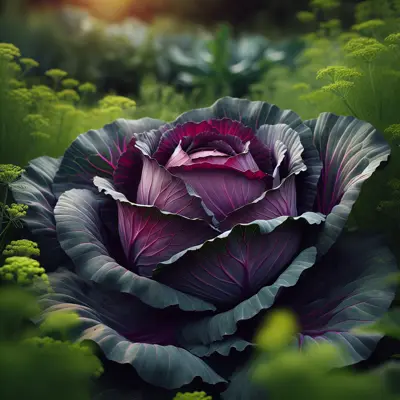
A classic heirloom cabbage prized for its deep burgundy-red color and exceptional storage capabilities. This reliable variety produces dense, round heads with crisp texture and sweet flavor that intensifies after light frosts. Perfect for both fresh eating and traditional fermented preparations like sauerkraut.
Harvest
100-110d
Days to harvest
Sun
Full sun to partial shade
Zones
6–9
USDA hardiness
Height
10-24 inches
Planting Timeline
Showing dates for Detroit Dark Red in USDA Zone 7
All Zone 7 brassica →Zone Map
Click a state to update dates
Detroit Dark Red · Zones 6–9
Growing Details
Succession Planting
In zone 7, work with two planting windows: a spring run transplanted out in late March to April, and a fall run started indoors in late July for transplanting in mid-August to early September. At 100–110 days to harvest, the fall planting is actually the more reliable of the two — heads mature into October and November when temperatures finally drop into Detroit Dark Red's preferred range.
Don't try to stretch the spring planting past early May. Once daytime highs are consistently above 80°F, heads won't size up properly and black rot (Xanthomonas campestris pv. campestris) spreads fast through wet summer heat. Set a hard cutoff: if transplants aren't in the ground by May 1, hold off and prep for the fall window instead.
Complete Growing Guide
This heirloom demands patience—its 100-110 day maturity means planning transplants for early summer to harvest before hard freezes, though light frosts actually enhance its signature sweetness. Detroit Dark Red thrives in consistently moist, nitrogen-rich soil with pH 6.0-7.5 and full sun, requiring more frequent watering than green varieties due to its dense head structure. While generally hardy, this cultivar shows moderate susceptibility to cabbage loopers and flea beetles, particularly on young transplants, making row covers essential during establishment. Unlike faster brassicas, it rarely bolts prematurely even under temperature stress. A practical advantage: store mature heads in cool, humid conditions (32-40°F) for exceptional storage life extending 4-6 months, making fall plantings ideal for winter use in fermentation projects.
Light: Full sun (6 or more hours of direct sunlight a day), Partial Shade (Direct sunlight only part of the day, 2-6 hours). Soil: Clay, Loam (Silt), Sand. Soil pH: Acid (<6.0), Neutral (6.0-8.0). Drainage: Good Drainage, Moist. Height: 0 ft. 10 in. - 2 ft. 0 in.. Spread: 1 ft. 0 in. - 2 ft. 0 in.. Spacing: 12 inches-3 feet. Growth rate: Medium. Maintenance: Medium. Propagation: Seed, Stem Cutting. Regions: Coastal, Mountains, Piedmont.
Harvesting
Harvest Detroit Dark Red cabbage when the heads feel firm and dense to hand pressure, typically reaching 4–6 pounds at maturity around 100–110 days. The deep burgundy color should be uniformly rich throughout the outer leaves with no signs of splitting or cracking. For single-harvest efficiency, cut heads at soil level with a sharp knife when they've reached desired size; however, you can also practice continuous harvesting by removing outer leaves from developing heads over several weeks. Time your final harvests just after the first light frost, as cold exposure converts sugars and intensifies sweetness while simultaneously improving storage longevity—heads harvested post-frost will keep for months in cool conditions.
The fruits dry and split when ripe.
Color: Brown/Copper, Green. Type: Siliqua. Length: > 3 inches.
Garden value: Edible
Harvest time: Fall, Summer
Edibility: The foliage is edible raw or cooked but when cooked can emit an unpleasant odor.
Storage & Preservation
Fresh Detroit Dark Red stores exceptionally well when properly handled. After harvest, remove loose outer leaves but leave several wrapper leaves intact. Store unwashed heads in perforated plastic bags in the refrigerator crisper drawer at 32-40°F with high humidity. Properly stored heads keep 3-4 months.
For longer preservation, Detroit Dark Red excels at fermentation—its dense texture and natural sugars create superior sauerkraut with beautiful deep red color. Shred and ferment using a 2% salt ratio by weight. The variety also freezes well when blanched for 2-3 minutes, though texture becomes softer. Consider dehydrating outer leaves into crispy chips or pickling whole small heads in vinegar brine for colorful additions to winter meals.
History & Origin
Detroit Dark Red emerged in the late nineteenth century as an American selection within the broader red cabbage breeding tradition, though precise documentation of its original breeder and year remains elusive. The variety likely developed through continuous selection by American seed companies and market gardeners who valued its exceptional storage qualities and deep coloration. It represents the refinement of European red cabbage germplasm adapted to North American growing conditions and market preferences. The name references Detroit's prominence as a vegetable seed hub during the early twentieth century, suggesting the variety gained prominence through commercial seed houses operating in the region. While specific breeding details are sparse, Detroit Dark Red exemplifies the practical heirloom selections that emerged from this era of American agricultural development.
Origin: W. Europe
Advantages
- +Deep burgundy color makes Detroit Dark Red visually striking in gardens and dishes.
- +Exceptional storage life extends harvest enjoyment well into winter months reliably.
- +Sweet flavor intensifies after frost, rewarding patient growers with superior taste.
- +Dense heads produce excellent sauerkraut and fermented preparations traditional enthusiasts appreciate.
- +Easy cultivation and 100-110 day maturity suit both beginner and experienced gardeners.
Considerations
- -Clubroot fungus in soil causes stunted growth and persistent yield problems indefinitely.
- -Multiple pest pressures including cabbage worms and flea beetles require consistent management.
- -Black rot and alternaria leaf spot diseases thrive in humid growing conditions.
- -Downy mildew spreads rapidly in cool, wet weather common to spring cultivation.
Companion Plants
Onions and garlic are the most useful neighbors for Detroit Dark Red. Both release sulfur compounds that confuse and deter aphids and cabbage worms — two pests that will find your brassicas regardless of what else you plant. Radishes do double duty: they mature fast enough to act as a trap crop for flea beetles, and if you let a few bolt they'll draw aphids off the cabbage heads before the problem gets serious. Carrots and lettuce fill in at different root depths — lettuce is essentially surface-level, carrots go down 6–10 inches — so neither one is competing for the same water Detroit Dark Red needs.
Fennel is broadly allelopathic and stunts most vegetables planted within a foot or two of it; keep it on the far end of the garden or skip it entirely. Pole beans are a subtler problem: they fix nitrogen aggressively, which sounds useful but tends to push brassicas toward loose, leafy heads rather than tight ones. Bush beans are a better trade if you want legumes nearby. Around here in the southeast, I skip mustard as a companion altogether — it hosts the same aphid species that hammer cabbage, so putting them side by side just concentrates the damage.
Plant Together
Onions
Repel flea beetles and aphids that commonly attack beets
Lettuce
Grows well in beet shade and makes efficient use of garden space
Garlic
Natural pest deterrent that repels root maggots and aphids
Bush Beans
Fix nitrogen in soil which benefits beet growth and development
Carrots
Compatible root depths and similar growing requirements
Radishes
Break up compacted soil and mature quickly between beet plantings
Spinach
Similar soil and water requirements, can be intercropped effectively
Cabbage
Both benefit from similar soil conditions and pest management
Keep Apart
Pole Beans
Climbing growth can shade beets excessively and compete for nutrients
Mustard
Allelopathic effects can inhibit beet germination and growth
Fennel
Inhibits growth of most garden plants including beets through allelopathy
Nutrition Facts
Per 100g serving. % Daily Value based on 2,000 calorie diet. Source: USDA FoodData Central (FDC #747447)
Pests & Disease Resistance
Resistance
Good resistance to splitting, moderate clubroot tolerance
Common Pests
Cabbage worms, aphids, flea beetles, cutworms
Diseases
Clubroot, black rot, downy mildew, alternaria leaf spot
Troubleshooting Detroit Dark Red
What you'll see, why it happens, and what to do about it.
Leaves wilting and yellowing from the base up, with stunted growth — roots show galls or brown, rotted tissue when pulled
Likely Causes
- Clubroot (Plasmodiophora brassicae) — a soil-borne pathogen that persists for up to 20 years in infected ground
- Waterlogged soil dropping pH below 6.0, which favors clubroot spore germination
What to Do
- 1.Pull and bag the affected plants — do not compost them
- 2.Lime the bed to raise soil pH to 7.0–7.2 before the next brassica planting; clubroot is suppressed above pH 7.0
- 3.Rotate brassicas out of that bed for a minimum of 4 years
V-shaped yellow lesions on leaf edges, darkening to brown, with black veins visible inside a cut stem
Likely Causes
- Black rot (Xanthomonas campestris pv. campestris) — a bacterial disease spread by infected seed, rain splash, and overhead irrigation
- Warm, wet weather between 75–95°F accelerating symptom spread
What to Do
- 1.Remove and trash all symptomatic leaves and plants immediately — don't let them sit on the soil
- 2.Switch to drip irrigation or water at the base to keep foliage dry
- 3.Start with hot-water-treated or certified disease-free seed next season; NC State Extension recommends seed treatment at 122°F for 25 minutes as a preventive measure
Frequently Asked Questions
How long does Detroit Dark Red cabbage take to grow?▼
Can you grow Detroit Dark Red cabbage in containers?▼
What does Detroit Dark Red cabbage taste like?▼
When should I plant Detroit Dark Red cabbage?▼
Is Detroit Dark Red cabbage good for beginners?▼
How do you prevent Detroit Dark Red cabbage from splitting?▼
Zone-by-Zone Planting Calendar
| Zone | Indoor Start | Transplant | Direct Sow | Harvest |
|---|---|---|---|---|
| Zone 1 | April – May | June – July | June – July | September – September |
| Zone 2 | April – May | June – July | May – July | September – September |
| Zone 11 | January – January | January – February | January – February | April – December |
| Zone 12 | January – January | January – February | January – February | April – December |
| Zone 13 | January – January | January – February | January – February | April – December |
| Zone 3 | March – April | May – June | May – June | August – October |
| Zone 4 | March – April | May – June | April – June | August – October |
| Zone 5 | February – March | April – May | April – May | July – November |
| Zone 6 | February – March | April – May | April – May | July – November |
| Zone 7 | February – March | April – May | March – May | July – November |
| Zone 8 | January – February | March – April | March – April | June – December |
| Zone 9 | January – January | February – March | February – March | May – December |
| Zone 10 | January – January | February – March | January – March | May – December |
Growing Guides from Wind River Greens
Sources & References
External authority sources used in compiling this guide.
See the Methodology page for how this data is sourced, what's AI-assisted, and known limitations.