Super Sugar Snap
Pisum sativum
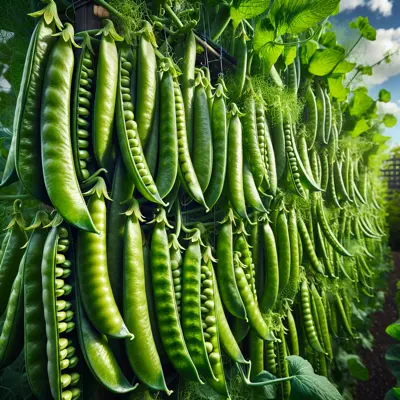
A disease-resistant version of the beloved Sugar Snap with more manageable 60" vines. Early yields are heavier over a shorter period. Not quite as sweet as the original. Pods avg. 3" long with 1 or 2 per node. Remove string from pods before cooking. Needs trellising.
Harvest
61d
Days to harvest
Sun
Full sun to partial shade
Zones
2–11
USDA hardiness
Height
12-18 inches
Planting Timeline
Showing dates for Super Sugar Snap in USDA Zone 7
All Zone 7 pea →Zone Map
Click a state to update dates
Super Sugar Snap · Zones 2–11
Growing Details
Succession Planting
Direct sow Super Sugar Snap every 14-18 days starting March 1 in zone 7, and stop by early May — once daytime highs are consistently above 80°F, pod set drops off sharply and the plants just run out of steam. That gives you two or three successions, which is about all the spring window allows. Germination runs 7-12 days, and with a 61-day days-to-harvest, your last March sowing should finish by late May before the worst heat arrives.
For a fall run, the UGA Vegetable Garden Calendar points to cleaning out spent spring rows in June and replanting for fall crops. Sow again around August 20-September 1 in zone 7 — soil is warm enough for fast germination and the plants will mature into cooler October weather. That fall planting is often cleaner than spring; downy mildew pressure eases once nights drop below 60°F.
Complete Growing Guide
Start preparing your Super Sugar Snap bed in early spring by working compost or aged manure into well-draining soil. These climbing peas thrive in soil with a pH between 6.0-7.0, so test and amend with lime if needed. Install your trellis system before planting—you'll need sturdy 6-8 foot supports since this variety produces vigorous vines that can become top-heavy when loaded with pods.
Direct sow seeds 2-4 weeks before your last frost date when soil temperatures reach 45°F. Plant seeds 2 inches deep and 3-4 inches apart along the base of your trellis. In zones 3-5, wait until soil workability improves, typically mid-March to early April. Southern gardeners in zones 8-9 should plant in late February for spring harvest or again in late summer for fall production.
Skip the fertilizer at planting—peas fix their own nitrogen and too much will produce lush foliage at the expense of pods. Instead, side-dress with compost when flowers appear. Water consistently but avoid overhead watering once flowering begins, as wet foliage invites powdery mildew despite this variety's resistance.
Train young vines to climb by gently weaving tendrils through your trellis weekly. Super Sugar Snaps produce heavy crops, so reinforce your supports mid-season if you notice sagging. The most common mistake is harvesting too late—check daily once pods start forming.
For continuous harvest, make succession plantings every 2-3 weeks until 10 weeks before your first fall frost. This extends your harvest window from the typical 2-3 weeks to nearly two months of fresh snap peas.
Harvesting
Super Sugar Snaps reach peak quality 64-70 days from sowing when pods are bright green, glossy, and well-filled but still tender. The ideal pod measures 3-4 inches long with visible pea bumps that haven't yet caused the pod walls to become tough and fibrous.
Perform the snap test: a perfectly ripe pod will break cleanly with an audible snap when bent. If it bends without breaking, wait another day or two. Harvest in early morning when pods are crisp and full of moisture—afternoon heat can make them limp and less flavorful.
Use both hands when harvesting: hold the vine steady with one hand while gently pulling pods upward and away from the stem with the other. This prevents damage to the delicate vines that could reduce future production. Pick pods every 1-2 days once harvest begins, as leaving mature pods on the vine signals the plant to stop producing new flowers. Even slightly overmature pods should be removed to keep production going strong.
Storage & Preservation
Fresh Super Sugar Snap pods maintain peak quality for 3-5 days when stored in perforated plastic bags in your refrigerator's crisper drawer. Don't wash until ready to eat, as excess moisture accelerates deterioration.
For freezing, blanch whole pods in boiling water for 2 minutes, then plunge into ice water before draining and freezing in airtight containers. Frozen snap peas retain their crunch for up to 8 months and work beautifully in stir-fries straight from frozen.
Pickling offers another preservation option: quick-pickle small, tender pods in rice vinegar with ginger and garlic for a crunchy condiment that keeps refrigerated for several weeks. Dehydrating isn't recommended as snap peas lose their signature texture and become leathery. For maximum freshness, harvest only what you'll use within a few days and make successive sowings for continuous supply rather than trying to preserve large quantities.
History & Origin
Super Sugar Snap represents the evolution of snap pea breeding since Calvin Lamborn's original Sugar Snap variety won the All-America Selections award in 1979. Lamborn, working for Gallatin Valley Seed Company in Idaho, created the first edible-pod pea that combined the sweetness of snow peas with the plump pods of shelling peas—a breakthrough that revolutionized home gardens.
Super Sugar Snap emerged in the 1990s as seed companies sought to improve upon the original's tendency toward disease susceptibility and inconsistent germination. Plant breeders focused on enhancing disease resistance, particularly against powdery mildew and pea enation mosaic virus, while maintaining the exceptional sweetness that made Sugar Snaps an instant garden favorite.
This hybrid variety represents modern breeding priorities: reliability over novelty. Where heirloom peas offer historical connection, Super Sugar Snap delivers the practical improvements that make successful harvests more likely for today's gardeners dealing with increasingly challenging growing conditions and evolving disease pressures.
Advantages
- +Outstanding disease resistance to powdery mildew and pea enation mosaic virus reduces crop loss
- +Exceptionally sweet flavor that remains tender even when pods are well-filled
- +Heavy, reliable yields that outproduce many standard snap pea varieties
- +Strong, vigorous vines that support heavy pod loads without breaking
- +Extended harvest window with pods holding quality longer on the vine
- +Excellent germination rates even in cool, damp spring conditions
- +Pods maintain crispness better than many snap pea varieties after picking
Considerations
- -Requires substantial 6-8 foot trellising system that needs reinforcement mid-season
- -Hybrid variety means you cannot save seeds for next year's planting
- -More expensive than open-pollinated snap pea varieties
- -Vines can become top-heavy and prone to wind damage when fully loaded
- -Susceptible to root rot in poorly-draining or waterlogged soils
Companion Plants
Carrots and radishes are the most practical companions for Super Sugar Snap. Radishes loosen the top few inches of soil as they're pulled, which helps shallow pea roots spread, and at 4-6 inch spacing they tuck in between pea plants without real crowding. Carrots occupy a deeper root zone, so there's no meaningful competition for water or nutrients. Lettuce and spinach work well tucked on the shaded side of a pea trellis — they appreciate filtered light once your 12-18 inch plants leaf out, and in our zone 7 Georgia garden that shade buys lettuce a few extra weeks before it bolts in May.
Onions and garlic are the ones to skip. Both release sulfur compounds that suppress the nitrogen-fixing bacteria (Rhizobium leguminosarum) living on pea root nodules — the very bacteria that make growing legumes worth the bed space. Gladiolus shares several pathogens with peas, including Fusarium oxysporum, so planting them nearby risks contaminating soil that your peas will be sitting in for 61 days.
Plant Together
Carrots
Peas improve soil nitrogen for carrots, while carrots help break up soil for pea roots
Radishes
Quick-growing radishes break up soil and are harvested before peas need full space
Lettuce
Benefits from nitrogen fixed by peas and provides ground cover to retain soil moisture
Spinach
Thrives in nitrogen-rich soil created by pea roots and has similar growing requirements
Marigolds
Repel aphids and other pests that commonly attack pea plants
Chives
Natural pest deterrent that repels aphids without competing for nutrients
Bush Beans
Both are nitrogen-fixers that can support each other's growth when planted in succession
Mint
Deters ants and rodents that may eat pea seeds, but plant in containers to prevent spreading
Keep Apart
Onions
Can inhibit pea growth and nitrogen fixation through root secretions
Garlic
Allelopathic compounds can stunt pea growth and interfere with beneficial root bacteria
Gladiolus
Competes heavily for nutrients and can inhibit pea pod development
Nutrition Facts
Per 100g serving. % Daily Value based on 2,000 calorie diet. Source: USDA FoodData Central (FDC #170419)
Pests & Disease Resistance
Resistance
Powdery Mildew (Intermediate)
Common Pests
Aphids, pea moths, leaf miners, birds
Diseases
Root rot, downy mildew, fusarium wilt, bacterial blight
Troubleshooting Super Sugar Snap
What you'll see, why it happens, and what to do about it.
White-gray fuzzy coating on upper or lower leaf surfaces, plants looking stunted by late spring
Likely Causes
- Downy mildew (Peronospora viciae) — common on peas in cool, humid conditions with poor air circulation
- Planting too densely, spacing under 4 inches, which traps moisture between plants
What to Do
- 1.Pull and trash affected leaves — don't compost them
- 2.Thin plants to at least 4-6 inches apart and make sure your row spacing allows airflow
- 3.Get your spring planting in the ground by early March in zone 7 so plants mature before the humid stretch hits — waiting until late April puts you right in downy mildew season
Plants wilting and yellowing from the base up, roots appearing brown or water-soaked when pulled
Likely Causes
- Fusarium wilt (Fusarium oxysporum f. sp. pisi) — soil-borne, persists for years
- Root rot from overwatering or heavy clay soil that holds standing water
What to Do
- 1.Don't plant peas in the same bed more than once every 3 years — rotate to a bed that hasn't seen legumes recently
- 2.Amend heavy clay with compost before direct sowing to improve drainage; target a soil pH of 6.0-7.2 where Fusarium is less aggressive
- 3.Water to 1-1.5 inches per week but let the top inch of soil dry slightly between waterings — consistent soggy soil is where root rot takes hold
Frequently Asked Questions
How long does Super Sugar Snap pea take to grow?▼
Can you grow Super Sugar Snap peas in containers?▼
What does Super Sugar Snap pea taste like?▼
When should I plant Super Sugar Snap peas?▼
Are Super Sugar Snap peas good for beginners?▼
Super Sugar Snap vs regular Sugar Snap peas - what's the difference?▼
Zone-by-Zone Planting Calendar
| Zone | Indoor Start | Transplant | Direct Sow | Harvest |
|---|---|---|---|---|
| Zone 1 | — | — | June – July | August – September |
| Zone 2 | — | — | May – July | July – September |
| Zone 11 | — | — | January – February | February – December |
| Zone 12 | — | — | January – February | February – December |
| Zone 13 | — | — | January – February | February – December |
| Zone 3 | — | — | May – June | July – October |
| Zone 4 | — | — | April – June | June – October |
| Zone 5 | — | — | April – May | June – November |
| Zone 6 | — | — | April – May | June – November |
| Zone 7 | — | — | March – May | May – November |
| Zone 8 | — | — | March – April | May – December |
| Zone 9 | — | — | February – March | April – December |
| Zone 10 | — | — | January – March | March – December |
Growing Guides from Wind River Greens
Sources & References
External authority sources used in compiling this guide.
- BreederJohnny's Selected Seeds
- USDAUSDA FoodData Central
See the Methodology page for how this data is sourced, what's AI-assisted, and known limitations.