Phacelia
Phacelia tanacetifolia
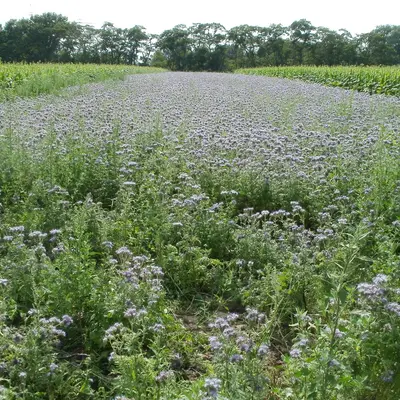
Most commonly seeded in mass plantings, or as an annual cover crop with nectar-rich blooms to attract and support beneficial and pollinator insects. An excellent, fast-growing, easy-to-grow source of nectar for honeybee forage. Tolerant of low water conditions and poor soils. Used as a cover crop, will winterkill at 18°F (-8°C) - residue breaks down relatively quickly. Furled, lavender-colored flowers with tall, sturdy stems are sometimes used as a cut flower, adding a casual, wildflower look to bouquets. Also commonly known as bee's friend, lacy phacelia, blue tansy, purple tansy, and lacy scorpion-weed. Relative of borage and native to the United States and Mexico. For mass plantings or cover crop, sow at 3 oz./1,000 sq.ft. or 7 lb./acre.
Harvest
45-60d
Days to harvest
Sun
Full sun
Zones
11–11
USDA hardiness
Height
1-3 feet
Planting Timeline
Showing dates for Phacelia in USDA Zone 7
All Zone 7 flower →Zone Map
Click a state to update dates
Phacelia · Zones 11–11
Growing Details
Succession Planting
Phacelia blooms for roughly 3–4 weeks per sowing before it sets seed and declines, so staggering direct sowings every 2–3 weeks from April through early June in zone 7 keeps flowers — and the pollinators that follow them — running through midsummer. Sow at 3 oz. per 1,000 sq. ft. each time; starting indoors is only worth the trouble if you're trying to get blooms before your last frost date.
Stop sowing once daytime highs are reliably at 80°F or above. The bloom window shrinks fast in summer heat and you'll get very little out of a July sowing. If you want fall coverage, let the last planting drop seed and mark the spot — volunteers come up on their own schedule and tend to perform better than anything pushed in the hottest part of the year.
Complete Growing Guide
Light: Full sun (6 or more hours of direct sunlight a day). Soil: Sand, Shallow Rocky. Height: 1 ft. 0 in. - 3 ft. 0 in.. Spread: 1 ft. 0 in. - 3 ft. 0 in.. Spacing: 12 inches-3 feet. Growth rate: Rapid. Maintenance: Medium. Propagation: Seed.
Harvesting
Two brown wrinkled seeds are produced in the ovoid fruit. Seeds drop to the ground when the fruit is mature.
Storage & Preservation
Phacelia is primarily grown for ornamental and agricultural purposes rather than culinary use. When harvested as cut flowers, condition stems in cool water immediately after cutting and store in a cool room (65-70°F) with 60-70% humidity; they will last 7-10 days. For seed collection, allow flower heads to dry completely on the plant, then harvest and store seeds in a cool, dry location (below 50°F, low humidity) in sealed containers for up to 3 years. If preserving for cover crop residue incorporation, allow plants to winter-kill naturally or cut and dry plant material before incorporating into soil as green manure.
History & Origin
Origin: California to Mexico
Advantages
- +Excellent nectar source attracts honeybees and beneficial pollinator insects efficiently
- +Fast-growing cover crop that winterkills easily at 18°F for cleanup
- +Tolerant of poor soils and low water conditions without special care
- +Attractive lavender flowers work well as casual, wildflower-style cut flowers
- +Easy to establish and maintain with minimal growing difficulty
Considerations
- -Dies in cold winters, limiting use in northern climates permanently
- -Self-seeds aggressively if allowed to flower, potentially becoming weedy pest
- -Requires timely mowing to prevent excessive reseeding in subsequent seasons
Companion Plants
Phacelia is one of the better pollinator draws you can put near fruiting crops. Its nectar-rich flowers pull in hoverflies (family Syrphidae) and parasitic wasps that hunt aphids and caterpillars — which is why it belongs near tomatoes, cucumbers, and beans. Those crops benefit from both stronger pollination and reduced pest pressure at the same time. Carrots and cabbage get a similar payoff: hoverflies working the phacelia blooms also deposit eggs near aphid colonies on brassicas and umbellifers, giving you some biological control you didn't have to spray for. Marigolds and sunflowers are easy neighbors with no territorial drama — similar water needs, no meaningful root competition.
Black walnut, eucalyptus, and fennel are the ones to plant well away from. Black walnut produces juglone, a root-exuded compound that suppresses a wide range of annuals. Fennel is broadly allelopathic — it stunts most plants that grow within a foot or two of it, and phacelia is no exception. Eucalyptus releases growth-inhibiting compounds through both its roots and fallen leaves. None of these are worth working around; just keep phacelia in a different part of the garden entirely.
Plant Together
Tomatoes
Phacelia attracts beneficial insects that control tomato hornworms and other pests
Cucumbers
Attracts pollinators and predatory insects that help with cucumber beetle control
Beans
Phacelia attracts beneficial wasps that parasitize bean pests like aphids
Carrots
Attracts hoverflies and parasitic wasps that control carrot fly and aphids
Cabbage
Draws beneficial insects that prey on cabbage worms and flea beetles
Strawberries
Attracts pollinators to improve fruit set and predators for pest control
Sunflowers
Both attract similar beneficial insects creating a strong pollinator habitat
Marigolds
Complementary pest control through different beneficial insect attraction
Keep Apart
Black Walnut
Produces juglone which inhibits growth of many plants including Phacelia
Eucalyptus
Releases allelopathic compounds that suppress growth of nearby plants
Fennel
Produces allelopathic compounds that inhibit germination and growth of most garden plants
Troubleshooting Phacelia
What you'll see, why it happens, and what to do about it.
Seedlings damping off at soil level within the first 10 days after germination
Likely Causes
- Pythium or Rhizoctonia fungi — triggered by overwatering and poor drainage
- Sowing too thickly (above 3 oz./1,000 sq. ft.) so seedlings crowd and hold moisture against stems
What to Do
- 1.Thin aggressively as soon as seedlings emerge — crowding is the main driver here
- 2.Water in the morning so the soil surface dries before nightfall
- 3.If starting indoors, use a sterile seed-starting mix and don't let trays sit in standing water
Leaves with pale, stippled patches and fine webbing on the undersides during hot, dry spells
Likely Causes
- Two-spotted spider mite (Tetranychus urticae) — populations explode when temperatures stay above 85°F and humidity is low
What to Do
- 1.Hit the undersides of leaves with a strong spray of water to knock mites off — do this three days in a row
- 2.Apply insecticidal soap or neem oil in the evening so it doesn't evaporate before contact
- 3.Keep soil consistently moist; drought-stressed plants draw mites faster than well-watered ones
Powdery white coating on leaves and stems, usually appearing after day 40 as plants mature
Likely Causes
- Powdery mildew (Erysiphe cichoracearum) — common on phacelia late in the season, especially where airflow is poor
- Overhead watering at night that leaves foliage wet for hours
What to Do
- 1.Cut out the worst-affected stems at the base and put them in the trash, not the compost pile
- 2.Switch to drip or base watering if you've been wetting the foliage
- 3.A baking soda spray (1 tablespoon per gallon of water) can slow spread if caught early, though it won't reverse existing infection
Plants flowering and going to seed well before the 45–60 day mark, with sparse, stunted foliage
Likely Causes
- Heat stress — phacelia rushes to seed when daytime temperatures consistently exceed 80–85°F
- Sowing too late so plants hit summer heat before they've sized up
What to Do
- 1.Direct sow no later than early June in zone 7; anything after that and the plants bolt before they've done much for you
- 2.For a late planting, choose a spot with afternoon shade to stretch the bloom window by a week or two
- 3.Let the last planting go to seed in place — phacelia reseeds reliably, and those volunteers will hit the ground at a better time than a forced midsummer sowing
Frequently Asked Questions
How long does phacelia take to flower?▼
Is phacelia good for beginners?▼
When should I plant phacelia?▼
What is phacelia used for?▼
Can you grow phacelia in containers?▼
Why is phacelia called a cover crop?▼
Zone-by-Zone Planting Calendar
| Zone | Indoor Start | Transplant | Direct Sow | Harvest |
|---|---|---|---|---|
| Zone 1 | May – June | July – August | July – September | — |
| Zone 2 | April – May | June – July | June – August | — |
| Zone 11 | January – January | January – February | January – March | — |
| Zone 12 | January – January | January – February | January – March | — |
| Zone 13 | January – January | January – February | January – March | — |
| Zone 3 | April – May | June – July | June – August | — |
| Zone 4 | March – April | June – June | June – July | — |
| Zone 5 | March – April | May – June | May – July | — |
| Zone 6 | March – April | May – June | May – July | — |
| Zone 7 | February – March | April – May | April – June | — |
| Zone 8 | February – March | April – May | April – June | — |
| Zone 9 | January – February | March – April | March – May | — |
| Zone 10 | January – January | February – March | February – April | — |
Growing Guides from Wind River Greens
Sources & References
External authority sources used in compiling this guide.
- ExtensionNC State Extension
- BreederJohnny's Selected Seeds
See the Methodology page for how this data is sourced, what's AI-assisted, and known limitations.