Habanero 'Red Savina'
Capsicum chinense 'Red Savina'
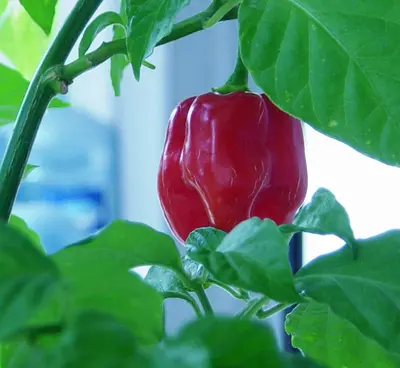
Once the world's hottest pepper, this fiery habanero delivers intense heat with surprising fruity flavor. The deep red, wrinkled pods pack serious punch at 200,000-350,000 Scoville units, making them perfect for hot sauce enthusiasts who want extreme heat with gourmet flavor.
Harvest
90-100d
Days to harvest
Sun
Full sun
Zones
10–11
USDA hardiness
Height
12-30 inches
Planting Timeline
Showing dates for Habanero 'Red Savina' in USDA Zone 7
All Zone 7 pepper →Zone Map
Click a state to update dates
Habanero 'Red Savina' · Zones 10–11
Growing Details
Complete Growing Guide
Red Savina habaneros demand warm soil temperatures of at least 75°F to germinate reliably, so start seeds 8-10 weeks before your last frost date indoors—earlier than standard peppers. This cultivar exhibits a strong tendency to stretch during seedling stage, requiring bright supplemental lighting or close positioning to prevent leggy plants that struggle to produce fruit. Once established, Red Savina thrives in full sun with consistently warm conditions; temperatures below 60°F cause flower drop and drastically reduce yield. Watch closely for spider mites and whiteflies, which are particularly attracted to this variety's dense foliage. The wrinkled fruit skin makes disease assessment tricky—inspect carefully for anthracnose and bacterial spot by examining lesions at pod creases. A practical tip: prune lower branches before flowering to improve air circulation and reduce fungal pressure in the dense canopy, which directly correlates with higher fruit production in this otherwise temperamental cultivar.
Light: Full sun (6 or more hours of direct sunlight a day). Soil: Clay, High Organic Matter, Loam (Silt), Sand. Soil pH: Acid (<6.0), Alkaline (>8.0), Neutral (6.0-8.0). Drainage: Good Drainage, Moist. Height: 1 ft. 0 in. - 2 ft. 6 in.. Spread: 1 ft. 0 in. - 2 ft. 0 in.. Spacing: 12 inches-3 feet. Growth rate: Medium. Maintenance: Medium. Regions: Coastal, Mountains, Piedmont.
Harvesting
Harvest Red Savina habaneros when pods reach their characteristic deep crimson color and develop the distinctive wrinkled skin texture that defines this cultivar, indicating peak heat and flavor development. The peppers should feel firm yet slightly yielding when gently squeezed. This variety responds well to continuous harvesting throughout the season—picking mature pods regularly encourages the plant to produce additional flowers and fruit rather than concentrating energy into fewer peppers. For optimal results, harvest in the early morning after dew dries but before intense afternoon heat, as this timing preserves the peppers' fruity citrusy notes and reduces stress on the plant. Even slightly underripe Red Savinas retain exceptional heat levels, making them forgiving for those who prefer slightly less wrinkled skin.
Fruits are a non-pulpy berry and vary considerably across cultivars in shape and color. Many tend to have a lumpy, crinkled appearance compared to other species. They contain high capsaicin levels.
Color: Gold/Yellow, Green, Orange, Purple/Lavender, Red/Burgundy, White. Type: Berry. Length: 1-3 inches. Width: 1-3 inches.
Garden value: Edible, Good Dried, Showy
Harvest time: Fall, Summer
Storage & Preservation
Fresh Red Savina peppers store best at 45-50°F with 90-95% humidity, ideally in perforated plastic bags within your refrigerator's crisper drawer. They'll keep for two to three weeks under these conditions, though they'll gradually lose heat potency and develop wrinkles over time. For longer preservation, freezing works well—simply wash, slice or dice, and freeze on a tray before transferring to freezer bags for up to eight months. Drying intensifies their fruity-smoky character and is ideal for this variety; hang whole peppers in a warm, well-ventilated space or use a dehydrator at 135°F until completely brittle. Canning as hot sauce captures their extreme heat effectively, while fermentation mellows the intensity slightly while developing complex flavor. Because Red Savina peppers retain significant capsaicin even when dried, store all preserved forms away from children and pets. Handle the dried pods carefully during grinding, as the dust is potent.
History & Origin
The Red Savina habanero emerged in the 1990s as a selectively bred cultivar of Capsicum chinense, the species native to the Caribbean and Central America. While specific breeder documentation remains limited in readily available sources, this variety was developed through intensive selection for extreme heat levels, building on the habanero's naturally high capsaicinoid content. The Red Savina gained prominence in the United States during the late 1990s and early 2000s when it briefly held the Guinness World Record for hottest pepper. Its development reflects the growing commercial interest in superhot peppers for artisanal hot sauce production, though detailed records of its precise breeding lineage and originating seed company are not consistently documented in horticultural literature.
Origin: Bolivia, northern Brazil, and Peru
Advantages
- +Legendary heat level at 200,000-350,000 Scoville units satisfies extreme spice seekers
- +Fruity, citrusy flavor profile elevates hot sauces beyond one-dimensional burn
- +Deep red, wrinkled pods offer striking visual appeal and gourmet presentation
- +90-100 day maturity allows full season harvest in most climates
Considerations
- -Moderate to difficult growing difficulty demands experienced pepper cultivation skills
- -Highly susceptible to bacterial leaf spot, mottle virus, and anthracnose
- -Vulnerable to multiple pests including aphids, spider mites, and pepper weevils
Companion Plants
Basil and marigolds are the two worth prioritizing alongside Red Savina. Basil's volatile oils may confuse aphids and spider mites, and in our zone 7 Georgia gardens it also pulls double duty in the kitchen when habaneros are coming off the plant by the pound in September. French marigolds (Tagetes patula) suppress root-knot nematodes — a genuine problem in the sandy soils common across this region. Onions and carrots fill the gaps without crowding: both stay shallow enough to coexist with the 18–24 inch spacing Red Savina needs. Fennel is broadly allelopathic to most vegetables and belongs in its own isolated bed. Black walnut is the harder no — juglone exuded from the roots will stunt or kill Capsicum chinense, and moving the plant fixes nothing if the roots extend under your bed.
Plant Together
Basil
Repels aphids, spider mites, and thrips while potentially enhancing pepper flavor
Marigolds
Deters nematodes, aphids, and whiteflies with natural compounds
Tomatoes
Share similar growing requirements and can benefit from same pest management
Oregano
Repels aphids and provides ground cover to retain soil moisture
Carrots
Help break up soil and don't compete for nutrients or space
Onions
Deter aphids, thrips, and other soft-bodied insects with sulfur compounds
Parsley
Attracts beneficial insects like parasitic wasps that control pepper pests
Nasturtiums
Act as trap crop for aphids and cucumber beetles while repelling whiteflies
Keep Apart
Fennel
Releases allelopathic compounds that inhibit pepper growth and development
Brassicas
Compete heavily for nutrients and may stunt pepper growth
Black Walnut
Produces juglone toxin that causes wilting and death in pepper plants
Nutrition Facts
Per 100g serving. % Daily Value based on 2,000 calorie diet. Source: USDA FoodData Central (FDC #169394)
Pests & Disease Resistance
Resistance
Good resistance to bacterial leaf spot and tobacco mosaic virus
Common Pests
Aphids, spider mites, pepper weevils, flea beetles
Diseases
Bacterial leaf spot, pepper mottle virus, anthracnose
Troubleshooting Habanero 'Red Savina'
What you'll see, why it happens, and what to do about it.
Sunken, dark, leathery patches on the side or bottom of the fruit — sometimes with secondary gray or black mold developing on the affected area
Likely Causes
- Blossom end rot — localized calcium deficiency in the developing fruit, often triggered by inconsistent watering
- High ammonium-nitrogen fertilizer applications, which interfere with calcium uptake
- Soil calcium genuinely low (confirm with a soil test before adding amendments)
What to Do
- 1.Water on a consistent schedule — Red Savina wants 1 to 1.5 inches per week; big swings between dry and wet are what trigger this
- 2.Get mulch down (straw works fine) before dry spells hit, not after — UGA Extension recommends mulching peppers around blooming time, not mid-drought
- 3.Back off high-nitrogen synthetic fertilizers once plants are setting fruit; switch to a balanced or lower-N source mid-season
Leaves with small, water-soaked spots that turn brown and ragged, sometimes with yellow halos; spotting spreads quickly in wet weather
Likely Causes
- Bacterial leaf spot (Xanthomonas campestris pv. vesicatoria) — spreads fast in warm, humid conditions
- Rain splash or overhead irrigation moving bacteria from soil or infected debris onto foliage
What to Do
- 1.Switch to drip irrigation or water at the base of the plant to keep foliage dry
- 2.Strip and bag affected leaves immediately — do not compost them
- 3.Rotate peppers, tomatoes, eggplant, and potatoes out of the same bed for at least 2 seasons; NC State Extension's organic gardening guidance specifically calls out this nightshade family for rotation to break disease cycles
Frequently Asked Questions
How long does Red Savina habanero take to grow from seed?▼
Can you grow Red Savina habanero in containers?▼
How hot is Red Savina habanero compared to regular habaneros?▼
Is Red Savina habanero good for beginners?▼
When should I plant Red Savina habanero seeds?▼
What does Red Savina habanero taste like?▼
Zone-by-Zone Planting Calendar
| Zone | Indoor Start | Transplant | Direct Sow | Harvest |
|---|---|---|---|---|
| Zone 1 | May – May | July – August | — | October – August |
| Zone 2 | April – May | June – July | — | October – September |
| Zone 11 | January – January | January – February | — | May – July |
| Zone 12 | January – January | January – February | — | May – July |
| Zone 13 | January – January | January – February | — | May – July |
| Zone 3 | April – April | June – July | — | September – October |
| Zone 4 | March – April | June – June | — | September – October |
| Zone 5 | March – March | May – June | — | September – October |
| Zone 6 | March – March | May – June | — | August – October |
| Zone 7 | February – March | April – May | — | August – October |
| Zone 8 | February – February | April – May | — | July – September |
| Zone 9 | January – January | March – April | — | June – August |
| Zone 10 | January – January | February – March | — | June – August |
Growing Guides from Wind River Greens
Sources & References
External authority sources used in compiling this guide.
See the Methodology page for how this data is sourced, what's AI-assisted, and known limitations.
More Peppers
Carolina Reaper
Sweet Pepper 'Carmen'
Ghost Pepper 'Bhut Jolokia'
Scotch Bonnet 'Scotch Bonnet Orange'
Chocolate Habanero
Sweet Italian Pepper 'Marconi Rosso'
Purple Beauty Bell Pepper
Mad Hatter