Catnip
Nepeta cataria
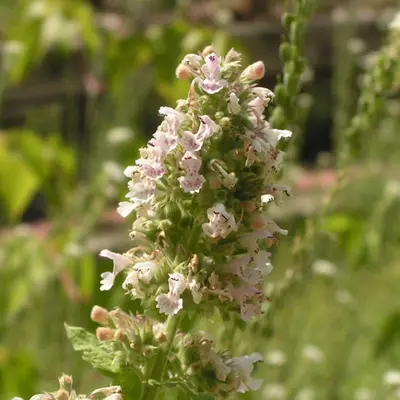
Cat-attracting perennial with gray-green leaves and white flowers. Markets for catnip include cat toy crafters, herbal tea companies, and retail plant sales. Flowers are very attractive to bees.
Harvest
75-85d
Days to harvest
Sun
Full sun to partial shade
Zones
3–9
USDA hardiness
Height
2-3 feet
Planting Timeline
Showing dates for Catnip in USDA Zone 7
All Zone 7 herb →Zone Map
Click a state to update dates
Catnip · Zones 3–9
Growing Details
Complete Growing Guide
Light: Full sun (6 or more hours of direct sunlight a day), Partial Shade (Direct sunlight only part of the day, 2-6 hours). Soil: Clay, Loam (Silt), Sand, Shallow Rocky. Drainage: Good Drainage, Occasionally Dry, Very Dry. Spacing: 12 inches-3 feet. Growth rate: Rapid. Maintenance: Low. Propagation: Division, Seed. Regions: Coastal, Mountains, Piedmont.
Harvesting
Edibility: Leaves for herbal teas, soups, stews, sauces, vegetables, or pasta.
Storage & Preservation
Store fresh catnip in a cool, dark place at 50–60°F with moderate humidity, ideally in a paper bag or breathable container to prevent moisture buildup. Fresh harvested leaves keep for about one week refrigerated in a sealed bag before losing potency. For longer storage, drying is the most effective method—hang bundles upside down in a well-ventilated area away from direct sunlight for 1–2 weeks, then strip leaves and store in airtight containers. Freezing works well too: chop fresh leaves and freeze in ice cube trays with a bit of water for later tea use. Some gardeners prefer freezing whole sprigs in vacuum-sealed bags to preserve the volatile oils better than air-drying does. Catnip loses flavor quickly once dried, so store away from light and heat, and use within six months for best results.
History & Origin
Origin: Europe and Asia
Advantages
- +Attracts: Bees, Butterflies, Moths
- +Edible: Leaves for herbal teas, soups, stews, sauces, vegetables, or pasta.
- +Fast-growing
- +Low maintenance
Considerations
- -Toxic (Leaves): Low severity
Companion Plants
Catnip's volatile compound nepetalactone is the reason it pulls its weight near tomatoes, peppers, eggplant, and squash — it actively confuses flea beetles, aphids, and squash bugs, and the deterrent effect is strong enough that some growers treat it as a sacrificial border plant rather than an interplant. Roses get the same benefit, particularly against aphid pressure in spring. Fennel is a poor neighbor for almost any herb because of its broad allelopathic root chemistry, and rue compounds that problem by suppressing germination of nearby plants. Black walnut is a non-starter: juglone, produced throughout the root system, will stunt or kill catnip — and that root zone runs well beyond the canopy edge, sometimes 50 feet or more from the trunk.
Plant Together
Tomatoes
Catnip repels aphids, whiteflies, and hornworms that commonly attack tomatoes
Peppers
Catnip deters aphids, spider mites, and flea beetles that damage pepper plants
Eggplant
Catnip repels flea beetles and Colorado potato beetles that attack eggplants
Squash
Catnip helps repel squash bugs, cucumber beetles, and aphids
Cucumber
Catnip deters cucumber beetles, aphids, and ants that can damage cucumber vines
Broccoli
Catnip repels cabbage worms, aphids, and flea beetles that attack brassicas
Carrots
Catnip helps repel carrot flies and aphids while attracting beneficial insects
Roses
Catnip repels aphids, ants, and Japanese beetles that commonly infest roses
Keep Apart
Black Walnut
Produces juglone which inhibits catnip growth and can cause wilting
Fennel
Allelopathic properties inhibit growth of catnip and most other herbs
Rue
Strong allelopathic compounds can stunt catnip growth and development
Nutrition Facts
Per 100g serving. % Daily Value based on 2,000 calorie diet. Source: USDA FoodData Central (FDC #172232)
Pests & Disease Resistance
Common Pests
Rarely affected; occasional spider mites or aphids under stress
Diseases
None significant; exceptionally disease-resistant
Troubleshooting Catnip
What you'll see, why it happens, and what to do about it.
Tiny webbing on leaf undersides, leaves look dusty or stippled, especially during hot dry spells
Likely Causes
- Two-spotted spider mite (Tetranychus urticae) — thrives when plants are drought-stressed and airflow is poor
- Planting in too much shade, which weakens the plant and increases susceptibility per NC State Extension IPM guidance
What to Do
- 1.Blast the undersides of leaves with a strong stream of water every 2-3 days for a week
- 2.Water the plant deeply to relieve drought stress — spider mites spike when roots are dry
- 3.If mites persist, apply insecticidal soap, making sure to coat leaf undersides
Clusters of small soft-bodied insects on new growth tips, stems look sticky or have a shiny film
Likely Causes
- Aphids (likely Aphis gossypii or a generalist species) — usually show up when plants are overfertilized and producing soft, lush new growth
- Absence of predatory insects like lacewings or lady beetles in the area
What to Do
- 1.Cut back any overly lush growth, and stop nitrogen fertilizing — catnip rarely needs it
- 2.Knock aphids off with a firm water spray; repeat every 3 days until populations drop
- 3.Avoid broad-spectrum insecticides that kill the beneficials keeping aphid numbers in check
Stems rotting at soil level, plant wilting despite adequate soil moisture, crown looks dark and mushy
Likely Causes
- Root or crown rot from overwatering or poorly drained soil — catnip is drought-tolerant once established and does not want wet feet
- Planting in heavy clay without amendment, trapping moisture around the crown
What to Do
- 1.Dig the plant, cut away rotted tissue, and let roots air-dry for a few hours before replanting in a raised bed or amended site
- 2.Water only when the top 2 inches of soil are dry — established plants can go 10-14 days between waterings in summer
- 3.Work coarse sand or perlite into the bed if drainage is the underlying problem
Plant looks leggy, floppy, and pale-stemmed after its first big flush of bloom; productivity drops off noticeably
Likely Causes
- Normal post-bloom senescence — catnip channels most of its energy into seed production once flowers mature
- Skipping the cutback that resets the plant for a second flush
What to Do
- 1.Cut the entire plant back by about half — down to roughly 6-8 inches — right after the first bloom fades
- 2.Side-dress lightly with compost at that point; the plant will flush again in 4-6 weeks
- 3.Do a second cutback in late August to push one more harvest before frost
Frequently Asked Questions
How long does it take catnip to grow from seed to harvest?▼
Can you grow catnip in pots or containers?▼
Is catnip good for beginners?▼
Does catnip need full sun or can it grow in shade?▼
What's the best time to plant catnip?▼
How do you dry catnip for storage?▼
Zone-by-Zone Planting Calendar
| Zone | Indoor Start | Transplant | Direct Sow | Harvest |
|---|---|---|---|---|
| Zone 3 | April – May | June – July | — | July – October |
| Zone 4 | March – April | June – July | — | July – October |
| Zone 5 | March – April | May – June | — | June – October |
| Zone 6 | March – April | May – June | — | June – November |
| Zone 7 | February – March | April – June | — | June – November |
| Zone 8 | February – March | April – May | — | May – December |
| Zone 9 | January – February | March – April | — | April – December |
| Zone 10 | January – January | February – April | — | April – December |
Growing Guides from Wind River Greens
Sources & References
External authority sources used in compiling this guide.
- ExtensionNC State Extension
- BreederJohnny's Selected Seeds
- USDAUSDA FoodData Central
See the Methodology page for how this data is sourced, what's AI-assisted, and known limitations.