Goldie
Physalis pruinosa
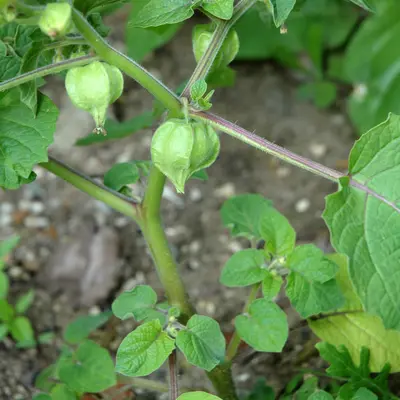
A conversation piece at markets, well-liked by children. This old-fashioned tomato family member bears 1/2- 3/4" sweet golden berries inside papery husks, resembling small, straw-colored Japanese lanterns. The flavor is quite sweet and a bit wild. Plants are profusely branching, prolific, and drop ripe fruits. Fruits can be eaten raw, dried like raisins, frozen, canned, or made into preserves, cooked pies, and desserts.
Harvest
75d
Days to harvest
Sun
Full sun
Zones
3–9
USDA hardiness
Height
1-3 feet
Planting Timeline
Showing dates for Goldie in USDA Zone 7
All Zone 7 berry →Zone Map
Click a state to update dates
Goldie · Zones 3–9
Growing Details
Succession Planting
Goldie is a warm-season annual that produces continuously once it starts — no need to stagger multiple sowings the way you would with lettuce or radishes. One transplant date (May through early June in zone 7) will carry you through harvest from July into October, or until frost shuts things down. Start seeds indoors 6-8 weeks before your transplant date, which puts indoor sowing around mid-to-late March.
If you want a second flush of production, pinch the growing tips back by about 4 inches in mid-August after the first heavy harvest; the plant will branch and set a new round of fruit before the first frost typically arrives in mid-to-late October in zone 7. That's not true succession — it's just managing one plant's season. You don't need to sow a second batch.
Complete Growing Guide
Light: Full sun (6 or more hours of direct sunlight a day). Soil: High Organic Matter. Drainage: Good Drainage, Moist. Height: 1 ft. 0 in. - 3 ft. 0 in.. Spread: 1 ft. 0 in. - 2 ft. 0 in.. Growth rate: Rapid. Maintenance: Medium. Propagation: Division, Seed. Regions: Coastal, Mountains, Piedmont.
Harvesting
A globose green berry that typically matures to a yellow or orange color sometimes purple surrounded by a five sized veined papery sac. Mature fruits are edible. Do not consume immature fruits.
Color: Gold/Yellow, Green, Orange, Purple/Lavender. Type: Berry.
Garden value: Edible, Showy
Edibility: Ripe fruits edible and some used to make jelly, jams, preserves, sauces, or pies. HARVEST TIME: Only collect fruits.
Storage & Preservation
Goldie berries keep best at 45–50°F with 85–90% humidity; store them unhusked in breathable containers or paper bags to prevent moisture buildup and mold. Expect a fresh shelf life of 2–3 weeks when refrigerated, though they'll gradually lose firmness. For longer storage, freeze whole berries on a tray before transferring to freezer bags—they work beautifully in smoothies and baked goods. Drying is excellent for this variety; simply remove the husk and dry at 135°F until papery. Because Goldie's thin skin bruises easily during harvest, handle gently and store only unblemished fruit. You can also preserve them in a light sugar syrup or macerate them with a touch of lemon juice and freeze, which concentrates their sweet-tart flavor nicely.
History & Origin
Origin: North and South America, India, Southern China
Advantages
- +Attracts: Pollinators, Specialized Bees
- +Edible: Ripe fruits edible and some used to make jelly, jams, preserves, sauces, or pies. HARVEST TIME: Only collect fruits.
- +Fast-growing
Considerations
- -Toxic (Flowers, Fruits, Leaves, Stems): High severity
Companion Plants
Marigolds (French varieties like 'Petite Gold') are the most practical planting partner for Goldie. They suppress root-knot nematodes in the top 12 inches of soil, and Physalis — being a solanaceous crop — sits in the same nematode crosshairs as tomatoes and peppers. Plant them as a border at 12-inch intervals. Garlic and chives work differently: their sulfur compounds appear to confuse aphids and thrips on approach, which matters because Goldie's sticky husks do nothing to deter soft-bodied insects. Nasturtiums pull double duty as a trap crop — plant a row about 18 inches out and you'll often find aphids pile onto them first and leave the Goldie alone.
Borage is worth including if you've got the space; it draws predatory wasps and pollinators, and while Goldie is self-fertile, the extra insect traffic doesn't hurt fruit set in the least.
The companions to avoid are more clear-cut. Black walnut produces juglone, a root-exuded chemical that stunts or kills plants in the nightshade family — site Goldie at least 50-60 feet away from any established walnut. Fennel is broadly allelopathic and a poor neighbor for most vegetables, Goldie included. Keep brassicas away too — not because of chemistry, but because they compete aggressively for moisture in the same 6-inch root zone, and in our zone 7 Georgia summers that competition shows up fast when heat stress sets in around July.
Plant Together
Marigolds
Repel nematodes and aphids while attracting beneficial insects
Chives
Deter aphids and Japanese beetles, improve soil health
Garlic
Repels aphids, spider mites, and fungal diseases
Nasturtiums
Act as trap crop for aphids and cucumber beetles
Borage
Attracts pollinators and beneficial insects, may improve fruit flavor
Comfrey
Deep roots bring nutrients to surface, excellent mulch provider
White Clover
Fixes nitrogen in soil and provides living mulch
Pine Trees
Acidify soil naturally, which golden berries prefer
Keep Apart
Black Walnut
Produces juglone which is toxic to most berry plants
Fennel
Allelopathic compounds inhibit growth of nearby plants
Brassicas
Compete for similar nutrients and may stunt berry growth
Nutrition Facts
Per 100g serving. % Daily Value based on 2,000 calorie diet. Source: USDA FoodData Central (FDC #167762)
Troubleshooting Goldie
What you'll see, why it happens, and what to do about it.
Fruit husks splitting open early and berries shriveling before they're fully golden, usually mid-summer
Likely Causes
- Inconsistent watering — dry spells followed by heavy rain cause rapid cell expansion
- Harvesting too late after the husk has dried and papery
What to Do
- 1.Water on a consistent schedule, aiming for about 1 inch per week; mulch with straw to buffer soil moisture swings
- 2.Harvest as soon as the husk turns tan and papery — the berry inside should be golden-yellow; don't wait for the husk to split on its own
Sticky, distorted new growth at the shoot tips, sometimes with small pale-green insects clustered underneath the leaves
Likely Causes
- Aphid infestation (likely green peach aphid, Myzus persicae) — common on Physalis in warm weather
- Ants farming aphid colonies, actively protecting them from predators
What to Do
- 1.Knock aphids off with a strong jet of water from a hose; repeat every 2-3 days until the population collapses
- 2.If ants are present, band the main stem with sticky tape to cut off their access, which lets natural predators like ladybird beetles move back in
- 3.As a last resort, spray with insecticidal soap (follow label dilution, usually 2 tablespoons per gallon) in the early morning
Wilting across the whole plant on hot afternoons even when the soil is moist, with no recovery by next morning
Likely Causes
- Fusarium wilt (Fusarium oxysporum) — a soil-borne fungus that blocks the vascular system; cut the stem near the base and look for brown discoloration inside
- Root rot from poorly drained or waterlogged soil, especially after heavy rain on clay
What to Do
- 1.Pull and dispose of the plant in the trash — do not compost; Fusarium persists in soil for years
- 2.Rotate Physalis out of that bed for at least 3 seasons
- 3.Amend heavy clay beds with 2-3 inches of compost worked in before next season's planting, and consider raised rows to improve drainage
Frequently Asked Questions
How long does it take Goldie berries to grow from seed to harvest?▼
What do Goldie berries taste like?▼
Can you grow Goldie berries in containers?▼
Is Goldie a good variety for beginner gardeners?▼
When should I plant Goldie berries?▼
What are the best uses for Goldie berries in the kitchen?▼
Zone-by-Zone Planting Calendar
| Zone | Indoor Start | Transplant | Direct Sow | Harvest |
|---|---|---|---|---|
| Zone 3 | — | June – August | — | August – September |
| Zone 4 | — | June – July | — | August – September |
| Zone 5 | — | May – July | — | August – October |
| Zone 6 | — | May – July | — | July – October |
| Zone 7 | — | May – June | — | July – October |
| Zone 8 | — | April – June | — | June – November |
| Zone 9 | — | March – May | — | May – December |
| Zone 10 | — | March – April | — | May – December |
Growing Guides from Wind River Greens
Sources & References
External authority sources used in compiling this guide.
- ExtensionNC State Extension
- BreederJohnny's Selected Seeds
- USDAUSDA FoodData Central
See the Methodology page for how this data is sourced, what's AI-assisted, and known limitations.