Mixed Broom Corn
Sorghum bicolor
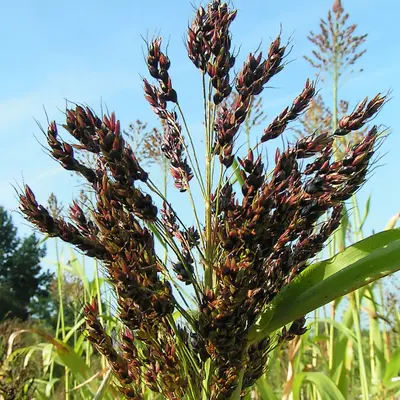
An appealing mix of brightly colored seed heads for an attractive fall display. Approx. 10 stems/plant. Plant every two weeks for a continuous harvest. Drought tolerant. Plants avg. 8-9' tall.
Harvest
85-110d
Days to harvest
Sun
Full sun
Zones
2–11
USDA hardiness
Height
2-3 feet
Planting Timeline
Showing dates for Mixed Broom Corn in USDA Zone 7
All Zone 7 corn →Zone Map
Click a state to update dates
Mixed Broom Corn · Zones 2–11
Growing Details
Succession Planting
Direct sow broom corn every 2–3 weeks from April through early June in zone 7, targeting soil temperatures of at least 60°F at planting depth. With an 85–110-day window to harvest, a June 1 sowing will push into October — workable, but that final planting needs to finish before your first frost date. Two or three successions is plenty; broom corn is grown for dried stalks and plumes, not continuous fresh eating, so staggering mainly spreads out your drying and bundling work rather than extending any harvest window.
Complete Growing Guide
Light: Full sun (6 or more hours of direct sunlight a day). Soil: Clay, Loam (Silt), Sand. Soil pH: Acid (<6.0), Neutral (6.0-8.0). Drainage: Moist, Occasionally Dry, Very Dry. Height: 2 ft. 0 in. - 3 ft. 0 in.. Spread: 2 ft. 0 in. - 3 ft. 0 in.. Spacing: 3 feet-6 feet. Growth rate: Rapid. Maintenance: High. Propagation: Seed. Regions: Coastal, Mountains, Piedmont.
Harvesting
Edible seeds ripen from September-October and vary in color from white through shades of red and brown to pale yellow to deep purple-brown.
Color: Gold/Yellow. Length: < 1 inch. Width: < 1 inch.
Garden value: Edible
Harvest time: Fall
Edibility: A grain that is used for human and livestock. It can be cooked like rice. It can also be ground into a flour. The grain from sorghum is gluten-free and is typically ground into a meal that is used for bread, porridge, and cakes. Processing the grain will help to dissipate its strong taste. It can also be used in the production of oils, starch, dextrose and even alcoholic drinks.
Storage & Preservation
After harvesting at 85–110 days, store freshly cut broom corn bundles in a cool, dry location between 50–60°F with humidity below 40% to prevent mold and maintain bristle flexibility. Keep bundles upright in a well-ventilated space, away from direct sunlight, which can fade color. Properly dried broom corn remains usable for 2–3 years when stored this way.
For long-term preservation, allow bundles to air-dry completely for 3–4 weeks before storage. Dried bristles can be bundled tightly and kept in sealed containers with desiccant packets. Freezing is unnecessary for broom corn, though seed can be extracted and stored cold (32–40°F) in airtight containers for planting next season.
A useful trick specific to broom corn: soak dried bristles briefly in warm water before use to restore pliability and prevent brittleness when shaping or tying into finished brooms.
History & Origin
Mixed Broom Corn is open-pollinated, meaning seed saved from healthy plants will produce true-to-type offspring. Listed in the Johnny's Selected Seeds catalog.
Origin: Africa
Advantages
- +Attracts: Songbirds
- +Edible: A grain that is used for human and livestock. It can be cooked like rice. It can also be ground into a flour. The grain from sorghum is gluten-free and is typically ground into a meal that is used for bread, porridge, and cakes. Processing the grain will help to dissipate its strong taste. It can also be used in the production of oils, starch, dextrose and even alcoholic drinks.
- +Fast-growing
Considerations
- -Toxic (Leaves, Stems): Low severity
- -High maintenance
Companion Plants
Beans and squash are the natural partners here — beans fix nitrogen that heavy-feeding broom corn pulls through its 85–110-day run, and squash's broad leaves shade out weeds at the base without competing for vertical space. Marigolds and nasturtiums near the perimeter add some pest confusion for aphids and cucumber beetles. Black walnut is the companion to avoid entirely; juglone leaches from its roots and hulls into surrounding soil and stunts most annuals planted within its drip zone. Fennel has documented allelopathic effects on nearby garden crops and should go in its own isolated bed, not next to broom corn.
Plant Together
Beans
Fixes nitrogen in soil that corn needs, while corn provides natural support for climbing beans
Squash
Large leaves provide ground cover that retains moisture and suppresses weeds around corn
Marigolds
Repels corn earworms, aphids, and other harmful insects while attracting beneficial predators
Nasturtiums
Acts as trap crop for aphids and cucumber beetles, protecting corn from pest damage
Sunflowers
Attracts beneficial insects and birds that control corn pests, similar growing requirements
Dill
Attracts parasitic wasps that control corn borers and other caterpillar pests
Cucumbers
Benefits from corn's wind protection while their different root depths reduce competition
Radishes
Helps break up compacted soil for corn roots and deters corn borers when planted nearby
Keep Apart
Black Walnut
Releases juglone toxin that severely stunts corn growth and can kill young plants
Tomatoes
Both are heavy feeders competing for nutrients, and corn can shade tomatoes reducing fruit production
Fennel
Allelopathic properties inhibit corn germination and growth through chemical compounds in soil
Nutrition Facts
Per 100g serving. % Daily Value based on 2,000 calorie diet. Source: USDA FoodData Central (FDC #168538)
Troubleshooting Mixed Broom Corn
What you'll see, why it happens, and what to do about it.
Galls or tumor-like growths on ears or stalks, with black powdery spores inside
Likely Causes
- Corn smut (Ustilago maydis) — a soil-borne fungus that enters through wounds or silk
- Mechanical damage from cultivation or hail that gives the fungus an entry point
What to Do
- 1.Remove galls before they rupture — bag them and put them in the trash, not the compost
- 2.Rotate broom corn out of that bed for at least 3 years; NC State's Plant Disease and Insect Clinic notes smut pressure builds in soil where corn returns repeatedly
- 3.Switch to drip irrigation during silking — wet silks are more susceptible to infection
Orange to reddish-brown pustules on leaf undersides, usually mid-season
Likely Causes
- Southern rust (Puccinia polysora) — airborne spores spread fast in warm, humid conditions above 80°F
- Dense planting under 18 inches that traps humidity between stalks
What to Do
- 1.Thin or space plants to the full 18–24 inches to improve air circulation
- 2.Strip and trash severely infected leaves if the plant is still 3+ weeks from harvest
- 3.For next season, site the planting where morning sun dries foliage quickly — NC State Extension's CDIN-002 on Southern rust in corn notes that drier canopies slow spore germination
Stalks wilting and collapsing at the soil line; white cottony growth with tan seed-like pellets visible near the base
Likely Causes
- Southern blight (Sclerotium rolfsii) — a fungal pathogen that thrives in hot, moist soil above 85°F
- Mulch piled directly against the stalk, holding moisture at the crown
What to Do
- 1.Pull and dispose of affected plants immediately — S. rolfsii sclerotia (those tan pellets) persist in soil for years
- 2.Keep mulch 2–3 inches back from the base of each stalk, not flush against it
- 3.Rotate this bed out of susceptible crops for 3–4 years; NC State Extension's VDIN-009 on Southern blight lists broad crop rotation as the primary cultural control
Frequently Asked Questions
How long does it take mixed broom corn to be ready for harvest?▼
Is broom corn good for beginners?▼
Can you grow broom corn in containers?▼
What should the spacing be between broom corn plants?▼
When should I plant mixed broom corn?▼
What are mixed broom corn seed heads used for?▼
Zone-by-Zone Planting Calendar
| Zone | Indoor Start | Transplant | Direct Sow | Harvest |
|---|---|---|---|---|
| Zone 3 | — | — | June – July | October – October |
| Zone 4 | — | — | June – July | October – October |
| Zone 5 | — | — | May – June | September – October |
| Zone 6 | — | — | May – June | September – October |
| Zone 7 | — | — | April – June | August – October |
| Zone 8 | — | — | April – May | August – September |
| Zone 9 | — | — | March – April | July – August |
| Zone 10 | — | — | February – April | June – August |
| Zone 1 | — | — | July – August | November – August |
| Zone 2 | — | — | June – August | October – September |
| Zone 11 | — | — | January – March | May – July |
| Zone 12 | — | — | January – March | May – July |
| Zone 13 | — | — | January – March | May – July |
Growing Guides from Wind River Greens
Sources & References
External authority sources used in compiling this guide.
- ExtensionNC State Extension
- BreederJohnny's Selected Seeds
- USDAUSDA FoodData Central
See the Methodology page for how this data is sourced, what's AI-assisted, and known limitations.