Double Click Bicolor Violet
Cosmos bipinnatus
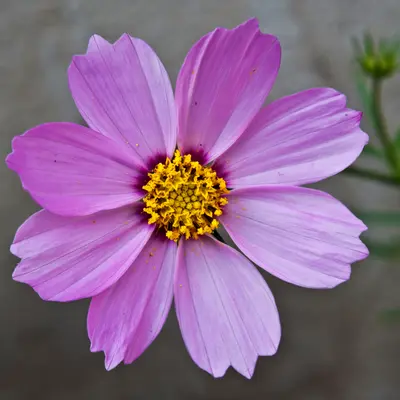
2-3" fully double and semidouble bicolor flowers on strong stems for cutting. Blooms vary in their proportion of purple to white, creating the pleasant effect of a bicolor mix. Flower colors range from eggplant-purple with a contrasting bright-white background to soft-and-creamy white with a blush of lavender.
Harvest
75-90d
Days to harvest
Sun
Full sun to partial shade
Zones
2–11
USDA hardiness
Height
2-4 feet
Planting Timeline
Showing dates for Double Click Bicolor Violet in USDA Zone 7
All Zone 7 flower →Zone Map
Click a state to update dates
Double Click Bicolor Violet · Zones 2–11
Growing Details
Succession Planting
Direct sow every 3 weeks from April through June in zone 7, and you'll have blooms from midsummer into first frost. Don't push past late June — germination drops off once soil temps consistently exceed 85°F, and seedlings started in peak summer heat tend to stall. The 75-90 days to first bloom means a mid-June sowing is about your last reliable shot at fall flowers before frost cuts things short.
Because Double Click Bicolor Violet is a cutting type, harvesting stems every 3-4 days extends the flush on each planting. If you let seed heads form, the plant winds down faster. Between regular harvesting and staggered sowings, a small 4-foot row can stay productive from late June through October without much fuss.
Complete Growing Guide
2-3" fully double and semidouble bicolor flowers on strong stems for cutting. Blooms vary in their proportion of purple to white, creating the pleasant effect of a bicolor mix. Flower colors range from eggplant-purple with a contrasting bright-white background to soft-and-creamy white with a blush of lavender. According to Johnny's Selected Seeds, Double Click Bicolor Violet is 75 - 90 days to maturity, annual, open pollinated. Notable features: Use for Cut Flowers and Bouquets.
Light: Full sun (6 or more hours of direct sunlight a day), Partial Shade (Direct sunlight only part of the day, 2-6 hours). Soil: Clay, Loam (Silt), Sand. Soil pH: Alkaline (>8.0), Neutral (6.0-8.0). Drainage: Good Drainage, Occasionally Dry. Height: 2 ft. 0 in. - 4 ft. 0 in.. Spread: 2 ft. 0 in. - 3 ft. 0 in.. Spacing: 12 inches-3 feet. Growth rate: Rapid. Maintenance: Low. Propagation: Seed. Regions: Coastal, Mountains, Piedmont.
Harvesting
Double Click Bicolor Violet reaches harvest at 75 - 90 days from sowing per Johnny's Selected Seeds. Expect 2-3" at peak. As an annual, harvest continues until frost ends the season.
Type: Capsule.
Storage & Preservation
Fresh-cut Double Click Bicolor Violet flowers keep best in a cool room (60-65°F) in a clean vase with commercial flower food and fresh water changed every 2-3 days. Remove lower foliage to prevent bacterial growth. Flowers typically maintain quality for 10-14 days with proper care.
To dry flowers for long-term use, harvest in the early morning and hang small bundles upside-down in a warm, dark, well-ventilated space (60-75°F) for 2-3 weeks. Dried blooms retain their striking bicolor tones and are suitable for dried arrangements and crafts. Alternatively, press individual flowers between parchment paper weighted with heavy books for 3-4 weeks to create flat specimens for scrapbooking or botanical art. Properly dried or pressed flowers store indefinitely in cool, dry conditions away from direct light.
History & Origin
Double Click Bicolor Violet is open-pollinated, meaning seed saved from healthy plants will produce true-to-type offspring. Listed in the Johnny's Selected Seeds catalog.
Origin: Mexico and southwest North America
Advantages
- +Fully double flowers create dramatic, full blooms perfect for cutting arrangements
- +Strong stems ideal for cut flowers and arranging without support needed
- +Beautiful bicolor color variation adds visual interest and pleasant natural mix
- +Relatively easy to grow making it accessible for beginner gardeners
- +Extended bloom period of 75-90 days provides long season of flowers
Considerations
- -Bicolor variation means less predictability in exact flower appearance and color
- -Double petals may trap moisture and increase susceptibility to fungal issues
- -Requires consistent deadheading to maintain prolific blooming throughout season
Companion Plants
Marigolds are the most useful neighbor here. French marigolds (Tagetes patula) emit thiophene compounds from their roots that suppress root-knot nematodes, and their scent above ground disorients aphids looking for a landing spot. Planted 12 inches out from your cosmos, they do actual work — not just fill space. Sweet Alyssum pulls a different lever: the tiny flowers run almost continuously and are among the better attractors of parasitic wasps and hoverflies, both of which hunt the aphids that like to cluster on cosmos buds. Nasturtiums are worth adding as a deliberate trap crop — aphids will preferentially colonize the nasturtium leaves, pulling pressure away from the cosmos. That's either a sacrifice play or a bonus harvest depending on whether you eat nasturtium leaves (you can, and they're peppery).
Zinnias and cleome make decent row companions mostly because they share similar water and sun requirements — no deep chemical interaction, just compatible growth habits that don't create a fight for resources at the 12-18 inch spacing cosmos prefer. Sunflowers are worth placing on the north side of a planting specifically: they attract predatory insects and offer a slight windbreak for taller cosmos stems without casting shade on the flowers below.
Black walnut trees are a hard no. Juglone — the allelopathic compound black walnuts release through their root systems — is toxic to a wide range of annuals, and cosmos are sensitive to it. NC State Extension puts the affected zone at up to 60 feet from the trunk, so "near the walnut" means farther than you probably think. Dense ground covers and aggressive spreaders are a problem for a different reason entirely: cosmos seedlings establish slowly, and anything that carpets the soil will outcompete them before they hit 6 inches tall.
Plant Together
Marigolds
Repel aphids, whiteflies, and nematodes while attracting beneficial insects
Sweet Alyssum
Attracts beneficial insects like hoverflies and provides ground cover
Nasturtiums
Act as trap crops for aphids and cucumber beetles, protecting the cosmos
Zinnias
Share similar growing conditions and attract pollinators and beneficial predatory insects
Cleome
Compatible height and bloom time, attracts butterflies and hummingbirds
Salvia
Complementary colors and attracts pollinators while deterring some pests
Celosia
Similar sun and water requirements, provides contrasting texture and attracts beneficial insects
Sunflowers
Provide beneficial shade and wind protection, attract pollinators
Keep Apart
Black Walnut Trees
Release juglone toxin that inhibits growth of cosmos and most flowers
Dense Shade Plants
Compete for light as cosmos require full sun for optimal blooming
Aggressive Ground Covers
Compete aggressively for nutrients and water, can overwhelm cosmos roots
Troubleshooting Double Click Bicolor Violet
What you'll see, why it happens, and what to do about it.
Powdery white coating on leaves and stems, usually showing up mid-summer when nights cool down
Likely Causes
- Powdery mildew (Erysiphe cichoracearum) — fungal, thrives when warm days meet cool humid nights
- Poor airflow from crowded spacing under 12 inches
What to Do
- 1.Thin plants to at least 12-18 inches apart so air can move through
- 2.Spray affected foliage with a diluted solution of 1 tablespoon baking soda per gallon of water — it won't cure advanced cases but slows spread
- 3.Cut and bin (don't compost) any heavily coated stems; cosmos are prolific enough that a hard cutback often produces clean new growth
Spindly, flopping stems with sparse flowers, even in a sunny bed
Likely Causes
- Overfertilization with nitrogen — cosmos on rich soil put energy into foliage, not blooms
- Insufficient light; cosmos need 6+ hours of direct sun for best stem strength
What to Do
- 1.Stop any fertilizing entirely — cosmos genuinely prefer lean, low-nitrogen soil
- 2.Pinch the main stem once at 12 inches tall to encourage branching and shorter, sturdier growth
- 3.If the bed gets less than 5 hours of direct sun, move next year's sowing to a better-lit spot
Dense aphid clusters on new buds and growing tips, appearing suddenly during warm dry stretches
Likely Causes
- Aphid (Aphis gossypii or Macrosiphum euphorbiae) infestations — cosmos attract both species
- Absence of beneficial insects, often from nearby pesticide use
What to Do
- 1.Knock aphids off with a firm stream of water from a hose — do it three mornings in a row for best results
- 2.Plant Sweet Alyssum within 18 inches of your cosmos to draw in parasitic wasps and hoverflies that prey on aphids
- 3.If the infestation is heavy, apply insecticidal soap directly to the clusters; avoid spraying open flowers
Frequently Asked Questions
How long does Double Click Bicolor Violet take to grow from seed to first flowers?▼
Is Double Click Bicolor Violet good for beginners?▼
Can you grow Double Click Bicolor Violet in containers?▼
Why are my Double Click Bicolor Violet flowers drooping after I cut them?▼
What does 'bicolor' mean in Double Click Bicolor Violet, and why does each flower look different?▼
When should I plant Double Click Bicolor Violet, and what are my climate limits?▼
Zone-by-Zone Planting Calendar
| Zone | Indoor Start | Transplant | Direct Sow | Harvest |
|---|---|---|---|---|
| Zone 1 | May – June | July – August | July – September | — |
| Zone 2 | April – May | June – July | June – August | — |
| Zone 11 | January – January | January – February | January – March | — |
| Zone 12 | January – January | January – February | January – March | — |
| Zone 13 | January – January | January – February | January – March | — |
| Zone 3 | April – May | June – July | June – August | — |
| Zone 4 | March – April | June – June | June – July | — |
| Zone 5 | March – April | May – June | May – July | — |
| Zone 6 | March – April | May – June | May – July | — |
| Zone 7 | February – March | April – May | April – June | — |
| Zone 8 | February – March | April – May | April – June | — |
| Zone 9 | January – February | March – April | March – May | — |
| Zone 10 | January – January | February – March | February – April | — |
Growing Guides from Wind River Greens
Sources & References
External authority sources used in compiling this guide.
- BreederJohnny's Selected Seeds
See the Methodology page for how this data is sourced, what's AI-assisted, and known limitations.