Velvet Curtains
Amaranthus caudatus
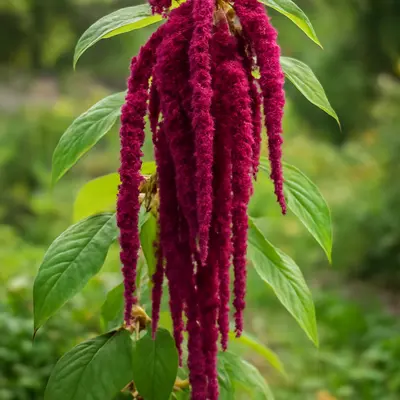
Feathery plumes are slightly lighter in color when compared to Red Spike. Lovely color and form for late summer and fall arrangements. When plants are young and leaves are tender, the foliage makes a nice edible green. Also known simply as amaranth.
Harvest
65-75d
Days to harvest
Sun
Full sun to partial shade
Zones
2–11
USDA hardiness
Height
3-5 feet
Planting Timeline
Showing dates for Velvet Curtains in USDA Zone 7
All Zone 7 flower →Zone Map
Click a state to update dates
Velvet Curtains · Zones 2–11
Growing Details
Succession Planting
Velvet Curtains produces its long drooping tassels continuously once it matures, without needing to be cut back and resown on a cycle. One planting carries through from midsummer to first frost. Start seeds indoors 6-8 weeks before your last frost date, or direct sow once soil temps reach 60°F — that single sowing is all you need.
Complete Growing Guide
Feathery plumes are slightly lighter in color when compared to Red Spike. Lovely color and form for late summer and fall arrangements. When plants are young and leaves are tender, the foliage makes a nice edible green. Also known simply as amaranth. According to Johnny's Selected Seeds, Velvet Curtains is 65 - 75 days to maturity, annual, open pollinated. Notable features: Use for Cut Flowers and Bouquets, Ideal for Drying and Crafts.
Light: Full sun (6 or more hours of direct sunlight a day), Partial Shade (Direct sunlight only part of the day, 2-6 hours). Drainage: Good Drainage. Height: 3 ft. 0 in. - 5 ft. 0 in.. Spread: 1 ft. 0 in. - 2 ft. 0 in.. Spacing: 12 inches-3 feet. Growth rate: Medium. Maintenance: Low. Propagation: Seed.
Harvesting
Velvet Curtains reaches harvest at 65 - 75 days from sowing per Johnny's Selected Seeds. As an annual, harvest continues until frost ends the season.
Type: Achene.
Edibility: Seeds, leaves
Storage & Preservation
For fresh flowers, store Velvet Curtains upright in a vase with room-temperature water away from direct sunlight and ripening fruit, which should last 7-10 days. Young foliage can be refrigerated in a sealed plastic bag for 3-5 days. For preservation, dry the flower plumes by hanging upside-down in a warm, well-ventilated space (yields long-lasting arrangements lasting months), freeze the tender young leaves in ice cube trays with water, or press the foliage between parchment paper under books for botanical crafting.
History & Origin
Velvet Curtains is open-pollinated, meaning seed saved from healthy plants will produce true-to-type offspring. Listed in the Johnny's Selected Seeds catalog.
Origin: Ecuador to NW. Argentina
Advantages
- +Feathery plumes lighter than Red Spike variety offer unique visual appeal
- +Excellent for late summer and fall flower arrangements and displays
- +Young tender foliage is edible and nutritious as a green
- +Fast growing with only 65-75 days from seed to maturity
- +Easy to grow making it ideal for beginning gardeners
Considerations
- -Tall plants may require staking or support in windy conditions
- -Seeds can self-sow prolifically potentially becoming weedy in gardens
- -Prefers warm soil and struggles in cool or wet climates
Companion Plants
Marigolds and Nasturtiums pull their weight near Velvet Curtains for different reasons. French marigolds (Tagetes patula) produce alpha-terthienyl in their roots, a compound toxic to soil nematodes in the top 6-8 inches — useful if you're rotating through beds that previously grew root-sensitive crops. Nasturtiums work above ground as a trap crop: aphids, including Aphis fabae, will colonize nasturtium stems before they reach the amaranth's tassels, buying you time to spot and deal with the problem. Sweet Alyssum draws in hoverflies and parasitic wasps that cut through the same aphid and mite populations that bother this plant. Cosmos and Zinnia work simply because they share similar heat tolerance and water needs without crowding the root zone — no chemistry, just compatible neighbors.
Black Walnut (Juglans nigra) is a hard stop. The juglone it releases through root decay and leaf litter is potent enough to stunt or kill many annuals, and amaranth is sensitive to it. Eucalyptus leaf litter carries cineole-based oils with similar suppressive effects. Fennel gets its own category — it's broadly allelopathic across most garden plants and will undercut neighbors growing within about 3 feet of its base.
Plant Together
Marigolds
Repel nematodes and aphids while attracting beneficial insects
Lavender
Deters pests with aromatic oils and attracts pollinators
Nasturtiums
Act as trap crops for aphids and cucumber beetles
Sweet Alyssum
Attracts beneficial insects like lacewings and parasitic wasps
Petunias
Repel aphids, tomato hornworms, and squash bugs
Cosmos
Attract beneficial pollinators and predatory insects
Zinnia
Attract butterflies and beneficial insects while providing color contrast
Catmint
Repels ants, aphids, and mosquitoes with natural compounds
Keep Apart
Black Walnut
Produces juglone which inhibits growth of many flowering plants
Eucalyptus
Releases allelopathic compounds that suppress nearby plant growth
Fennel
Inhibits growth of most garden plants through allelopathic root secretions
Troubleshooting Velvet Curtains
What you'll see, why it happens, and what to do about it.
Seedlings collapse at soil level, stems pinched and brown right where they meet the dirt
Likely Causes
- Damping off (Pythium or Rhizoctonia spp.) — fungal rot triggered by cold, wet, poorly drained seed-starting mix
- Overwatering combined with low airflow around seedlings
What to Do
- 1.Toss the affected tray — there's no saving collapsed seedlings
- 2.Start fresh in a sterile, well-draining seed-starting mix; don't reuse old trays without sanitizing them first
- 3.Water from the bottom and run a small fan nearby to keep surface moisture down
Leaves stippled with tiny pale dots, undersides look dusty or faintly webbed in dry weather
Likely Causes
- Two-spotted spider mite (Tetranychus urticae) — thrives when temperatures exceed 85°F and humidity drops
- Plants that were drought-stressed before mites arrived are hit harder
What to Do
- 1.Blast the undersides of leaves with a firm stream of water every 2-3 days to knock mites off
- 2.Apply insecticidal soap or neem oil in the early morning so it contacts the mites before it evaporates — repeat every 5-7 days for 3 applications
- 3.Keep plants consistently watered; stressed plants draw mites faster than healthy ones
Lower leaves develop irregular tan or brown patches with no distinct border, starting mid-season
Likely Causes
- Cercospora leaf spot (Cercospora spp.) — a fungal disease that splashes up from soil during rain or overhead watering
- Dense planting under 12 inches apart that restricts airflow between stems
What to Do
- 1.Remove and trash (don't compost) affected leaves as soon as you notice them
- 2.Switch to drip irrigation or water at the base — keep foliage dry
- 3.Space plants at least 12-18 inches apart next season; this variety hits 3-5 feet tall and needs the room to breathe
Stems and flower tassels covered in black or green clusters of soft-bodied insects by midsummer
Likely Causes
- Aphids (commonly green peach aphid, Myzus persicae, or black bean aphid, Aphis fabae) — they pile onto tender growing tips first
- Ant activity nearby, which often signals ants are actively tending the colony for honeydew
What to Do
- 1.Knock aphids off with a strong water spray; for heavy infestations, follow up with insecticidal soap directly on the clusters
- 2.Find the ant trails and disrupt them — if ants are running protection, spraying the aphids alone won't hold
- 3.Interplant Sweet Alyssum within a few feet to draw in parasitic wasps that work through aphid populations on their own
Frequently Asked Questions
How long do Velvet Curtains flowers last in a vase?▼
Can you grow Velvet Curtains amaranth in containers?▼
Is Velvet Curtains amaranth good for beginner gardeners?▼
When should I plant Velvet Curtains for late summer and fall color?▼
Can young Velvet Curtains foliage really be eaten?▼
How does Velvet Curtains compare to Red Spike amaranth?▼
Zone-by-Zone Planting Calendar
| Zone | Indoor Start | Transplant | Direct Sow | Harvest |
|---|---|---|---|---|
| Zone 3 | April – May | June – July | June – August | — |
| Zone 4 | March – April | June – June | June – July | — |
| Zone 5 | March – April | May – June | May – July | — |
| Zone 6 | March – April | May – June | May – July | — |
| Zone 7 | February – March | April – May | April – June | — |
| Zone 8 | February – March | April – May | April – June | — |
| Zone 9 | January – February | March – April | March – May | — |
| Zone 10 | January – January | February – March | February – April | — |
| Zone 1 | May – June | July – August | July – September | — |
| Zone 2 | April – May | June – July | June – August | — |
| Zone 11 | January – January | January – February | January – March | — |
| Zone 12 | January – January | January – February | January – March | — |
| Zone 13 | January – January | January – February | January – March | — |
Growing Guides from Wind River Greens
Sources & References
External authority sources used in compiling this guide.
- BreederJohnny's Selected Seeds
See the Methodology page for how this data is sourced, what's AI-assisted, and known limitations.