Red Sails
Lactuca sativa
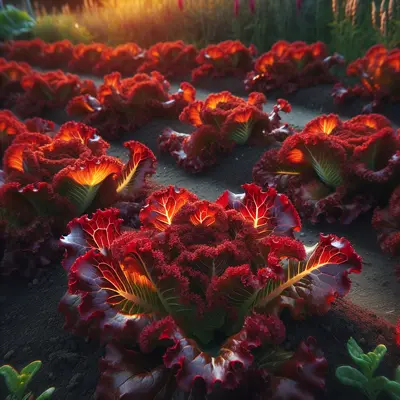
Attractive, ruffled, fringed leaves of deep burgundy red over green. AAS Winner. MT0-30.
Harvest
45-55d
Days to harvest
Sun
Full sun to partial shade
Zones
2–11
USDA hardiness
Height
6-12 inches
Planting Timeline
Showing dates for Red Sails in USDA Zone 7
All Zone 7 lettuce →Zone Map
Click a state to update dates
Red Sails · Zones 2–11
Growing Details
Succession Planting
Direct sow Red Sails every 14 days starting around March 1 in zone 7, and keep going through mid-May. Once daytime highs are consistently hitting 80-85°F, the plants bolt fast — leaves turn bitter and the whole thing goes to seed within a week. Pick up again with a late August sowing for a fall run; lettuce germinates best when soil temps sit between 40-75°F, so if August soil feels too warm, pre-chill the seed in a damp paper towel in the fridge for 24-48 hours before sowing.
For the fall run, work backward from your first frost date — Red Sails needs 45-55 days to harvest, so a September 1 sow in zone 7 gives you October heads well before a typical mid-November frost. Two or three short rows staggered two weeks apart will keep you in cut leaves without a glut.
Complete Growing Guide
Red Sails is best started from direct sowing in your garden beds rather than indoor transplanting, as lettuce seedlings are fragile and transplanting can stress them unnecessarily. Sow seeds directly into the soil about two weeks before your last spring frost date, as Red Sails germinates reliably in cool conditions and the young plants actually tolerate light frosts well. For fall crops, sow seeds eight to ten weeks before your first expected frost to allow the full 45 to 55 days to maturity. You can also succession plant every two to three weeks throughout spring and fall for continuous harvests, which is particularly rewarding with such an attractive variety.
Prepare your planting bed with rich, well-draining soil amended with compost before sowing. Red Sails prefers loose, fertile soil that retains moisture without becoming waterlogged. Sow seeds directly into the prepared bed, pressing them lightly into the soil surface—lettuce seeds need light to germinate, so cover them only minimally with a fine layer of soil or compost. Thin seedlings to six to eight inches apart once they develop their first true leaves, as Red Sails grows to six to twelve inches and needs adequate spacing for those attractive ruffled leaves to fully develop.
Water consistently and gently throughout the growing season, aiming for one to one and a half inches per week. Red Sails prefers evenly moist soil, but this variety is particularly susceptible to lettuce drop in excessively wet conditions, so avoid overhead watering and don't let the soil become soggy. Feed with a balanced, mild fertilizer every two to three weeks if your soil is not particularly rich, though Red Sails isn't a heavy feeder. Lettuce grown in well-amended soil often needs no supplemental feeding at all.
Watch closely for flea beetles, which can riddle the tender leaves with tiny holes, making this beautiful variety less appealing on the plate. Row covers over young plants provide excellent protection. Aphids may also congregate on the undersides of leaves, and slugs are attracted to the moist conditions lettuce prefers—hand-pick slugs and use organic pest management for aphids. Downy mildew and tipburn can occur in wet conditions or when calcium is lacking, making good drainage and consistent watering practices essential.
The most common mistake gardeners make with Red Sails is overcrowding the plants. This variety's stunning ruffled foliage needs adequate air circulation and space to fully express itself. Thin seedlings generously rather than leaving them crowded, even though it feels wasteful at the time—properly spaced plants will reward you with superior flavor and those deep burgundy leaves that make Red Sails an All-America Selections winner.
Harvesting
Red Sails reaches harvest at 30 baby; 55 full size from sowing per Johnny's Selected Seeds. As an annual, harvest continues until frost ends the season.
Tiny seeds with a dandelion-like tuft (pappus) to aid in wind dispersal.
Color: Brown/Copper. Type: Achene. Length: < 1 inch. Width: < 1 inch.
Harvest time: Summer
Edibility: Leaves can be used raw or cooked in salads, sandwiches, and other dishes. Head lettuce can be stored for 2-3 weeks while leaf and butterhead store for 1-2 weeks.
Storage & Preservation
Fresh Red Sails lettuce stores best when harvested dry and immediately refrigerated. Gently wash leaves in cold water, spin dry thoroughly, and store in perforated plastic bags or containers lined with paper towels. Properly stored, it maintains quality for 7-10 days in the refrigerator at 32-36°F.
For longer preservation, Red Sails works excellently in mesclun freeze-drying blends or can be dehydrated for winter salad seasonings. The colorful leaves retain much of their burgundy hue when properly dried at 95°F until crisp. While freezing destroys the crisp texture, frozen Red Sails can be used in smoothies or cooked dishes. Consider lacto-fermenting whole small heads as you would cabbage for a unique, tangy addition to winter meals. The variety's mild flavor profile makes it particularly suitable for quick pickling in rice vinegar for Asian-inspired dishes.
History & Origin
Red Sails is open-pollinated, meaning seed saved from healthy plants will produce true-to-type offspring. Listed in the Johnny's Selected Seeds catalog.
Origin: Mediterranean to Siberia
Advantages
- +Stunning deep burgundy leaves add visual appeal to salads and garden beds
- +AAS award-winning variety proves excellent taste and growing performance
- +Quick 45-55 day maturity allows multiple successive plantings per season
- +Mild, sweet flavor with tender texture appeals to most palates
Considerations
- -Susceptible to tipburn in inconsistent watering or high calcium soils
- -Fringed leaves trap moisture and create spots for fungal diseases
- -Vulnerable to multiple pests including aphids, flea beetles, and leafminers
- -Requires careful drainage to prevent lettuce drop in wet conditions
Companion Plants
Radishes are probably the most practical neighbor for Red Sails in a tight bed. They germinate in 5-7 days, mark the row while the lettuce fills in, and their pungent oils help confuse flea beetles — which will pepper lettuce leaves with tiny shot holes if populations build unchecked. Chives and garlic operate on a similar principle: the sulfur compounds they release are genuinely off-putting to aphids, which are the other pest you'll be pulling off lettuce all spring. In our zone 7 Georgia gardens, aphid pressure picks up fast once March temperatures climb past 60°F, so having chives already established along the bed edge before you sow pays off.
Fennel is the one to plant elsewhere entirely — it releases allelopathic compounds from its roots that stunt most vegetables, and lettuce is no exception. Broccoli competes for the same shallow moisture zone (the top 6-8 inches of soil) and casts dense shade once it heads up, which matters because Red Sails actually tolerates partial shade fine on its own terms — it doesn't need a brassica neighbor helping that along.
Plant Together
Chives
Repels aphids and improves lettuce growth and flavor
Carrots
Loose soil from carrot roots helps lettuce root development
Radishes
Fast-growing radishes break up soil and don't compete for space
Marigolds
Repel nematodes and aphids while attracting beneficial insects
Spinach
Similar growing requirements and can be succession planted together
Garlic
Deters aphids, slugs, and other pests that damage lettuce
Nasturtiums
Act as trap crop for aphids and cucumber beetles
Parsley
Attracts beneficial insects and doesn't compete for nutrients
Keep Apart
Broccoli
Competes for similar nutrients and can shade out lettuce
Sunflowers
Allelopathic effects inhibit lettuce germination and growth
Fennel
Inhibits growth of most garden plants through allelopathy
Nutrition Facts
Per 100g serving. % Daily Value based on 2,000 calorie diet. Source: USDA FoodData Central (FDC #2346388)
Pests & Disease Resistance
Resistance
Excellent heat tolerance and bolt resistance, moderate disease resistance
Common Pests
Aphids, flea beetles, slugs, leafminers
Diseases
Downy mildew, tipburn, lettuce drop in wet conditions
Troubleshooting Red Sails
What you'll see, why it happens, and what to do about it.
Seedlings collapse at the soil line within the first 7-10 days after transplanting or germination, sometimes with fuzzy white mold on the soil surface nearby
Likely Causes
- Damping off — a complex of soil-borne fungi (Pythium, Rhizoctonia) that attack stems at or below the soil line
- Overwatering or poorly draining soil that keeps the root zone saturated
What to Do
- 1.Pull and discard the collapsed seedlings; don't compost them
- 2.Let the bed surface dry out slightly between waterings — Red Sails wants 1 inch per week, not constant wet
- 3.Next season, start fresh seed in a sterile germination mix and avoid reusing bed soil that's had repeated lettuce failures; NC State's IPM guidance recommends sending a sample to a diagnostic lab if the problem recurs to nail down the exact pathogen
Grayish-purple fuzzy coating on the undersides of outer leaves, with pale yellow patches on the upper surface, most visible in cool damp weather
Likely Causes
- Downy mildew (Bremia lactucae) — spreads fastest when nights are cool (50-65°F) and leaves stay wet
- Dense planting that traps humidity around the foliage
What to Do
- 1.Strip and trash the affected leaves immediately; don't let them sit on the soil
- 2.Thin plants to at least 6-8 inches apart — airflow does more work here than any spray
- 3.Water at the base, not overhead, and water in the morning so foliage dries before nightfall
Frequently Asked Questions
How long does Red Sails lettuce take to grow?▼
Can you grow Red Sails lettuce in containers?▼
What does Red Sails lettuce taste like?▼
When should I plant Red Sails lettuce?▼
Is Red Sails lettuce good for beginners?▼
Why are my Red Sails lettuce leaves not turning red?▼
Zone-by-Zone Planting Calendar
| Zone | Indoor Start | Transplant | Direct Sow | Harvest |
|---|---|---|---|---|
| Zone 3 | — | — | May – June | June – October |
| Zone 4 | — | — | April – June | June – October |
| Zone 5 | — | — | April – May | June – November |
| Zone 6 | — | — | April – May | May – November |
| Zone 7 | — | — | March – May | May – November |
| Zone 8 | — | — | March – April | April – December |
| Zone 9 | — | — | February – March | March – December |
| Zone 10 | — | — | January – March | March – December |
| Zone 1 | — | — | June – July | July – September |
| Zone 2 | — | — | May – July | July – September |
| Zone 11 | — | — | January – February | February – December |
| Zone 12 | — | — | January – February | February – December |
| Zone 13 | — | — | January – February | February – December |
Growing Guides from Wind River Greens
Sources & References
External authority sources used in compiling this guide.
- BreederJohnny's Selected Seeds
- USDAUSDA FoodData Central
See the Methodology page for how this data is sourced, what's AI-assisted, and known limitations.