Amaranth, Glitter Mix
Amaranthus spp.
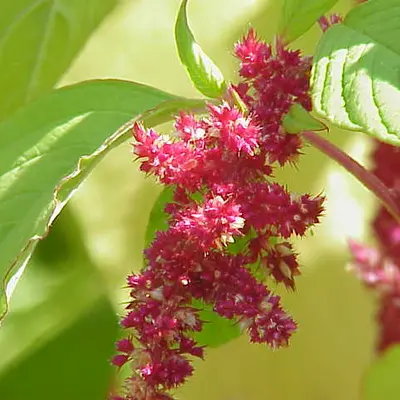
A beautiful combination of delicate leaves featuring glowing pink and purple stems and leaves blended with a range of copper, orange, and green tones. Even maturity and mild, earthy flavor. Varieties are subject to change depending upon availability.
Harvest
16-25d
Days to harvest
Sun
Indoor
Zones
2–11
USDA hardiness
Height
1 ft. 6 in. - 5 ft. 0 in.
Planting Timeline
Showing dates for Amaranth, Glitter Mix in USDA Zone 7
All Zone 7 microgreen →Zone Map
Click a state to update dates
Amaranth, Glitter Mix · Zones 2–11
Growing Details
Succession Planting
With a 16-25 day harvest window and a January-to-December indoor season, Glitter Mix amaranth is one of the easier crops to keep in rotation. Stagger two or three trays 7-10 days apart and you'll have a steady supply without a glut. A three-tray cycle — one just seeded, one under the dome, one a few days from harvest — covers most household or small CSA needs without much math involved.
The main reason to pause a succession isn't the calendar; it's your own throughput. Amaranth microgreens hold in the fridge for about 5-7 days post-harvest, so don't drop a new tray if you still have a full clamshell sitting there. Match your cadence to how fast you're actually moving product, not to an arbitrary weekly schedule.
Complete Growing Guide
Amaranth Glitter Mix microgreens are an indoor growing project perfect for beginners. Start by preparing a shallow tray—a standard microgreen flat or repurposed container works well. Line it with a thin layer of coco coir, peat moss, or specialized microgreen mix. You don't need traditional soil; microgreens derive energy from the seed's cotyledon, so a lightweight medium that retains moisture is ideal.
Soak your Amaranth Glitter Mix seeds for 30 minutes to 2 hours before sowing to improve germination rates. Spread seeds densely across the moistened growing medium—aim for near-complete coverage without excessive overlapping. Mist the seeds gently with water to ensure good contact with the medium. This variety doesn't require light during the germination phase, so cover the tray with a humidity dome or dark cloth for the first 3-5 days to maintain moisture.
After the first week, remove the cover and place trays under grow lights or near a bright window indoors. Maintain consistent moisture—the medium should be damp but never waterlogged, as this invites mold or rot. Indoor growing eliminates pest and disease pressure, making this an excellent beginner option. A common mistake is overwatering or allowing the medium to dry out completely; check moisture daily.
Provide 12-16 hours of light daily if using grow lights, positioned 2-4 inches above the seedlings. Amaranth microgreens thrive in temperatures between 65-75°F. No fertilizing is necessary for microgreens since they're harvested before developing true leaves. Ensure good air circulation with a small fan to prevent mold and strengthen stems.
Yield is excellent with proper spacing and moisture management. A standard 10x20 inch tray typically produces 1-2 ounces of finished microgreens. Avoid crowding or inconsistent watering—both reduce quality and yields. Most growers see success on their first attempt with this hardy variety.
Harvesting
Harvest Amaranth Glitter Mix microgreens at 16-25 days, when plants reach 2-3 inches tall and display their signature pink, purple, copper, and orange stem coloration. Visual cues for readiness include fully expanded cotyledons (seed leaves), visible stem color variation, and a densely packed canopy. The stems should feel firm and leaves tender, not brittle.
Use clean scissors or a sharp knife to cut the microgreens just above the soil surface. Harvest in the morning after any surface moisture has dried—this minimizes mold risk and preserves the delicate leaves. Cut bunches cleanly in one motion rather than plucking, which can disturb the root mat and cause contamination.
Rinse harvested microgreens gently in cool water and pat dry with paper towels or spin in a salad spinner. Avoid soaking, as excessive moisture shortens shelf life. Store in an airtight container lined with paper towels in the refrigerator for up to 7-10 days. This variety's tender leaves are best consumed fresh within 3-5 days of harvest for optimal flavor and nutrition.
Storage & Preservation
Amaranth Glitter Mix microgreens are best stored in a breathable container lined with paper towel to absorb excess moisture, kept at 32–40°F in high humidity (90–95%). Expect a fresh shelf life of 7–10 days when properly refrigerated. For longer preservation, freezing works well: blanch briefly, cool in ice water, dry thoroughly, then pack in freezer bags for up to three months. Alternatively, dry the microgreens in a low-temperature dehydrator (95–115°F) until brittle, then store in an airtight container for several months. The jewel-toned stems retain their striking color best when blanched before freezing, making them visually appealing in winter dishes. Avoid washing until just before use, as moisture accelerates deterioration.
History & Origin
Amaranth microgreens, including modern cultivars like Glitter Mix, stem from amaranth plants native to Central and South America. Amaranth species (Amaranthus cruentus, A. hypochondriacus, and A. caudatus) were sacred to pre-Columbian civilizations like the Aztecs, who valued them as staple crops. The plant was suppressed during Spanish colonization but has experienced a resurgence in recent decades due to growing interest in ancient grains and nutrient-dense foods.
Glitter Mix is a contemporary microgreen blend, likely developed within the past 10-15 years as the microgreens industry expanded globally. This variety combines multiple Amaranth cultivars selected for visual appeal—the striking pink, purple, copper, and orange coloration—alongside reliable germination and mild flavor. Modern seed companies have refined these blends for commercial microgreen production, emphasizing uniform maturity and aesthetic presentation. While not a formally registered heirloom, Glitter Mix represents the democratization of rare amaranth genetic diversity for home and small-scale growers, maintaining nutritional and cultural ties to its Mesoamerican heritage.
Companion Plants
For microgreens grown indoors, "companion planting" is less about field-row strategy and more about what shares a rack or germination shelf without friction. Lettuce, spinach, arugula, kale, and mustard greens sit comfortably next to Glitter Mix amaranth because they want nearly the same thing: consistent moisture, a 14-16 hour light window, and a harvest date that lands within a few days of each other. Radish and pea shoots fit the same mold. In our zone 7 Georgia garden we run mixed microgreen racks straight through the winter, cycling these varieties together without any scheduling headaches.
Sunflower microgreens are the main mismatch. They need a weighted blackout period for the first 3-4 days and a much heavier seed load per tray — neither of which lines up with amaranth's light-dependent germination and fine seed rate. Tomato starts germinating nearby can introduce Pythium pressure if their trays are kept wetter than microgreen trays prefer, and black walnut releases juglone through its root system and hull debris, which suppresses Amaranthus spp. seedlings even at low concentrations. Both are worth keeping out of the microgreen area entirely.
Plant Together
Lettuce
Similar growing conditions and harvest timing, provides ground cover
Spinach
Compatible nutrient needs and growth habits for mixed microgreen trays
Radish
Fast germination helps break soil crust and creates space for amaranth seedlings
Arugula
Similar harvest window and growing requirements for efficient succession planting
Pea Shoots
Nitrogen fixation improves soil for amaranth growth
Cilantro
Attracts beneficial insects and has similar moisture requirements
Kale
Compatible spacing and can be interplanted without competition
Mustard Greens
Natural pest deterrent properties protect amaranth from flea beetles
Keep Apart
Sunflower
Allelopathic compounds inhibit amaranth seed germination and early growth
Tomato
Produces solanine compounds that can stunt amaranth growth
Black Walnut
Juglone toxicity severely inhibits amaranth germination and development
Nutrition Facts
Per 100g serving. % Daily Value based on 2,000 calorie diet. Source: USDA FoodData Central (FDC #167782)
Troubleshooting Amaranth, Glitter Mix
What you'll see, why it happens, and what to do about it.
Seeds germinate unevenly or not at all by day 5, with bare patches across the tray
Likely Causes
- Amaranth seed is tiny and needs light to germinate — covering it too deeply blocks germination
- Tray surface drying out between waterings, killing the radicle before it anchors
What to Do
- 1.Press seed onto the surface of your medium and mist; don't bury it more than 1/8 inch
- 2.Cover the tray with a humidity dome for the first 3-4 days to hold moisture consistently
- 3.Bottom-water once seedlings emerge rather than misting from above
Pale, washed-out, or white seedlings at day 8-10 that never develop the deep magenta or red color Glitter Mix is known for
Likely Causes
- Insufficient light — Amaranthus spp. needs strong light to trigger anthocyanin pigment production
- Harvesting too early before color has fully developed
What to Do
- 1.Move trays to within 2-3 inches of a full-spectrum LED grow light running 14-16 hours per day
- 2.Wait until day 16-18 minimum; the red and magenta tones intensify in the final few days before harvest
- 3.A south-facing windowsill alone won't cut it — even a bright room rarely delivers enough intensity for good pigment
Fuzzy white or gray growth at the base of stems, right at the soil line, around day 7-10
Likely Causes
- Damping-off caused by Pythium or Rhizoctonia spp. — triggered by overwatering and poor airflow
- Reusing unwashed trays that carry fungal spores from a previous grow
What to Do
- 1.Reduce watering frequency; squeeze a handful of medium and it should barely drip — if water streams out freely, you're overwatering
- 2.Run a small fan near your trays on low to move air around the canopy
- 3.Sanitize trays between grows with a 10% bleach solution (1 part bleach to 9 parts water), rinse well, and dry completely before reuse
Seedlings toppling over and lying flat by day 6-8, stems thin and spindly
Likely Causes
- Etiolation from insufficient light — stems stretch toward the source and can't support their own weight
- Damping-off (Pythium spp.) pinching the stem at the soil line — sometimes mistaken for a light problem
- Sowing too densely, which traps moisture and starves lower stems of airflow
What to Do
- 1.Check the stem base first: a brown, pinched collar means damping-off — toss the tray and sanitize; a pale, elongated stem with no collapse at the base is a light problem
- 2.For light-related stretch, drop your grow light to 2 inches above the canopy or extend the photoperiod to 16 hours
- 3.Sow at roughly 1 oz of seed per 10x20 tray — Glitter Mix seed is fine enough that it's easy to put down twice what you need without noticing
Frequently Asked Questions
How long does it take to grow Amaranth Glitter Mix microgreens from seed to harvest?▼
Is Amaranth Glitter Mix good for beginner microgreen growers?▼
What does Amaranth Glitter Mix taste like, and how do you use it?▼
Can you grow Amaranth Glitter Mix in small containers or on windowsills?▼
What are the main reasons Amaranth Glitter Mix crops fail?▼
How do you store harvested Amaranth Glitter Mix microgreens?▼
Zone-by-Zone Planting Calendar
| Zone | Indoor Start | Transplant | Direct Sow | Harvest |
|---|---|---|---|---|
| Zone 3 | January – December | — | — | January – December |
| Zone 4 | January – December | — | — | January – December |
| Zone 5 | January – December | — | — | January – December |
| Zone 6 | January – December | — | — | January – December |
| Zone 7 | January – December | — | — | January – December |
| Zone 8 | January – December | — | — | January – December |
| Zone 9 | January – December | — | — | January – December |
| Zone 10 | January – December | — | — | January – December |
| Zone 1 | January – December | — | — | January – December |
| Zone 2 | January – December | — | — | January – December |
| Zone 11 | January – December | — | — | January – December |
| Zone 12 | January – December | — | — | January – December |
| Zone 13 | January – December | — | — | January – December |
Growing Guides from Wind River Greens
Sources & References
External authority sources used in compiling this guide.
- BreederJohnny's Selected Seeds
- USDAUSDA FoodData Central
See the Methodology page for how this data is sourced, what's AI-assisted, and known limitations.