Nelson Carrot
Raphanus sativus
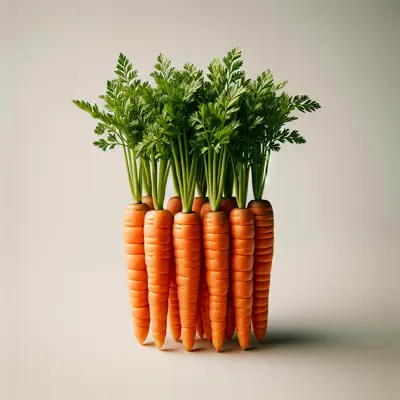
Straight candy-red roots resist pithiness better than other long French types. Compared to French Breakfast, roots are shorter, wider, and show less white on the tips. Responds better to tight spacing. Improved top strength. NOTE: For longer, straighter roots, sow 15-20% more seeds per row 1/2 to 1 cm deeper, and do not irrigate unless absolutely necessary.
Harvest
21d
Days to harvest
Sun
Full sun to partial shade
Zones
2–11
USDA hardiness
Height
0-3 feet
Planting Timeline
Showing dates for Nelson Carrot in USDA Zone 7
All Zone 7 root-vegetable →Zone Map
Click a state to update dates
Nelson Carrot · Zones 2–11
Growing Details
Succession Planting
Direct sow Nelson every 14 to 21 days starting around March 1 in zone 7, running through early May. A second window opens in late August through September for a fall pull that can stretch into November. Cut off spring sowings once daytime highs are reliably above 80°F — germination rates drop sharply and the roots tend to crack and turn bitter before they size up properly.
Germination takes 10 to 17 days, and Nelson hits usable harvest around 21 days after that, so even a single 4-foot row sown every two weeks gives you a steady pull rather than a glut all at once. Write your sow dates on a stake in the bed — once the tops fill in, one row looks exactly like the next.
Complete Growing Guide
Start by preparing your carrot bed with deep cultivation—work the soil to at least 12 inches deep, removing all stones, clods, and debris that could cause forked or stunted roots. Nelson carrots develop their signature 7-8 inch straight roots only in loose, obstacle-free soil. Amend heavy clay with coarse sand and compost, but avoid fresh manure which causes excessive foliage growth and hairy roots.
Direct sow Nelson carrot seeds 2-3 weeks before your last frost date when soil temperature reaches 45°F consistently. Never start carrots indoors—they hate transplanting and will develop deformed taproots. Create shallow furrows ¼ inch deep, space seeds ½ inch apart, and cover lightly with fine soil or vermiculite. The tiny seeds need consistent moisture to germinate, so water gently twice daily until you see green shoots in 10-14 days.
Thin seedlings aggressively when they reach 2 inches tall—this is where most gardeners fail with carrots. Final spacing should be 2-3 inches between plants. Crowded carrots never size up properly. Pull weaker seedlings rather than cutting to avoid attracting carrot fly to wounded roots.
Fertilize with a balanced 10-10-10 fertilizer at planting, then switch to lower-nitrogen feeds once tops are established. Too much nitrogen produces all greens and wimpy roots. Side-dress with compost or low-nitrogen fertilizer at 4 weeks if growth seems slow.
Maintain consistent soil moisture throughout the growing season—irregular watering causes the splitting that Nelson is bred to resist, but even this tough variety has limits. Mulch around plants once they're 4 inches tall to retain moisture and suppress weeds. Never cultivate deeply near carrot rows as you'll damage the developing taproots.
In zones 7-9, make successive plantings every 2-3 weeks through summer for continuous harvest. Northern gardeners should focus spring and fall plantings when temperatures stay below 80°F—hot weather makes carrots bitter and tough regardless of variety.
Harvesting
Nelson carrots reach peak harvest at 58-68 days when shoulders measure 1-1.5 inches across at soil level. Gently brush soil away from the crown to check diameter—the trademark bright orange color should be vivid and uniform. Harvest when roots feel firm but not woody; overmature carrots lose their exceptional sweetness and develop a tough core.
Harvest in early morning when soil moisture is optimal for easy pulling. Grasp the green tops close to the crown and pull straight up with steady pressure—Nelson's uniform shape means they release cleanly from loose soil. In heavy soil, use a garden fork inserted 4 inches away to loosen roots before pulling. Never yank by the tops alone as they may break off, leaving roots stranded underground. After harvest, twist off greens immediately to prevent moisture loss, leaving ½ inch of stem to avoid cutting into the root itself.
Storage & Preservation
Store fresh Nelson carrots unwashed in perforated plastic bags in the refrigerator crisper drawer at 32-35°F with high humidity. Remove greens before storage as they draw moisture from roots. Properly stored Nelson carrots maintain their crisp texture and sweetness for 2-3 months—longer than most varieties due to their superior storage genetics.
For longer preservation, blanch whole small carrots or cut pieces in boiling water for 3-5 minutes, then freeze in airtight containers for up to 12 months. Nelson's dense flesh and low core make it excellent for dehydrating—slice ¼ inch thick and dry at 125°F until leathery. The variety's exceptional sweetness also makes it ideal for fermented carrot sticks or pressure-canned carrot coins, maintaining better texture than softer varieties after processing.
History & Origin
Nelson carrot was developed through modern hybrid breeding programs focused on combining the classic Nantes carrot shape with enhanced storage qualities and disease resistance. While the exact breeding lineage remains proprietary to seed companies, Nelson represents the evolution of Nantes-type carrots that originated in the Loire Valley region of France in the 1850s.
The original Nantes carrots were prized for their cylindrical shape, blunt tips, and sweet flavor—characteristics that made them ideal for both fresh market and home garden use. Nelson builds on this foundation with hybrid vigor that delivers more consistent germination, uniform sizing, and improved shelf life that traditional open-pollinated Nantes varieties couldn't match.
This variety was specifically bred to meet the demands of both commercial growers seeking reliable, uniform harvests and home gardeners wanting restaurant-quality carrots with minimal fuss. The name 'Nelson' reflects the variety's dependable, stalwart performance—a nod to the reliability that has made it popular among market gardeners and CSA operations seeking premium carrots that store well and maintain their gourmet appeal throughout the marketing season.
Advantages
- +Exceptional crack and split resistance even during irregular watering or heavy rainfall periods
- +Uniform 7-8 inch roots with minimal tapering make processing and storage highly efficient
- +Superior cold storage life of 2-3 months while maintaining crisp texture and sweet flavor
- +Reliable germination and consistent sizing reduce crop failures common with open-pollinated varieties
- +Fine-textured flesh with minimal woody core even when slightly overmature
- +Good leaf blight resistance reduces need for fungicide applications
- +Premium sweetness that intensifies after light frost exposure
Considerations
- -Higher seed cost compared to open-pollinated Nantes varieties due to hybrid breeding
- -Cannot save seeds for next season as hybrid offspring won't breed true
- -Requires consistently loose, deep soil preparation—performs poorly in compacted conditions
- -Still susceptible to carrot fly damage despite other pest resistances
Companion Plants
Chives, leeks, and rosemary are worth planting within a foot or two of your carrot rows. Chives and leeks release sulfur compounds that disrupt the host-finding behavior of carrot fly (Psila rosae) adults — the mixed scent makes it harder for them to lock onto the carrot smell and lay eggs. Rosemary and sage do similar work through volatile oils. Lettuce earns its spot for a different reason entirely: its roots stay in the top 4 to 6 inches while carrots are pushing down 8 to 12, so the two crops genuinely don't compete for the same soil column and you get a second harvest out of the same bed footprint.
Dill, coriander, and parsnips all belong to Apiaceae, the same family as carrots. Planting any of them nearby concentrates carrot fly populations and aphid pressure in one spot instead of spreading it around. Parsnips add a seed-saving problem on top of that — they'll cross-pollinate with carrots if they bolt anywhere near each other. Keep all three at least 20 to 30 feet away if you're working in a tight space.
Plant Together
Chives
Repels carrot rust flies and aphids with their strong onion scent
Leeks
Mask carrot scent from carrot rust flies and improve soil structure
Rosemary
Strong aromatic oils repel carrot flies and other harmful insects
Sage
Deters carrot rust flies and cabbage moths with its intense fragrance
Lettuce
Shallow roots don't compete, provides ground cover and efficient space use
Radishes
Break up compacted soil for carrot root development and mature quickly
Tomatoes
Root vegetables and nightshades complement each other's growth patterns
Marigolds
Release compounds that repel nematodes and other soil-dwelling pests
Keep Apart
Dill
Can stunt carrot growth and attract carrot rust flies when flowering
Parsnips
Same family susceptible to identical pests and diseases, creating concentrated problems
Coriander
May inhibit carrot germination and early growth through allelopathic effects
Nutrition Facts
Per 100g serving. % Daily Value based on 2,000 calorie diet. Source: USDA FoodData Central (FDC #170393)
Pests & Disease Resistance
Resistance
Good resistance to leaf blight and cavity spot
Common Pests
Carrot fly, aphids, wireworms
Diseases
Alternaria leaf blight, bacterial soft rot
Troubleshooting Nelson Carrot
What you'll see, why it happens, and what to do about it.
Seedlings collapse at soil level within the first 10 days of germination — stems look pinched and dark at the base
Likely Causes
- Damping off — typically Pythium or Rhizoctonia solani, both soil-borne fungi that thrive in cold, wet soil
- Overwatering or poor drainage keeping the seed bed saturated
What to Do
- 1.Pull and discard the affected seedlings immediately — don't compost them
- 2.Let the top inch of soil dry slightly between waterings; Nelson carrot seed needs consistent moisture but not standing wet
- 3.Rotate the bed out of root crops for at least 3 to 4 years, as NC State Extension's IPM guidance recommends for soil-borne pathogens
Carrot tops show brown, water-soaked lesions that dry into papery tan patches — foliage looks scorched by midsummer
Likely Causes
- Alternaria leaf blight (Alternaria dauci) — fungal spores spread by rain splash and overhead irrigation
- Dense planting at less than 2-inch spacing trapping humidity around foliage
What to Do
- 1.Thin to at least 2 to 3 inches apart as soon as seedlings are an inch tall — crowded tops are the main accelerant
- 2.Water at the base, not overhead, and do it in the morning so foliage dries before nightfall
- 3.Remove and trash (not compost) heavily affected tops; rotate this bed out of carrots and related Apiaceae for 3 seasons
Roots pulled at harvest are stunted, forked, or covered in rough galls or dark lesions instead of smooth skin
Likely Causes
- Root-knot nematode (Meloidogyne spp.) — the raised galls are the tell; NC State Extension notes Meloidogyne is the most destructive plant-parasitic nematode genus in the region due to its wide host range
- Wireworms (Agriotes spp.) — leave narrow tunneling damage and dark entry holes without any galling
- Rocky or compacted soil causing mechanical forking — a cultural problem, not a pest
What to Do
- 1.For nematodes: NC State Extension is clear there are no chemical controls available to home gardeners — rotation (avoid root crops in the same bed for 3 to 4 years) and resistant cover crops like sunn hemp between seasons are your main tools
- 2.For wireworms: delay planting into recently tilled sod ground by at least one season, where wireworm populations run highest
- 3.For forking: loosen soil 12 inches deep before direct sowing and pull out any stones or hard clods
Roots develop soft, foul-smelling decay in the ground late season or within a few days of harvest
Likely Causes
- Bacterial soft rot (Erwinia carotovora) — enters through wounds, insect feeding sites, or cracks opened by uneven watering
- Carrot fly (Psila rosae) larvae tunneling into roots, creating entry points for secondary bacterial infection
What to Do
- 1.Harvest Nelson promptly at maturity — leaving roots in warm, wet soil past their window is the fastest path to rot
- 2.Store only completely undamaged roots; let them dry in a shaded spot for an hour before refrigerating so surface moisture doesn't accelerate decay
- 3.For carrot fly: drape floating row cover from direct sow through thinning (the main egg-laying window), and avoid thinning on warm, still evenings when adult flies are most active
Frequently Asked Questions
How long does Nelson carrot take to grow from seed to harvest?▼
Can you grow Nelson carrots in containers?▼
Is Nelson carrot good for beginners?▼
What does Nelson carrot taste like compared to store-bought?▼
When should I plant Nelson carrot seeds?▼
Nelson vs regular Nantes carrots - what's the difference?▼
Zone-by-Zone Planting Calendar
| Zone | Indoor Start | Transplant | Direct Sow | Harvest |
|---|---|---|---|---|
| Zone 3 | — | — | May – June | May – October |
| Zone 4 | — | — | April – June | May – October |
| Zone 5 | — | — | April – May | May – November |
| Zone 6 | — | — | April – May | April – November |
| Zone 7 | — | — | March – May | April – November |
| Zone 8 | — | — | March – April | March – December |
| Zone 9 | — | — | February – March | February – December |
| Zone 10 | — | — | January – March | February – December |
| Zone 1 | — | — | June – July | June – September |
| Zone 2 | — | — | May – July | June – September |
| Zone 11 | — | — | January – February | January – December |
| Zone 12 | — | — | January – February | January – December |
| Zone 13 | — | — | January – February | January – December |
Growing Guides from Wind River Greens
Sources & References
External authority sources used in compiling this guide.
See the Methodology page for how this data is sourced, what's AI-assisted, and known limitations.