Cocozelle Italian Heirloom Zucchini
Cucurbita pepo 'Cocozelle'
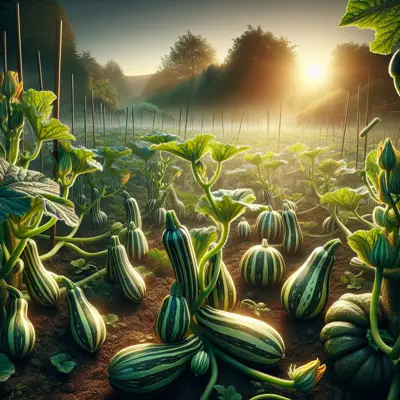
An Italian heirloom dating back to the 1890s, this distinctive zucchini stands out with its beautiful striped pattern and superior flavor that puts modern varieties to shame. The dark green fruits with light green stripes have incredibly tender skin when young and dense, flavorful flesh that holds up beautifully in cooking. This variety embodies the authentic taste of traditional Italian cooking.
Harvest
55-65d
Days to harvest
Sun
Full sun
Zones
3–11
USDA hardiness
Height
1-3 feet
Planting Timeline
Showing dates for Cocozelle Italian Heirloom Zucchini in USDA Zone 7
All Zone 7 squash →Zone Map
Click a state to update dates
Cocozelle Italian Heirloom Zucchini · Zones 3–11
Growing Details
Succession Planting
Cocozelle produces heavily for about 6-8 weeks before powdery mildew and squash bug pressure shut it down, so plan on two sowings. Direct sow the first round in late April once soil hits 65°F, then a second sowing around late June for fall harvest. In zone 7, a third sowing by July 10 can squeak in before frost if you're willing to fight mildew. Stop sowing once nights are consistently above 75°F — germination gets erratic and vine borers are laying eggs.
Complete Growing Guide
Plant Cocozelle seeds directly in warm soil after the last frost, as this heirloom germinates best when soil temperature reaches 70°F or higher. Unlike modern hybrids, Cocozelle requires consistent moisture and thrives in full sun with rich, well-draining soil amended with compost. This variety tends to bolt and decline in peak summer heat, so consider succession planting in early spring and again in midsummer for fall harvest. Watch vigilantly for squash vine borers, which aggressively target heirloom varieties; plant nasturtiums nearby as a trap crop to redirect pests. The dense foliage can trap moisture and promote powdery mildew, so space plants generously and provide good air circulation. Harvest fruits at 6-8 inches when skin is still tender; delaying harvest reduces the tender quality that defines this cultivar's superiority over commercial zucchini.
Light: Full sun (6 or more hours of direct sunlight a day). Soil: High Organic Matter, Loam (Silt). Soil pH: Neutral (6.0-8.0). Drainage: Good Drainage, Moist. Height: 1 ft. 0 in. - 3 ft. 0 in.. Spread: 2 ft. 0 in. - 25 ft. 0 in.. Spacing: 12 inches-3 feet. Growth rate: Rapid. Maintenance: High. Propagation: Seed. Regions: Coastal, Mountains, Piedmont.
Harvesting
Harvest Cocozelle zucchini when fruits reach 6-8 inches long and display their characteristic dark green coloring with light green stripes, while the skin remains tender enough to pierce easily with a fingernail. Pick regularly every 2-3 days during peak season to encourage continuous fruit production rather than allowing fewer fruits to mature to full size. The striped pattern becomes more pronounced as the zucchini matures, but don't wait for this deepening—harvest while skin is still tender and flesh dense, as overgrown specimens become woody and lose the nutty sweetness this heirloom variety is prized for. Morning harvests yield the crispest, best-flavored fruits before afternoon heat sets in.
A type of berry called a pepo that has a hard rind. Fruits may be long or round, large or small, smooth or warty– some have edible flesh and some are too hard or insipid to eat, though the seeds of all are edible. Has a harder, thicker stem compared to other species.
Color: Black, Cream/Tan, Gold/Yellow, Green, Orange, Pink, Red/Burgundy, Variegated, White. Type: Berry. Length: > 3 inches. Width: > 3 inches.
Garden value: Edible, Showy
Harvest time: Fall
Storage & Preservation
Fresh Cocozelle keeps best stored unwashed in the refrigerator's crisper drawer, where they'll maintain quality for 4-7 days. For counter storage, keep them in a cool, dry place for 2-3 days maximum. The tender skin of this heirloom variety makes it more perishable than modern thick-skinned zucchini.
For preservation, slice and blanch Cocozelle for 2 minutes before freezing in airtight containers—the dense flesh holds up better than most zucchini varieties. Grate and freeze in measured portions for baking projects, or slice and dehydrate at 125°F for 8-12 hours to make vegetable chips. The firm texture and rich flavor also make Cocozelle excellent for pressure canning in mixed vegetable recipes or pickling in traditional Italian giardiniera-style preserves.
History & Origin
Tracing back to 1890s Italy, Cocozelle represents a distinct lineage within Italian zucchini heritage, though specific breeder documentation remains elusive in accessible horticultural records. The variety emerged from southern Italian gardening traditions, likely developing through generations of farmer selection in regions where zucchini cultivation was deeply embedded in local food culture. Unlike modern hybrid zucchinis bred for uniformity and shelf life, Cocozelle's striped phenotype and dense flesh suggest intentional selection by Italian growers prioritizing flavor and cooking qualities over commercial convenience. The variety entered broader seed commerce through European heirloom seed networks and later American heritage seed companies, preserving its genetic integrity through open-pollination. While precise origination details remain undocumented in formal breeding literature, Cocozelle's persistence as a named cultivar across multiple seed catalogs confirms its establishment as a recognized Italian heirloom by the early twentieth century.
Origin: North America
Advantages
- +Beautiful striped pattern makes these heirloom fruits visually distinctive and garden-worthy.
- +Rich, nutty flavor with dense texture significantly outperforms modern commercial zucchini varieties.
- +Tender skin when young requires minimal peeling, perfect for traditional Italian recipes.
- +Matures quickly in 55-65 days, ideal for shorter growing seasons and succession planting.
- +Easy to grow with minimal care, making this heirloom accessible to beginner gardeners.
Considerations
- -Highly susceptible to powdery mildew and downy mildew in humid or wet conditions.
- -Vulnerable to multiple pests including squash bugs, vine borers, and cucumber beetles.
- -Requires vigilant monitoring and pest management to prevent crop loss and disease spread.
Companion Plants
Nasturtiums and radishes pull their weight here — nasturtiums draw aphids and cucumber beetles off the squash leaves, and a few radishes left to bolt near the base seem to throw the beetles off too. Borage and dill bring in bees, which matters because every Cocozelle fruit needs pollinator visits or you get stubby half-formed zucchini. Keep potatoes out of the bed; they share cucumber beetle and aphid pressure and compete at the same shallow root depth. Black walnut's juglone will stunt cucurbits, so don't site within the drip line.
Plant Together
Nasturtiums
Acts as trap crop for squash bugs and cucumber beetles, repels aphids
Marigolds
Deters squash bugs, cucumber beetles, and nematodes with strong scent
Radishes
Repels squash vine borers and cucumber beetles, harvested before squash spreads
Beans
Fix nitrogen in soil to benefit heavy-feeding squash plants
Corn
Provides vertical structure and shade, part of traditional Three Sisters planting
Catnip
Strong natural repellent against squash bugs and cucumber beetles
Dill
Attracts beneficial insects that prey on squash pests like aphids
Borage
Attracts pollinators essential for squash fruit production, may improve growth
Keep Apart
Black Walnut
Produces juglone toxin that inhibits growth and can kill squash plants
Potatoes
Compete for similar nutrients and space, both are heavy feeders
Fennel
Inhibits growth of squash through allelopathic compounds
Nutrition Facts
Per 100g serving. % Daily Value based on 2,000 calorie diet. Source: USDA FoodData Central (FDC #168565)
Pests & Disease Resistance
Resistance
Moderate resistance typical of heirloom varieties
Common Pests
Squash bugs, cucumber beetles, aphids, vine borers
Diseases
Powdery mildew, downy mildew, bacterial wilt
Troubleshooting Cocozelle Italian Heirloom Zucchini
What you'll see, why it happens, and what to do about it.
Plant suddenly wilts at midday, then collapses entirely within a few days — usually mid-to-late summer
Likely Causes
- Squash vine borer (Melittia cucurbitae) larva tunneling inside the main stem — look for a small hole near the base with sawdust-like frass
- Bacterial wilt (Erwinia tracheiphila) spread by cucumber beetles
What to Do
- 1.Slit the stem lengthwise with a razor at the entry hole, dig out the white grub, then mound soil over the wound so it can re-root
- 2.For bacterial wilt there's no cure — pull and trash the plant (not compost) to protect the rest
- 3.NC State Extension recommends planting squash as early as possible so the crop matures before borers lay eggs in July
White powdery patches spreading across upper leaf surfaces starting around day 50
Likely Causes
- Powdery mildew (Podosphaera xanthii) — almost guaranteed on cucurbits by late summer
- Crowded planting and overhead watering
What to Do
- 1.Spray with a 1:9 milk-to-water solution or potassium bicarbonate weekly once you see the first spots
- 2.Strip the worst leaves to improve airflow — Cocozelle's big leaves trap humidity
- 3.Water at the base in the morning only; never wet the foliage in the evening
Small fruits yellow at the blossom end, shrivel, and drop off at 2-3 inches long
Likely Causes
- Poor pollination — not enough bee visits, common in hot humid weather when pollen goes sterile above 90°F
- Female flowers opening before males are producing pollen (early in the season)
What to Do
- 1.Hand-pollinate at dawn: pick a male flower (thin stem, no fruit behind it), peel back the petals, and dab the anther directly on the female stigma
- 2.Plant borage or dill nearby to pull in more pollinators
- 3.Be patient the first 10 days of flowering — males usually open first, females catch up
Clusters of bronze-brown shield-shaped bugs and football-shaped copper eggs on leaf undersides
Likely Causes
- Squash bugs (Anasa tristis) — they'll suck the plant dry and can vector cucurbit yellow vine disease
What to Do
- 1.Scrape egg masses off with a butter knife into soapy water — check leaf undersides twice a week
- 2.Lay a board flat on the soil overnight; squash bugs gather under it and you can stomp them at dawn
- 3.Clean up all vine debris in fall — NC State notes adults overwinter in plant trash, so removing it disrupts the life cycle
Frequently Asked Questions
How long does Cocozelle Italian heirloom zucchini take to grow?▼
Is Cocozelle zucchini good for beginners?▼
Can you grow Cocozelle zucchini in containers?▼
What does Cocozelle zucchini taste like compared to regular zucchini?▼
When should I plant Cocozelle zucchini seeds?▼
Cocozelle vs regular zucchini - what's the difference?▼
Zone-by-Zone Planting Calendar
| Zone | Indoor Start | Transplant | Direct Sow | Harvest |
|---|---|---|---|---|
| Zone 1 | — | — | July – August | October – August |
| Zone 2 | — | — | June – August | September – September |
| Zone 11 | — | — | January – March | April – June |
| Zone 12 | — | — | January – March | April – June |
| Zone 13 | — | — | January – March | April – June |
| Zone 3 | — | — | June – July | September – October |
| Zone 4 | — | — | June – July | August – October |
| Zone 5 | — | — | May – June | August – September |
| Zone 6 | — | — | May – June | August – September |
| Zone 7 | — | — | April – June | July – September |
| Zone 8 | — | — | April – May | July – August |
| Zone 9 | — | — | March – April | June – July |
| Zone 10 | — | — | February – April | May – July |
Growing Guides from Wind River Greens
Sources & References
External authority sources used in compiling this guide.
See the Methodology page for how this data is sourced, what's AI-assisted, and known limitations.