Purple Queen
Agrostemma githago
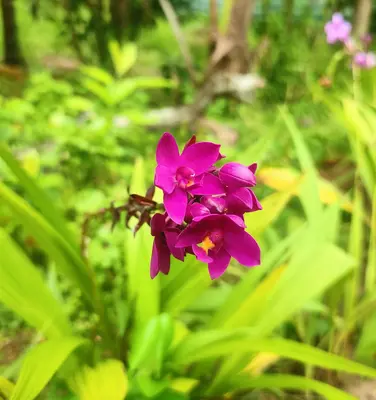
Silky, speckled, 1-2" blooms grow in sprays on willowy gray stems. Easy-to-grow plants prefer cool growing conditions.
Harvest
70-85d
Days to harvest
Sun
Full sun to partial shade
Zones
1–11
USDA hardiness
Height
2-3 feet
Planting Timeline
Showing dates for Purple Queen in USDA Zone 7
All Zone 7 flower →Zone Map
Click a state to update dates
Purple Queen · Zones 1–11
Growing Details
Succession Planting
Direct sow Purple Queen every 3 weeks from April through early June in zone 7, and you'll get staggered bloom windows from roughly day 70 onward into late summer. Each sowing takes about 7–14 days to germinate, so the math works out to overlapping flushes rather than one big peak. Stop sowing by mid-June — once daytime highs are consistently above 85°F, germination gets patchy and seedlings struggle to establish before the heat really sets in.
If you want a very early start, indoor sowing in February or March gives you transplant-ready plugs for an April 15–May 1 outdoor move. Don't start them too early indoors — Agrostemma githago doesn't love being root-bound, and leggy seedlings transplant poorly. Four to five weeks indoors is plenty.
Complete Growing Guide
Silky, speckled, 1-2" blooms grow in sprays on willowy gray stems. Easy-to-grow plants prefer cool growing conditions. According to Johnny's Selected Seeds, Purple Queen is 70 - 85 days to maturity, annual, open pollinated. Notable features: Use for Cut Flowers and Bouquets.
Light: Full sun (6 or more hours of direct sunlight a day), Partial Shade (Direct sunlight only part of the day, 2-6 hours). Soil: Loam (Silt), Sand. Soil pH: Acid (<6.0), Neutral (6.0-8.0). Drainage: Good Drainage, Moist, Occasionally Dry. Height: 2 ft. 0 in. - 3 ft. 0 in.. Spread: 1 ft. 0 in. - 1 ft. 6 in.. Spacing: 12 inches-3 feet. Growth rate: Rapid. Maintenance: Medium. Propagation: Seed. Regions: Coastal, Mountains, Piedmont.
Harvesting
Purple Queen reaches harvest at 70 - 85 days from sowing per Johnny's Selected Seeds. Expect 1-2" at peak. As an annual, harvest continues until frost ends the season.
Fruit is a capsule with numerous black, pitted seeds.
Color: Black. Type: Capsule.
Harvest time: Fall
Storage & Preservation
Fresh-cut Purple Queen flowers should be placed immediately in cool water (65-70°F) with commercial flower food, which extends vase life to 10-14 days. Keep arrangements away from ripening fruit, direct sunlight, and heating vents. Change water every 2-3 days and recut stems at a 45-degree angle to increase water absorption.
For longer-term preservation, dry flowers by hanging stems upside-down in a warm (65-75°F), dark, well-ventilated space for 2-3 weeks until petals feel papery. Dried Purple Queen flowers retain their speckled coloring and add texture to dried arrangements for months or even years. Alternatively, press individual blooms between parchment paper in a heavy book for 3-4 weeks to preserve them for craft projects or herbals. Store dried materials in airtight containers with silica gel in cool, dark conditions.
History & Origin
Purple Queen is open-pollinated, meaning seed saved from healthy plants will produce true-to-type offspring. Listed in the Johnny's Selected Seeds catalog.
Origin: Europe
Advantages
- +Silky speckled petals create elegant visual interest in cut flower arrangements
- +Willowy gray stems provide natural, graceful height without additional support structures
- +Easy cultivation makes Purple Queen ideal for beginner gardeners and children
- +Cool-season preference means reliable blooms in spring and fall gardens
- +Relatively quick 70-85 day maturity allows multiple succession plantings per season
Considerations
- -Toxicity concerns limit use in homes with children or pets present
- -Sparse foliage on stems may require companion planting for fuller garden appearance
- -Self-seeds aggressively, potentially becoming invasive in permissive garden settings
- -Requires consistent cool conditions; heat stress causes premature flowering and reduced bloom quality
Companion Plants
Sweet Alyssum is probably the most practical companion here — it stays low (6–8 inches), doesn't compete for light, and draws in parasitic wasps that prey on aphids and whiteflies. Marigolds pull similar duty through their root secretions, which suppress soil nematodes, and their scent genuinely disrupts the host-finding behavior of some flying pests. Caladiums, Impatiens, and Ferns fit naturally in a mixed border because they're content in the shade cast by taller plants, leaving Purple Queen to hold the full-sun column without a fight — the layering is functional, not just decorative.
Skip Sunflowers and Eucalyptus entirely. Sunflowers are allelopathic — compounds released from their roots and decomposing litter actively suppress nearby annuals — and a 6-foot sunflower will shade out a 2–3 foot plant before you notice the damage. Eucalyptus works through the same mechanism. In our zone 7 Georgia gardens, Black Walnut is the subtler problem: juglone can persist in the soil for years after a tree is removed, so "there used to be a walnut there" is reason enough to pick a different bed.
Plant Together
Marigold
Repels nematodes and aphids while attracting beneficial insects
Caladium
Similar shade and moisture requirements, complementary foliage colors
Impatiens
Thrives in similar partial shade conditions and adds contrasting flower colors
Begonia
Compatible growing conditions and provides textural contrast with similar care needs
Coleus
Similar shade tolerance and moisture needs, creates colorful foliage combinations
Ferns
Share preference for moist, shaded areas and provide structural contrast
Sweet Alyssum
Acts as living mulch and attracts beneficial insects for pest control
Torenia
Similar shade and water requirements with complementary purple and white blooms
Keep Apart
Black Walnut
Produces juglone which is toxic to many plants including Purple Queen
Eucalyptus
Allelopathic compounds inhibit growth of nearby plants
Sunflower
Competes aggressively for nutrients and water, may overshadow smaller plants
Troubleshooting Purple Queen
What you'll see, why it happens, and what to do about it.
Seedlings collapse at soil level, stems look pinched or water-soaked just below the surface
Likely Causes
- Damping off (Pythium or Rhizoctonia spp.) — fungal rot triggered by overwatering or poor drainage
- Sowing too densely, which traps moisture and cuts airflow between stems
What to Do
- 1.Don't water again until the top half-inch of soil is dry — Agrostemma githago hates sitting wet
- 2.Thin seedlings to at least 2 inches apart as soon as they have their first true leaves, even if it hurts
- 3.If starting indoors, use a sterile seed-starting mix and bottom-water only; avoid misting the stems
Leaves developing gray, powdery coating starting on upper leaf surfaces, usually mid-season
Likely Causes
- Powdery mildew (Erysiphe spp.) — common in humid summers with warm days and cool nights
- Crowded spacing that restricts airflow, especially in shaded spots
What to Do
- 1.Space plants the full 12–18 inches apart at planting; they won't fill in the gaps gracefully if you crowd them
- 2.Spray affected foliage with a diluted baking soda solution (1 tablespoon per gallon of water) weekly
- 3.Pull and trash any heavily infected stems — powdery mildew spreads fast once it's established
Plants stunted and pale, not reaching expected 2–3 foot height by week 8, lower leaves yellowing evenly
Likely Causes
- Nitrogen deficiency from poor or sandy soil with low organic matter
- Root competition from a nearby aggressive feeder like Black Walnut (Juglans nigra), which releases juglone through its roots and leaf litter
What to Do
- 1.Side-dress with a balanced granular fertilizer (10-10-10) at 1 tablespoon per plant, worked lightly into the soil
- 2.If planted within 50 feet of a black walnut, relocate — juglone toxicity won't resolve with fertilizer
- 3.Amend the bed with 2–3 inches of compost before next season's sowing
Frequently Asked Questions
How long does Purple Queen take to grow from seed to bloom?▼
Is Purple Queen good for beginners?▼
Can you grow Purple Queen in containers?▼
When should I plant Purple Queen?▼
Why isn't my Purple Queen blooming?▼
How do I get longer-lasting cut flowers from Purple Queen?▼
Zone-by-Zone Planting Calendar
| Zone | Indoor Start | Transplant | Direct Sow | Harvest |
|---|---|---|---|---|
| Zone 1 | May – June | July – August | July – September | — |
| Zone 2 | April – May | June – July | June – August | — |
| Zone 11 | January – January | January – February | January – March | — |
| Zone 12 | January – January | January – February | January – March | — |
| Zone 13 | January – January | January – February | January – March | — |
| Zone 3 | April – May | June – July | June – August | — |
| Zone 4 | March – April | June – June | June – July | — |
| Zone 5 | March – April | May – June | May – July | — |
| Zone 6 | March – April | May – June | May – July | — |
| Zone 7 | February – March | April – May | April – June | — |
| Zone 8 | February – March | April – May | April – June | — |
| Zone 9 | January – February | March – April | March – May | — |
| Zone 10 | January – January | February – March | February – April | — |
Growing Guides from Wind River Greens
Sources & References
External authority sources used in compiling this guide.
- BreederJohnny's Selected Seeds
See the Methodology page for how this data is sourced, what's AI-assisted, and known limitations.