Lovage
Levisticum officinale
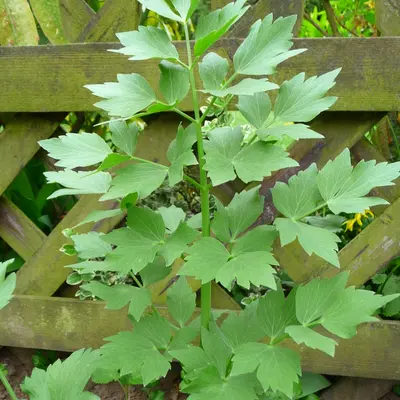
Young leaves taste like celery with a hint of anise, and are used in spring tonic salads and with potato, rice, soups, and poultry dishes. Roots and young stems are also edible. Young stems can be cut, peeled, and used in salads. Stems are smooth, hollow, and thick. Also available in organic seed. Attracts Beneficial Insects: If allowed to flower, provides pollen and nectar for beneficial insects such as bees, hoverflies, lacewing larvae, lady beetles, parasitic wasps, and tachinid flies.
Harvest
90d
Days to harvest
Sun
Full sun to partial shade
Zones
4–9
USDA hardiness
Height
3-6 feet
Planting Timeline
Showing dates for Lovage in USDA Zone 7
All Zone 7 herb →Zone Map
Click a state to update dates
Lovage · Zones 4–9
Growing Details
Complete Growing Guide
Light: Full sun (6 or more hours of direct sunlight a day), Partial Shade (Direct sunlight only part of the day, 2-6 hours). Soil: Clay, Loam (Silt), Sand. Soil pH: Acid (<6.0), Alkaline (>8.0), Neutral (6.0-8.0). Drainage: Good Drainage, Moist. Height: 3 ft. 0 in. - 6 ft. 0 in.. Spread: 2 ft. 0 in. - 3 ft. 0 in.. Spacing: 6-feet-12 feet. Growth rate: Medium. Maintenance: High. Propagation: Division, Seed. Regions: Mountains, Piedmont.
Harvesting
Garden value: Edible
Harvest time: Fall
Edibility: All parts are edible; seeds and leaves as flavoring, root as a vegetable, and flowers in soups and salads.
Storage & Preservation
Harvest lovage leaves after 90 days, ideally in the morning once dew dries. Store fresh sprigs in a sealed plastic bag in the refrigerator at 35–40°F with moderate humidity; they'll keep 7–10 days. For longer preservation, freezing works best—blanch whole sprigs briefly, then freeze in ice cube trays with water or oil for convenient portioning into soups and stews. Dried lovage also preserves well; hang-dry bundles in a warm, dark, well-ventilated space, then strip leaves and store in airtight containers away from light. The roots possess distinct medicinal properties and can be dried separately for herbal tea infusions. Avoid canning lovage, as its dense cellular structure doesn't process well under pressure. All methods retain the herb's characteristic celery-like warmth better than others, making frozen cubes particularly valuable for winter cooking.
History & Origin
Origin: Eastern Mediterannean
Advantages
- +Attracts: Butterflies
- +Edible: All parts are edible; seeds and leaves as flavoring, root as a vegetable, and flowers in soups and salads.
Considerations
- -Toxic: Low severity
- -High maintenance
Companion Plants
Lovage pulls real weight near tomatoes, peppers, and beans. Its sharp, celery-like volatile compounds are thought to disrupt the host-plant odor cues that aphids and whiteflies rely on to find their targets. Planted at the corners of a tomato bed, it also draws in predatory wasps that parasitize hornworm eggs — which, in our zone 7 Georgia garden, matters most in July and August when hornworm pressure peaks. Carrots and onions sit comfortably nearby because their shallow root zones don't compete with lovage at depth, and at 18–24 inch spacing lovage isn't crowding anyone out.
Keep it well away from fennel (Foeniculum vulgare), which releases allelopathic compounds that stunt most neighboring vegetables — lovage included. Black walnut (Juglans nigra) is the harder constraint: juglone diffuses through the root zone and is toxic to a wide range of plants, so don't site lovage anywhere a walnut's canopy has historically reached. Sage is a lower-stakes concern, but the two share nearly identical moisture requirements and wind up competing for the same soil resources without doing each other any favors.
Plant Together
Tomatoes
Lovage repels pests like aphids and tomato hornworms while improving tomato flavor
Beans
Beans fix nitrogen in soil which benefits the heavy-feeding lovage plant
Carrots
Lovage improves carrot flavor and repels carrot flies with its strong scent
Cabbage
Lovage deters cabbage worms and other brassica pests
Onions
Both plants repel each other's pests and onions help deter slugs from lovage
Roses
Lovage repels aphids and other rose pests while attracting beneficial insects
Peppers
Lovage provides natural pest control for aphids and improves pepper growth
Strawberries
Lovage repels harmful insects and may enhance strawberry flavor
Keep Apart
Fennel
Inhibits growth of lovage and most garden plants through allelopathic compounds
Black Walnut
Produces juglone which is toxic to lovage and inhibits its growth
Sage
Competes aggressively for nutrients and may stunt lovage growth when planted too close
Nutrition Facts
Per 100g serving. % Daily Value based on 2,000 calorie diet. Source: USDA FoodData Central (FDC #172232)
Pests & Disease Resistance
Common Pests
Rarely troubled by pests; occasional spider mites or aphids in dry conditions
Diseases
Root rot in waterlogged soil; powdery mildew in poor air circulation; generally disease-resistant when grown in well-draining soil
Troubleshooting Lovage
What you'll see, why it happens, and what to do about it.
Seedlings collapse at soil level, stems look pinched or water-soaked, often within the first 1-2 weeks after transplant
Likely Causes
- Damping off — typically Pythium or Rhizoctonia spp. — triggered by overwatering or heavy, poorly draining soil
- Planting into cold, wet soil below 50°F where seedlings sit vulnerable before roots establish
What to Do
- 1.Pull the affected seedlings and check for brown, slimy roots — if you see that, cut watering immediately and improve drainage
- 2.Amend planting beds with coarse compost or perlite before transplanting; lovage wants consistent moisture but not standing water
- 3.Start fresh transplants in a container with sterile seed-starting mix rather than reusing soil from a bed that's had damping off problems
Crowns and roots turn brown and mushy; plant wilts even when soil is wet; outer stalks collapse first
Likely Causes
- Root rot — most commonly Pythium spp. — from chronically waterlogged soil or a low spot that holds water after rain
- Heavy clay soil with poor internal drainage, which is common across much of the Georgia piedmont
What to Do
- 1.Dig the plant and inspect the crown; cut away any soft, discolored root tissue with a clean knife
- 2.Replant in a raised bed or a spot with at least 12 inches of well-draining amended soil
- 3.Water to 1–1.5 inches per week and stop supplemental irrigation during rainy stretches
White powdery coating on leaf surfaces, usually appearing mid-summer on older interior leaves
Likely Causes
- Powdery mildew (Erysiphe spp.) — favored by warm days, cool nights, and stagnant air around dense foliage
- Planting too close — lovage needs 18–24 inches between plants; tighter spacing traps humidity against the stems
What to Do
- 1.Thin or prune interior stems to open up the canopy and let air move through
- 2.Remove and bag (don't compost) affected leaves; the spores spread easily
- 3.Apply a diluted neem oil spray (2 tsp per gallon of water with a few drops of dish soap) every 7–10 days until symptoms stop spreading
Stippled, bronzed leaves with fine webbing on the undersides, usually during dry stretches in late summer
Likely Causes
- Two-spotted spider mites (Tetranychus urticae) — they thrive when humidity drops and plants are drought-stressed
- Dry spells that weaken the plant before mite populations build to damaging levels
What to Do
- 1.Knock mites off with a strong stream of water from a hose — do this in the morning so leaves dry before evening
- 2.Keep soil consistently moist at 1–1.5 inches per week; spider mites accelerate fast on plants that are already struggling
- 3.If the infestation is heavy, spray with insecticidal soap, hitting the undersides of leaves where mites actually feed
Frequently Asked Questions
How long does lovage take to grow from seed to harvest?▼
Can you grow lovage in containers or pots?▼
What does lovage taste like compared to celery?▼
Is lovage frost-hardy and can it overwinter in cold climates?▼
How do you harvest lovage without killing the plant?▼
Why is lovage called a spring tonic, and how is it traditionally used?▼
Zone-by-Zone Planting Calendar
| Zone | Indoor Start | Transplant | Direct Sow | Harvest |
|---|---|---|---|---|
| Zone 3 | April – May | June – July | — | July – October |
| Zone 4 | March – April | June – July | — | July – October |
| Zone 5 | March – April | May – June | — | June – October |
| Zone 6 | March – April | May – June | — | June – November |
| Zone 7 | February – March | April – June | — | June – November |
| Zone 8 | February – March | April – May | — | May – December |
| Zone 9 | January – February | March – April | — | April – December |
| Zone 10 | January – January | February – April | — | April – December |
Growing Guides from Wind River Greens
Sources & References
External authority sources used in compiling this guide.
- ExtensionNC State Extension
- BreederJohnny's Selected Seeds
- USDAUSDA FoodData Central
See the Methodology page for how this data is sourced, what's AI-assisted, and known limitations.