Blue Hubbard Squash
Cucurbita maxima
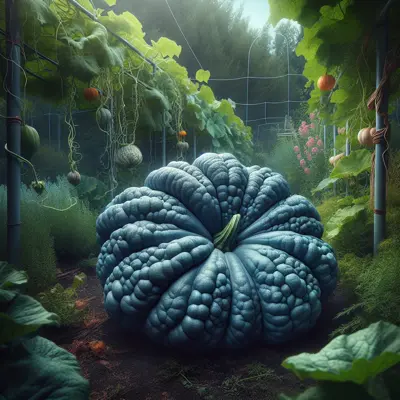
A beloved heirloom with a hard, bumpy, blue-green shell. A fall tradition at New England roadside stands. Medium-dry, medium-sweet yellow flesh. Avg. weight: 12-15 lb., with some larger.
Harvest
100d
Days to harvest
Sun
Full sun
Zones
3–11
USDA hardiness
Difficulty
Moderate
Planting Timeline
Showing dates for Blue Hubbard Squash in USDA Zone 7
All Zone 7 squash →Zone Map
Click a state to update dates
Blue Hubbard Squash · Zones 3–11
Growing Details
Succession Planting
Blue Hubbard isn't a succession crop — each plant runs 100 days and produces a small number of large fruits before it's finished. One well-timed sowing is all you need. In zone 7, direct sow from late April through early June; anything going in after mid-June is gambling against frost on the back end and sending your vines through peak squash vine borer season in July with no buffer. NC State Extension's IPM guidance puts it plainly: plant as early as the season allows to get ahead of borers, which lay eggs in July. Pick your date, get it in the ground, and spend your energy keeping those plants alive through the summer heat rather than planning a second round.
Complete Growing Guide
Blue Hubbard Squash requires a full 100 days of warm weather, so plant seeds only after soil reaches 70°F and all frost danger has passed—typically mid-May in New England. This cultivar thrives in rich, well-draining soil with consistent moisture during vine growth and fruit development, though it tolerates slightly drier conditions than smaller squash varieties. Blue Hubbard is moderately susceptible to powdery mildew in humid climates; ensure good air circulation and avoid overhead watering. The vines spread aggressively and can stretch 10+ feet, so provide ample space or trellis support for the heavy 12-15 lb. fruits. Start harvesting only after the skin hardens completely and resists fingernail puncture, as premature picking reduces storage life. A practical tip: direct-sow seeds rather than transplanting, as Blue Hubbard's long taproot resents disturbance and transplants often struggle to establish.
Light: Full sun (6 or more hours of direct sunlight a day). Soil: High Organic Matter, Loam (Silt). Soil pH: Neutral (6.0-8.0). Drainage: Good Drainage, Moist. Spacing: 12 inches-3 feet. Growth rate: Rapid. Maintenance: Medium. Propagation: Seed. Regions: Coastal, Mountains, Piedmont.
Harvesting
Harvest Blue Hubbard squash when the shell develops a deep blue-green hue with a hard, waxy feel that resists thumbnail puncture, typically reaching 12–15 pounds at peak maturity. The skin should appear dull rather than glossy, and the stem will brown and harden as readiness approaches. This variety supports a single main harvest rather than continuous picking, so wait until most fruits on the plant have reached full color and size before cutting with a sharp knife, leaving 2–3 inches of stem attached. A crucial timing tip: harvest before the first frost, as even light freezing will damage the flesh and reduce storage life, making late September to early October ideal for most regions.
Soft or hard-shelled berries called pepos come in a variety of colors, shapes, and sizes and are harvested in the fall. The stems of the fruits generally have a soft corky texture compared to other species.
Color: Blue, Cream/Tan, Gold/Yellow, Gray/Silver, Orange, Pink, Red/Burgundy, Variegated, White. Type: Berry. Length: > 3 inches. Width: > 3 inches.
Garden value: Edible, Long-lasting, Showy
Harvest time: Fall
Storage & Preservation
Blue Hubbard squash stores exceptionally well when kept in a cool, dry place between 50–60°F with moderate humidity. A basement, root cellar, or unheated garage works ideal. Store squashes on shelves or in crates lined with straw, ensuring they don't touch one another. Properly cured specimens will keep for three to four months, sometimes longer if conditions remain stable.
For longer preservation, freeze the cooked flesh in freezer bags or containers for up to eight months—the dense, creamy texture holds up remarkably well to freezing compared to watery squash varieties. Puree works beautifully for pie filling. Canning as cubes or puree is also viable, though pressure canning is required for food safety. Drying sliced pieces yields nutritious chips for soups and stocks.
Before storage, cure freshly harvested squashes by leaving them in a warm, airy location (70–75°F) for seven to ten days. This hardens the skin, significantly extending shelf life.
History & Origin
Blue Hubbard squash emerged in 19th-century New England, likely descending from earlier Hubbard varieties that gained popularity in the 1850s. Though specific breeder attribution remains unclear, the variety became deeply embedded in the region's agricultural and culinary heritage, establishing itself as a fall staple by the early 1900s. The blue-green skin variant became the most recognized form, particularly favored in New England markets where it thrived in the cool growing season. Documentation of its exact origins is sparse, but its persistence across generations of heirloom gardeners and seed savers reflects its status as a regionally significant American squash rather than a formally documented breeding line.
Origin: Central and South America
Advantages
- +Iconic heirloom variety with reliable sweet, creamy flavor and fine texture.
- +Hard blue-green shell stores exceptionally well for months after harvest.
- +Medium weight of 12-15 lbs provides practical single-family serving portions.
- +Classic New England fall tradition with strong market demand and recognition.
Considerations
- -Susceptible to multiple pests including squash bugs, beetles, and vine borers.
- -Vulnerable to powdery mildew, downy mildew, and bacterial wilt diseases.
- -Moderate growing difficulty requires pest management and disease prevention strategies.
- -Long 100-day maturity window demands extended growing season in cool climates.
Companion Plants
Nasturtiums and marigolds pull their weight here for different reasons. Nasturtiums act as a trap crop for aphids — insects pile onto them and largely leave the squash alone — and both plants draw in predatory beetles and wasps that feed on cucumber beetle larvae. Plant them at the edges of the hill where they get light, not buried under the sprawling vines. Corn and beans round out the Three Sisters combination: corn gives the vines structure to wander around, beans fix nitrogen at the 6–8 inch root zone where squash feeder roots aren't competing, and nothing underground is fighting for the same resources. Around here in the southeast, squash bug pressure is serious enough that I'll stack every cultural advantage I can — radishes tucked at the hill perimeter reportedly deter squash bugs, and at this point I'm not inclined to argue with it.
Potatoes are the one to keep on the other side of the garden entirely. They share soilborne pathogens with squash, and putting both in the same tight bed is an efficient way to move problems between crops. Strong aromatic herbs like rosemary and sage won't poison the squash, but they shed volatile oils that suppress germination nearby and their dense root mats compete for the consistent 1–2 inches of weekly moisture Blue Hubbard needs through July and August.
Plant Together
Nasturtiums
Trap crop for squash bugs and cucumber beetles, repels aphids
Marigolds
Repel cucumber beetles, squash bugs, and nematodes
Radishes
Deter squash vine borers and cucumber beetles when planted around squash hills
Corn
Provides vertical structure and shade, part of traditional Three Sisters planting
Beans
Fix nitrogen in soil, complete the Three Sisters guild with corn and squash
Catnip
Strong repellent for squash bugs, cucumber beetles, and other squash pests
Dill
Attracts beneficial insects like parasitic wasps that control squash pests
Sunflowers
Attract pollinators and beneficial insects, provide wind protection
Keep Apart
Potatoes
Compete for space and nutrients, may inhibit squash growth
Aromatic herbs (strong)
Plants like sage and rosemary can inhibit squash growth through allelopathy
Brassicas
Heavy feeders that compete for nutrients, may stunt squash development
Nutrition Facts
Per 100g serving. % Daily Value based on 2,000 calorie diet. Source: USDA FoodData Central (FDC #168040)
Pests & Disease Resistance
Resistance
Good general disease resistance typical of Hubbard types
Common Pests
Squash bugs, cucumber beetles, squash vine borers
Diseases
Powdery mildew, downy mildew, bacterial wilt
Troubleshooting Blue Hubbard Squash
What you'll see, why it happens, and what to do about it.
Stems collapsing at the base, with sawdust-like frass packed near the soil line, usually late June through July
Likely Causes
- Squash vine borer (Melittia cucurbitae) — the moth lays eggs at the stem base in July; larvae tunnel in and cut off water flow
- Late planting that puts young plants in the ground right when borer activity peaks
What to Do
- 1.Direct sow as early as your last frost allows — Blue Hubbard needs 100 days, so a late April sow in zone 7 puts harvest in late July/August, ahead of the worst borer pressure
- 2.Check stem bases every few days starting in late June; if you catch a borer early, slit the stem lengthwise with a razor, remove the larva, and mound soil over the wound to encourage new roots
- 3.NC State Extension notes that butternut squash carries vine borer resistance — if borers wipe you out two years running, consider growing butternut as the main crop and Blue Hubbard as a trap crop only
Whole-plant wilting that doesn't recover overnight, no obvious stem damage, on plants that looked fine a week ago
Likely Causes
- Bacterial wilt (Erwinia tracheiphila), spread by striped or spotted cucumber beetles — the bacteria block vascular tissue and there is no cure once a plant is infected
- Heavy cucumber beetle feeding on seedlings before the plant is established enough to tolerate it
What to Do
- 1.Pull and trash any wilted plant immediately — it won't turn around, and it keeps drawing beetles to that spot
- 2.NC State Extension specifically lists Blue Hubbard as having some cucumber beetle resistance at the seedling stage and in foliage, which lowers transmission risk compared to more susceptible cucurbits
- 3.Clear all plant debris after harvest each fall and rotate out of the cucurbit family for at least 3 years — cucumber beetle eggs overwinter in discarded plant material, so a clean bed cuts the starting population the following spring
White powdery coating spreading across upper leaf surfaces, often accelerating in late summer around day 60–70 after germination
Likely Causes
- Powdery mildew — most likely Podosphaera xanthii or Erysiphe cichoracearum on cucurbits — thrives at roughly 80°F with dry leaf surfaces and humid nights
- Dense vine canopy with poor airflow once the plants hit their full 8–10 foot sprawl
What to Do
- 1.Maintain the full 8–10 feet of spacing between hills — crowding accelerates mildew faster than almost anything else you can do wrong
- 2.Apply potassium bicarbonate spray (follow label rates) at the first sign of white patches; it shifts surface pH enough to slow the fungus without affecting fruit
- 3.Remove the worst-affected leaves and compost them well away from the bed — the fruit can still reach 100-day maturity with moderate mildew on older leaves, so don't pull the whole vine over cosmetic damage
Frequently Asked Questions
How long does Blue Hubbard squash take to grow?▼
Can you grow Blue Hubbard squash in containers?▼
Is Blue Hubbard squash good for beginners?▼
What does Blue Hubbard squash taste like?▼
When should I plant Blue Hubbard squash?▼
How do you store Blue Hubbard squash over winter?▼
Zone-by-Zone Planting Calendar
| Zone | Indoor Start | Transplant | Direct Sow | Harvest |
|---|---|---|---|---|
| Zone 3 | — | — | June – July | October – October |
| Zone 4 | — | — | June – July | October – October |
| Zone 5 | — | — | May – June | October – October |
| Zone 6 | — | — | May – June | September – November |
| Zone 7 | — | — | April – June | September – October |
| Zone 8 | — | — | April – May | August – October |
| Zone 9 | — | — | March – April | July – September |
| Zone 10 | — | — | February – April | July – August |
| Zone 1 | — | — | July – August | November – August |
| Zone 2 | — | — | June – August | October – September |
| Zone 11 | — | — | January – March | May – July |
| Zone 12 | — | — | January – March | May – July |
| Zone 13 | — | — | January – March | May – July |
Growing Guides from Wind River Greens
Sources & References
External authority sources used in compiling this guide.
See the Methodology page for how this data is sourced, what's AI-assisted, and known limitations.