Cantaloupe Hales Best
Cucumis melo var. cantalupensis 'Hales Best'
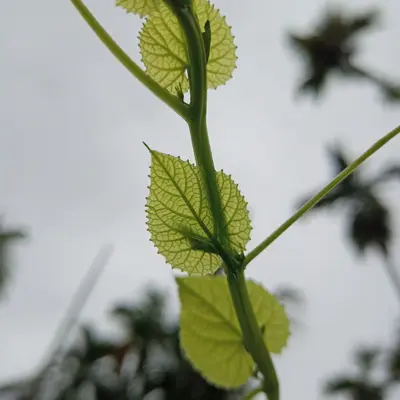
A time-tested heirloom cantaloupe that has been the benchmark for home garden success since 1924. Developed in California's Imperial Valley, this variety combines excellent disease tolerance with outstanding flavor and reliable production. The thick, sweet, salmon-colored flesh and perfect netting make it the cantaloupe that many gardeners grow year after year.
Harvest
85-90d
Days to harvest
Sun
Full sun
Zones
2–11
USDA hardiness
Height
6-9 feet
Planting Timeline
Showing dates for Cantaloupe Hales Best in USDA Zone 7
All Zone 7 melon →Zone Map
Click a state to update dates
Cantaloupe Hales Best · Zones 2–11
Growing Details
Succession Planting
Hales Best is a one-time fruiting crop — vines set fruit, ripen it over a few weeks, and they're done. You don't succession-plant it the way you would lettuce or beans. One planting per season is the standard approach.
That said, in zone 7 you can stagger your harvest window by 2–3 weeks: start one round indoors in late March and direct-sow a second round in late May. Don't push past early June — seeds need soil temps above 70°F to germinate reliably, and vines started after mid-June won't finish their 85–90 days before fall nights drop below 55°F and stall ripening.
Complete Growing Guide
This heirloom variety thrives when planted in warm soil (at least 70°F) and requires consistent warmth throughout its 85–90 day season, making late spring planting ideal for most climates. Hales Best performs exceptionally well in hot, dry conditions like those of its Imperial Valley origin, though it still needs deep, consistent watering during fruit development to prevent cracking and ensure that signature sweet flesh. While the variety's disease tolerance is notably stronger than many melons, it can still succumb to powdery mildew in humid regions, so ensure good air circulation and avoid overhead watering. The vines grow vigorously to 6–9 feet, requiring substantial space; a practical strategy is to plant on mounds or use sturdy trellising to maximize garden space while improving air flow around foliage. Watch for the distinctive slip-skin characteristic that indicates ripeness—the fruit will detach easily from the vine stem when mature—rather than harvesting prematurely.
Light: Full sun (6 or more hours of direct sunlight a day). Soil: Clay, High Organic Matter, Loam (Silt). Soil pH: Acid (<6.0), Neutral (6.0-8.0). Drainage: Good Drainage, Moist. Height: 6 ft. 0 in. - 9 ft. 0 in.. Spread: 1 ft. 0 in. - 3 ft. 0 in.. Spacing: 12 inches-3 feet. Growth rate: Medium. Maintenance: Medium. Propagation: Seed. Regions: Coastal, Mountains, Piedmont.
Harvesting
Hales Best cantaloupes reach peak harvest readiness when the fruit develops a tan-gold background color beneath the characteristic netting, and the blossom end yields slightly to gentle thumb pressure without feeling mushy. A mature fruit typically weighs 4-5 pounds and measures 5-6 inches in diameter. The most reliable indicator is a sweet, fragrant aroma emanating from the stem end—a hallmark of this aromatic variety. Unlike single-harvest melons, Hales Best produces continuously throughout the growing season, rewarding regular picking with sustained yield. Harvest in early morning when the stem slip—the natural separation point where the melon detaches from the vine—becomes apparent, ensuring maximum sweetness and optimal flesh firmness for storage and eating.
Musky-scented, spherical to oblong berry with a rind (pepo), often furrowed with yellow, white or green flesh and many seeds. The rind may be green, yellow, tan, beige or white and the surface may be smooth, rough, warty, scaly, or netted. Seeds white, about 1/2 inch long, narrow. Seeds ripen in August and September.
Color: Gold/Yellow, Green, White. Type: Berry. Length: < 1 inch. Width: < 1 inch.
Garden value: Edible, Showy
Harvest time: Fall
Edibility: Eaten fresh, wrapped in prosciutto, in salads, or as a dessert. Watery, but delicate, flavor. Avoid the seeds as the sprouting seed produces a toxic substance in its embryo.
Storage & Preservation
Fresh Hales Best cantaloupes continue ripening at room temperature for 2-3 days if harvested slightly underripe. Once fully ripe, refrigerate whole melons for 5-7 days in the crisper drawer. Cut cantaloupe stays fresh for 3-4 days when wrapped tightly in plastic.
For longer preservation, cube ripe flesh and freeze in single layers on baking sheets before transferring to freezer bags—frozen cantaloupe keeps for 8-10 months and works well in smoothies. Dehydrate thin slices at 135°F for 12-18 hours to create chewy fruit leather. You can also preserve cantaloupe in light syrup through water bath canning, though the texture becomes softer. Avoid freezing whole or large pieces, as the high water content creates mushy results when thawed for fresh eating.
History & Origin
Developed in California's Imperial Valley during the 1920s, Hales Best emerged as a landmark cantaloupe variety that established benchmarks for home garden cultivation. While specific breeder documentation remains limited in accessible records, the variety arose from intensive selection work within California's commercial melon production region, where growers prioritized disease resistance and flavor consistency. The 1924 introduction date reflects the period when this cultivar gained recognition and wider distribution among American gardeners. Hales Best represents a pivotal moment in cantaloupe breeding when domestic varieties began rivaling imported types, establishing a lineage that continues influencing modern cantaloupe development through its hardy genetics and reliable performance standards.
Origin: Africa, Arabian Peninsula, India, Australia
Advantages
- +Proven heirloom variety with nearly 100 years of reliable home garden success
- +Excellent disease tolerance compared to many modern cantaloupe varieties
- +Very sweet, aromatic flesh with thick texture and perfect netting appearance
- +Relatively quick maturation at 85-90 days fits most growing seasons
- +Easy to moderate difficulty makes it suitable for beginning gardeners
Considerations
- -Susceptible to bacterial wilt spread by cucumber beetles and other vectors
- -Vulnerable to fusarium wilt and alternaria leaf spot in humid climates
- -Requires consistent pest management for cucumber beetles, aphids, and squash bugs
Companion Plants
Marigolds — French types like 'Petite Yellow' — and nasturtiums do different jobs in a melon bed. Marigolds work at the root level, where their exudates suppress soil nematodes and their scent disrupts aphid and thrips pressure above ground. Nasturtiums are better thought of as a sacrificial crop: aphids find them first, which gives you a visible early-warning cluster you can yank out before the population migrates to your vines. Basil planted along the vine perimeter adds some aphid confusion, and if you grow Hales Best you already know the cantaloupe-basil pairing at the table is worth the bed space on its own terms. Radishes sown at the bed edge can disorient cucumber beetles — the main bacterial wilt vector in our zone 7 Georgia summers — well enough to be worth the 6 inches of row space they take up.
Cucumbers are the companion to avoid most firmly. They draw the same cucumber beetles, aphids, and Fusarium wilt strains as Hales Best, so putting them side by side just doubles the pest load on both crops. Fennel is broadly allelopathic and will slow cucurbit root development — keep it on the opposite end of the garden. Strong sages and similar aromatics can stunt melon roots if planted within 36 inches, so if you mix them, give them room.
Plant Together
Basil
Repels aphids, thrips, and flies while potentially enhancing melon flavor
Marigolds
Deters nematodes, aphids, and cucumber beetles that commonly attack melons
Nasturtiums
Acts as trap crop for cucumber beetles and aphids, draws pests away from melons
Radishes
Breaks up soil for better root growth and deters cucumber beetles
Corn
Provides beneficial shade and wind protection without competing for nutrients
Beans
Fixes nitrogen in soil and provides ground cover to retain moisture
Oregano
Repels aphids and provides general pest deterrent properties
Sunflowers
Attracts beneficial pollinators essential for melon fruit development
Keep Apart
Cucumber
Competes for same nutrients and space, shares common diseases and pests
Aromatic herbs (strong)
Strong scents from mint or sage can inhibit melon growth and development
Fennel
Produces allelopathic compounds that inhibit growth of most garden plants including melons
Nutrition Facts
Per 100g serving. % Daily Value based on 2,000 calorie diet. Source: USDA FoodData Central (FDC #169092)
Pests & Disease Resistance
Resistance
Good tolerance to powdery mildew and downy mildew
Common Pests
Cucumber beetles, aphids, thrips, squash bugs
Diseases
Bacterial wilt, fusarium wilt, alternaria leaf spot
Troubleshooting Cantaloupe Hales Best
What you'll see, why it happens, and what to do about it.
Seedlings wilting suddenly and collapsing, even when soil is moist — plants die within a few days of first wilt
Likely Causes
- Bacterial wilt (Erwinia tracheiphila), spread by cucumber beetles feeding on stems and leaves
- Fusarium wilt (Fusarium oxysporum f. sp. melonis), a soil-borne fungus that persists for years
What to Do
- 1.Pull and discard the entire plant including roots — don't compost it
- 2.Rotate melons out of that bed for at least 3 years; NC State Extension notes that some wilt pathogens persist in soil indefinitely, so the longer the rotation the better
- 3.Next season, use wire cone protectors over seedlings at the cotyledon stage to keep cucumber beetles off young plants before they're established — NC State Extension's IPM guidance specifically recommends this for home plantings
Sunken, dry, tan-to-brown spot on the blossom end of the fruit, sometimes with secondary mold growth on the rotted area
Likely Causes
- Blossom-end rot from calcium deficiency in the developing fruit — usually triggered by inconsistent soil moisture, not a true lack of calcium in the soil
- Overfertilization with high-nitrogen fertilizers, which drives fast leafy growth at the expense of calcium uptake
- Soil pH outside the 6.5–6.8 range, which limits calcium availability
What to Do
- 1.Mulch heavily with straw to even out soil moisture swings — NC State Extension identifies erratic watering as the primary trigger, so this matters more than any spray or supplement
- 2.Back off nitrogen fertilizer once vines are running; side-dress with compost instead of a high-N synthetic
- 3.Pull a soil test and lime to 6.5–6.8 if you haven't already; pH below 6.0 is common in Georgia red clay and directly cuts calcium availability
Frequently Asked Questions
How long does Hales Best cantaloupe take to grow from seed?▼
Can you grow Hales Best cantaloupe in containers?▼
Is Hales Best cantaloupe good for beginners?▼
What does Hales Best cantaloupe taste like?▼
When should I plant Hales Best cantaloupe seeds?▼
How can you tell when Hales Best cantaloupe is ripe?▼
Zone-by-Zone Planting Calendar
| Zone | Indoor Start | Transplant | Direct Sow | Harvest |
|---|---|---|---|---|
| Zone 3 | May – May | June – July | June – August | September – October |
| Zone 4 | April – May | June – June | June – July | September – October |
| Zone 5 | April – April | May – June | May – July | September – October |
| Zone 6 | April – April | May – June | May – July | August – October |
| Zone 7 | March – April | May – May | May – June | August – September |
| Zone 8 | March – March | April – May | April – June | July – September |
| Zone 9 | February – February | March – April | March – May | June – August |
| Zone 10 | January – February | March – March | March – April | June – July |
| Zone 1 | June – June | July – August | July – September | October – August |
| Zone 2 | May – June | July – July | July – August | October – September |
| Zone 11 | January – January | February – February | February – March | May – June |
| Zone 12 | January – January | February – February | February – March | May – June |
| Zone 13 | January – January | February – February | February – March | May – June |
Growing Guides from Wind River Greens
Sources & References
External authority sources used in compiling this guide.
See the Methodology page for how this data is sourced, what's AI-assisted, and known limitations.
More Melons
Charleston Gray Watermelon
Ali Baba Watermelon
Cantaloup Charentais
Watermelon Charleston Gray
Hale's Best Cantaloupe
Cantaloupe Iroquois
Sugar Baby Watermelon
Tiger Baby Watermelon