Wheatgrass Microgreens
Triticum aestivum
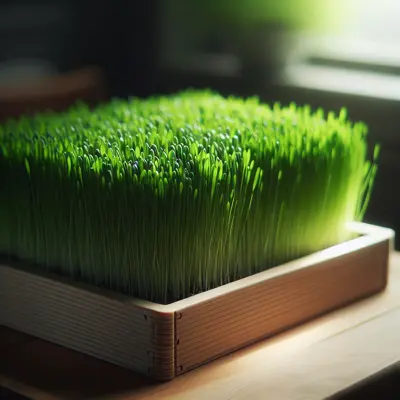
Wheat sprouts with a sweet flavor. 1/2 cup of seed yields approx. 2-3 cups of sprouts. All of Johnny's high-germination sprouting seeds have tested negative for the presence of E. coli 0157 and Salmonella.
Harvest
7-10d
Days to harvest
Sun
Full sun
Zones
4–9
USDA hardiness
Height
2-4 feet
Planting Timeline
Showing dates for Wheatgrass Microgreens in USDA Zone 7
All Zone 7 microgreen →Zone Map
Click a state to update dates
Wheatgrass Microgreens · Zones 4–9
Growing Details
Succession Planting
Wheatgrass runs 7-10 days from sow to cut and grows indoors year-round, so succession is really just a question of how much you use each week. A standard 10×20-inch tray yields roughly one to two juicing sessions; if you juice daily, start three trays offset by 3 days each so one is always hitting peak harvest height (around 6-8 inches). Most growers find 2-4 trays running at any one time is plenty — the short cycle keeps restocking almost automatic once you've done it a few times.
Complete Growing Guide
Light: Full sun (6 or more hours of direct sunlight a day). Soil: Clay, High Organic Matter, Loam (Silt), Sand. Soil pH: Neutral (6.0-8.0). Drainage: Good Drainage, Moist, Occasionally Dry. Height: 2 ft. 0 in. - 4 ft. 0 in.. Spread: 0 ft. 6 in. - 1 ft. 0 in.. Spacing: Less than 12 inches. Growth rate: Rapid. Maintenance: Low. Propagation: Seed. Regions: Coastal, Mountains, Piedmont.
Harvesting
Edibility: The grain is edible when cooked.
Storage & Preservation
Fresh wheatgrass microgreens are best used immediately after harvest for maximum nutrition and flavor. If you must store them, place unwashed microgreens in a breathable container lined with paper towels and refrigerate for up to 3-4 days. Higher moisture content in wheatgrass makes it more perishable than other microgreens.
For preservation, juicing immediately and freezing the juice in ice cube trays works excellently—you'll maintain most nutritional benefits for up to 3 months. Dehydrating is another option: spread clean, dry microgreens on dehydrator trays at 95°F until crisp, then powder in a blender for a nutrient-dense green powder. This powder keeps for 6 months in airtight containers.
Avoid freezing fresh wheatgrass microgreens, as their high water content creates mushy results upon thawing. Instead, focus on frequent small harvests and immediate consumption for the best experience.
History & Origin
Origin: Turkey through Iran to India
Advantages
- +Edible: The grain is edible when cooked.
- +Fast-growing
- +Low maintenance
Companion Plants
Wheatgrass shares a shelf easily with cilantro, kale, broccoli, and pea shoot trays — similar water schedules, similar light needs, no one crop muscling out another. Radish and sunflower microgreens are fine neighbors too, though both outpace wheatgrass in height by a few inches, so position them where they won't cast shade on shorter trays. Mustard and onion microgreens are worth keeping at a distance: both release volatile sulfur compounds that can bleed into the mild, grassy flavor wheatgrass is grown for. Buckwheat has documented allelopathic properties and is better off on its own shelf entirely.
Plant Together
Cilantro Microgreens
Natural pest deterrent properties protect neighboring microgreens
Kale Microgreens
Similar moisture and temperature requirements, compatible harvest schedules
Arugula Microgreens
Natural pest-repelling compounds help protect wheatgrass from common microgreen pests
Pea Shoots
Both have similar water and light requirements, grow well together in microgreen trays
Radish Microgreens
Fast germination helps break soil surface for slower-germinating wheatgrass
Sunflower Microgreens
Similar growing conditions and harvest timing, complementary nutritional profiles
Broccoli Microgreens
Compatible growing requirements and similar germination periods
Mung Bean Sprouts
Nitrogen-fixing properties can benefit wheatgrass growth in shared growing medium
Keep Apart
Mustard Microgreens
Releases allelopathic compounds that can inhibit wheatgrass germination and growth
Onion Microgreens
Strong sulfur compounds can suppress wheatgrass growth in close proximity
Buckwheat Microgreens
Competitive growth pattern and allelopathic effects can stunt wheatgrass development
Nutrition Facts
Per 100g serving. % Daily Value based on 2,000 calorie diet. Source: USDA FoodData Central (FDC #167782)
Pests & Disease Resistance
Resistance
Very hardy with good disease resistance
Common Pests
Fungus gnats, mold if overwatered
Diseases
Root rot from overwatering, mold in humid conditions
Troubleshooting Wheatgrass Microgreens
What you'll see, why it happens, and what to do about it.
White or gray fuzzy mold appearing on the soil surface or at the base of stems within the first 4-6 days
Likely Causes
- Botrytis cinerea or Pythium species — both thrive when humidity stays high and airflow is poor
- Overwatering or standing water in the tray with no drainage
What to Do
- 1.Cut watering to once daily and bottom-water only — pour into the tray beneath, let the medium wick it up
- 2.Point a small fan across the trays on low; even gentle airflow drops surface humidity enough to slow mold significantly
- 3.If it's already widespread, harvest whatever's usable immediately and sterilize the tray with a 10% bleach solution before the next sow
Seeds germinating unevenly — some sprout in 2 days, others still sitting dry by day 5
Likely Causes
- Unsoaked seed — wheatgrass benefits from an 8-12 hour pre-soak that most other microgreens don't need
- Thin or uneven seed distribution leaving some seeds exposed to air and drying out before they root
What to Do
- 1.Soak seeds in cool water for 8-12 hours before sowing, drain well, and spread immediately
- 2.Press seeds firmly and evenly into the growing medium so nearly all are in contact with the surface — a flat-bottomed glass works fine
- 3.Keep a second tray inverted on top as a blackout dome for the first 2-3 days to hold moisture during germination
Tiny slow-moving flies around the trays, and seedlings yellowing or stalling at day 6-8
Likely Causes
- Fungus gnats (Bradysia species) — their larvae feed on roots and organic matter in the top inch of growing medium
- Overwatered trays creating the wet, organic-rich conditions fungus gnats breed in
What to Do
- 1.Let the top of the growing medium dry out slightly between waterings — fungus gnats need consistently wet conditions to reproduce
- 2.Place yellow sticky traps flat on the tray edges to catch adults before they lay another generation
- 3.You're harvesting by day 7-10 anyway — if gnats show up late, cut the tray promptly rather than reaching for a treatment
Frequently Asked Questions
How long do wheatgrass microgreens take to grow?▼
Can you grow wheatgrass microgreens without soil?▼
What do wheatgrass microgreens taste like?▼
Do wheatgrass microgreens regrow after cutting?▼
Why are my wheatgrass microgreens turning yellow?▼
How much wheatgrass microgreens should I eat daily?▼
Zone-by-Zone Planting Calendar
| Zone | Indoor Start | Transplant | Direct Sow | Harvest |
|---|---|---|---|---|
| Zone 3 | January – December | — | — | January – December |
| Zone 4 | January – December | — | — | January – December |
| Zone 5 | January – December | — | — | January – December |
| Zone 6 | January – December | — | — | January – December |
| Zone 7 | January – December | — | — | January – December |
| Zone 8 | January – December | — | — | January – December |
| Zone 9 | January – December | — | — | January – December |
| Zone 10 | January – December | — | — | January – December |
| Zone 1 | January – December | — | — | January – December |
| Zone 2 | January – December | — | — | January – December |
| Zone 11 | January – December | — | — | January – December |
| Zone 12 | January – December | — | — | January – December |
| Zone 13 | January – December | — | — | January – December |
Growing Guides from Wind River Greens
Sources & References
External authority sources used in compiling this guide.
- ExtensionNC State Extension
- USDAUSDA FoodData Central
See the Methodology page for how this data is sourced, what's AI-assisted, and known limitations.