Belladonna Mix
Delphinium x belladonna
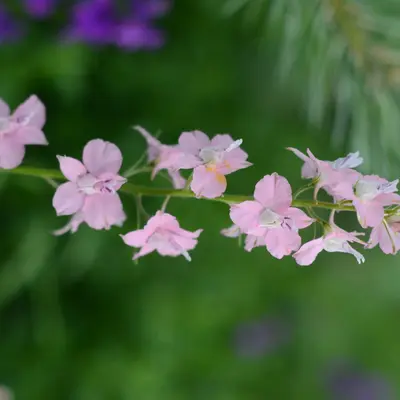
First-year flowering perennial. Well-branched plants produce spikes in dark blue, turquoise, or white. Tall plants may benefit from support - stems can lodge or topple in heavy rain or wind. Attracts bees and butterflies. Often grown as an annual. Perennial in Zones 3-7.
Harvest
130-135d
Days to harvest
Sun
Full sun to partial shade
Zones
3–9
USDA hardiness
Height
1-3 feet
Planting Timeline
Showing dates for Belladonna Mix in USDA Zone 7
All Zone 7 flower →Zone Map
Click a state to update dates
Belladonna Mix · Zones 3–9
Growing Details
Complete Growing Guide
Light: Full sun (6 or more hours of direct sunlight a day), Partial Shade (Direct sunlight only part of the day, 2-6 hours). Soil: High Organic Matter. Soil pH: Alkaline (>8.0). Drainage: Good Drainage. Height: 1 ft. 0 in. - 3 ft. 0 in.. Spread: 1 ft. 0 in. - 2 ft. 0 in.. Spacing: Less than 12 inches. Maintenance: High. Propagation: Seed. Regions: Coastal, Mountains, Piedmont.
Harvesting
Fruit dry, many seeded.
Color: Black, Brown/Copper.
Edibility: Poisonous. Plants are considered toxic to humans if ingested.
Storage & Preservation
Belladonna Mix flowers are ornamental cut flowers best stored in a cool environment. Keep fresh-cut stems in a tall vase filled with clean, cool water at 65-72°F. Change water every 2-3 days and re-cut stems at a 45-degree angle. Vase life typically extends 10-14 days in cool conditions. For preservation, air-dry flower spikes upside-down in a dark, well-ventilated space for 2-3 weeks to create long-lasting dried arrangements. Alternatively, press individual florets between parchment paper under heavy weight for 1-2 weeks for botanical preservation or craft use. Silica gel drying preserves color most effectively when flowers are fully opened.
History & Origin
Origin: Temperate and Subtropical Old World, North America
Advantages
- +Attracts: Butterflies, Hummingbirds
- +Edible: Poisonous. Plants are considered toxic to humans if ingested.
Considerations
- -Toxic (Flowers, Leaves, Seeds, Stems): High severity
- -High maintenance
Companion Plants
Marigolds (especially Tagetes patula) and nasturtiums attract parasitic wasps and hoverflies that prey on the aphids delphinium tends to collect on its soft new growth — sweet alyssum and calendula do the same work by different means, drawing in hoverfly adults whose larvae do the actual feeding on aphid colonies. Catmint and lavender are good neighbors for a structural reason: both share delphinium's drainage requirements, so they won't pull the bed toward the soggy conditions that invite Phytophthora root rot. Fennel and black walnut are a different story — fennel releases allelopathic root exudates that suppress nearby plants, and black walnut produces juglone, a compound toxic enough to stunt or kill a broad range of garden plants rooted anywhere near it.
Plant Together
Marigolds
Repel aphids, whiteflies, and nematodes while attracting beneficial insects
Nasturtiums
Act as trap crops for aphids and cucumber beetles, protecting nearby plants
Sweet Alyssum
Attracts beneficial insects like hoverflies and parasitic wasps for natural pest control
Calendula
Repels aphids and tomato hornworms while attracting pollinators
Zinnias
Attract butterflies and beneficial insects, provide good companion height variation
Cosmos
Attract beneficial insects and provide structural support without competing for nutrients
Catmint
Repels ants, aphids, and rodents while attracting pollinators
Lavender
Repels moths, fleas, and mosquitoes with aromatic compounds
Keep Apart
Black Walnut
Produces juglone toxin that inhibits growth and can kill sensitive flowering plants
Eucalyptus
Releases allelopathic compounds that suppress growth of nearby plants
Fennel
Inhibits growth of most garden plants through allelopathic root secretions
Pests & Disease Resistance
Common Pests
Aphids, spider mites, slugs
Diseases
Powdery mildew, root rot in poorly drained soil
Troubleshooting Belladonna Mix
What you'll see, why it happens, and what to do about it.
White powdery coating on leaves and stems, usually appearing mid-summer when nights cool down
Likely Causes
- Powdery mildew (Erysiphe aquilegiae or related Erysiphe spp.) — thrives in warm days with cool, humid nights
- Poor airflow from crowded planting at less than 12-inch spacing
What to Do
- 1.Cut affected stems back hard — delphinium will often resprout cleaner foliage
- 2.Space plants at least 12-18 inches apart and remove any foliage touching the ground
- 3.Apply a diluted neem oil spray (2 tbsp per gallon) every 7-10 days at first sign; don't wait until the whole plant is coated
Plant suddenly wilts and collapses at the base, stem feels soft or hollow at soil level
Likely Causes
- Crown rot or root rot — usually Botrytis cinerea or Phytophthora spp. in waterlogged or poorly drained soil
- Planting too deep, which keeps the crown wet
What to Do
- 1.Dig the plant — if the roots are black and mushy below 2 inches, it's gone; pull it and don't replant delphinium in that spot for 2-3 seasons
- 2.Amend the bed with coarse grit or perlite before replanting to improve drainage
- 3.Set the crown slightly above soil grade at transplant time, not buried
Irregular holes chewed in leaves and young shoots, worst damage at soil level in spring
Likely Causes
- Slugs (Deroceras reticulatum and related species) — most active after rain or irrigation, especially in cool weather below 65°F
- Young transplants and first-year crowns are the most vulnerable
What to Do
- 1.Set out iron phosphate bait (Sluggo or similar) around the base of plants after any rain or watering; reapply every 5-7 days
- 2.Lay a ring of coarse diatomaceous earth 3-4 inches wide around each plant — refresh it after rain
- 3.Check under mulch near the crowns at night with a flashlight and hand-pick
Leaves stippled with tiny pale dots, fine webbing visible on undersides in hot, dry weather
Likely Causes
- Two-spotted spider mite (Tetranychus urticae) — populations explode when temperatures exceed 85°F and humidity drops
- Drought-stressed plants are hit first and hardest
What to Do
- 1.Blast the undersides of leaves with a strong stream of water every 2-3 days — it physically dislodges mites and they rarely climb back
- 2.Apply insecticidal soap (1% solution) directly to leaf undersides; repeat every 5-7 days for at least 3 applications
- 3.Water consistently at the root zone — a plant under drought stress will lose this fight faster than a well-watered one
Frequently Asked Questions
How long do Belladonna Mix flowers last in a vase?▼
Is Belladonna Mix a good flower for beginners?▼
Can you grow Belladonna Mix in containers?▼
When should I plant Belladonna Mix seeds?▼
What colors does Belladonna Mix produce?▼
Do Belladonna Mix plants need staking or support?▼
Zone-by-Zone Planting Calendar
| Zone | Indoor Start | Transplant | Direct Sow | Harvest |
|---|---|---|---|---|
| Zone 3 | April – May | June – July | June – August | — |
| Zone 4 | March – April | June – June | June – July | — |
| Zone 5 | March – April | May – June | May – July | — |
| Zone 6 | March – April | May – June | May – July | — |
| Zone 7 | February – March | April – May | April – June | — |
| Zone 8 | February – March | April – May | April – June | — |
| Zone 9 | January – February | March – April | March – May | — |
| Zone 10 | January – January | February – March | February – April | — |
| Zone 1 | May – June | July – August | July – September | — |
| Zone 2 | April – May | June – July | June – August | — |
| Zone 11 | January – January | January – February | January – March | — |
| Zone 12 | January – January | January – February | January – March | — |
| Zone 13 | January – January | January – February | January – March | — |
Growing Guides from Wind River Greens
Sources & References
External authority sources used in compiling this guide.
- BreederJohnny's Selected Seeds
See the Methodology page for how this data is sourced, what's AI-assisted, and known limitations.