Silver Queen
Zea mays 'Silver Queen'
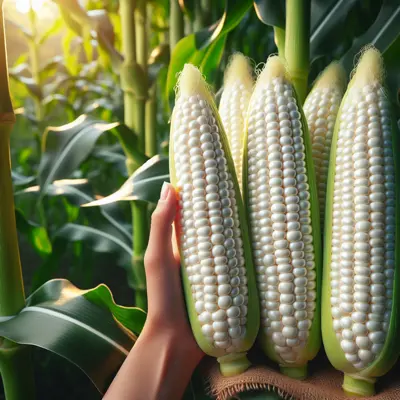
The gold standard of white sweet corn varieties, Silver Queen has been the benchmark for sweetness and tenderness since 1958. This reliable heirloom produces large ears packed with creamy white kernels that deliver exceptional flavor and crisp texture. A true classic that continues to dominate home gardens and farmers markets across America.
Harvest
92-94d
Days to harvest
Sun
Full sun
Zones
2–11
USDA hardiness
Height
5-8 feet
Planting Timeline
Showing dates for Silver Queen in USDA Zone 7
All Zone 7 corn →Zone Map
Click a state to update dates
Silver Queen · Zones 2–11
Growing Details
Succession Planting
Silver Queen runs 92-94 days to harvest, so you don't have unlimited room to stagger plantings — but two solid blocks are doable. Direct sow the first around April 15 once soil temps reach 60°F, then put in a second sowing between May 15 and June 1. The UGA Vegetable Garden Calendar lists a third corn planting in May as viable; Silver Queen's long days-to-maturity means anything started after early June risks running into fall frost before the ears are ready to pull.
Space those sowings 2-3 weeks apart rather than all at once, and plant each block in a minimum 4x4 grid — corn is wind-pollinated, and a single long row is the most common reason for patchy kernel fill. Hard cutoff: don't sow Silver Queen after June 1 in zone 7. A late-June start on a 92-day variety won't finish before October frosts close things down.
Complete Growing Guide
Light: Full sun (6 or more hours of direct sunlight a day). Soil: Clay, High Organic Matter, Loam (Silt). Soil pH: Acid (<6.0), Neutral (6.0-8.0). Drainage: Good Drainage. Height: 5 ft. 0 in. - 8 ft. 0 in.. Spread: 1 ft. 0 in. - 2 ft. 0 in.. Spacing: 12 inches-3 feet. Growth rate: Rapid. Maintenance: Medium. Propagation: Seed. Regions: Coastal, Mountains, Piedmont.
Harvesting
Color: Gold/Yellow. Type: Caryopsis. Length: > 3 inches. Width: 1-3 inches.
Garden value: Edible, Showy
Harvest time: Fall
Edibility: Edibile
Storage & Preservation
Silver Queen's sugars convert to starch rapidly after harvest, so immediate processing is crucial. Store unhusked ears in the refrigerator for maximum 2-3 days, keeping husks damp to prevent kernel drying.
For freezing, blanch whole ears for 7-9 minutes depending on size, then plunge into ice water. Cut kernels from cobs or freeze whole ears. Silver Queen's creamy texture makes excellent cream-style corn—scrape cobs after cutting to capture the sweet milk.
This variety cans beautifully using a pressure canner, maintaining its tender texture better than most sweet corn varieties. The high sugar content also makes Silver Queen ideal for making corn relish or pickled corn salad that showcases its distinctive flavor.
History & Origin
Silver Queen emerged from the University of Illinois sweet corn breeding program in the 1950s, introduced commercially in 1958 by the Northrup King seed company. Developed during the post-war agricultural expansion when home gardeners and commercial growers sought reliable white corn varieties with superior sweetness, Silver Queen represented a significant advancement over earlier white cultivars. The variety resulted from deliberate crosses within elite breeding lines selected for kernel tenderness, sugar content, and ear size. While detailed records of the original breeders remain fragmented in archived seed company documentation, Silver Queen's introduction coincided with the broader modernization of American vegetable breeding, establishing itself as the defining white sweet corn standard that persists today.
Origin: Mexico
Advantages
- +Edible: Edibile
- +Fast-growing
Companion Plants
Bush beans and pole beans are the most practical neighbors for Silver Queen. Beans fix atmospheric nitrogen, and corn — which can strip a bed of N fast enough to show deficiency by knee height — will pull that fertility straight out of the soil as the season moves. Winter squash completes the classic Three Sisters arrangement: the big leaves sprawl across the 30-36 inch row gaps, shading out weeds and holding soil moisture through the dry stretches that reliably hit our zone 7 Georgia gardens in July. Dill draws in parasitic wasps that attack corn earworm larvae, and sunflowers planted on the north side act as a beetle magnet, pulling Japanese beetles away from the ears before they get established.
Black walnut is the one to plant nowhere near this bed — juglone, the compound walnut roots and husks release, suppresses corn growth and there's no working around it short of staying outside the drip line. Tomatoes and brassicas both compete hard for the same calcium and nitrogen Silver Queen needs, and they can share aphid populations back and forth in a dense planting. Neither pairing gains you anything worth the trouble.
Plant Together
Dill
Attracts beneficial wasps that prey on corn borers and other corn pests
Bush Beans
Fix nitrogen in soil that corn can utilize, part of traditional Three Sisters planting
Winter Squash
Provides ground cover and weed suppression, completes the Three Sisters companion trio
Marigolds
Repel corn earworm, aphids, and other harmful insects with strong scent
Nasturtiums
Trap crop for cucumber beetles and aphids, protect corn from pest damage
Sunflowers
Attract beneficial insects and provide windbreak protection for corn stalks
Lettuce
Benefits from corn's shade during hot weather, efficient use of garden space
Pole Beans
Climb corn stalks for support while fixing nitrogen that benefits corn growth
Keep Apart
Black Walnut Trees
Release juglone toxin that inhibits corn growth and can cause stunting or death
Brassicas
Corn's allelopathic compounds can stunt growth of cabbage, broccoli, and related crops
Tomatoes
Both are heavy nitrogen feeders creating competition, corn attracts tomato fruitworm
Nutrition Facts
Per 100g serving. % Daily Value based on 2,000 calorie diet. Source: USDA FoodData Central (FDC #168538)
Pests & Disease Resistance
Resistance
Good resistance to Stewart's wilt. Moderate resistance to common rust.
Common Pests
Corn earworm, European corn borer, corn rootworm, Japanese beetles
Diseases
Common rust, northern corn leaf blight, Stewart's wilt, smut
Troubleshooting Silver Queen
What you'll see, why it happens, and what to do about it.
Silks and ear tips showing brown, chewed damage, often with frass (caterpillar droppings) inside the husk at harvest
Likely Causes
- Corn earworm (Helicoverpa zea) — larvae enter through the silk channel and feed down into the ear
- European corn borer (Ostrinia nubilalis) — secondary tunneling into the ear from stalk entry points
What to Do
- 1.Apply a few drops of mineral oil to the silks 3-5 days after silks first appear — this suffocates newly hatched larvae before they burrow in
- 2.Follow the Georgia Pest Management Handbook spray schedule for corn earworm; timing to silk emergence is critical
- 3.At harvest, just cut the damaged tip off — the bottom 80% of the ear is almost always fine
Rusty orange or tan pustules covering the upper and lower surfaces of leaves, spreading fast across the planting
Likely Causes
- Common rust (Puccinia sorghi) — fungal spores blow in on wind, spread rapidly in humid conditions
- Southern rust (Puccinia polysora) — more aggressive in hot weather; NC State Extension's CDIN-002 notes it can be more damaging than common rust in the Southeast
What to Do
- 1.Silver Queen has no significant rust resistance built in — scout leaves weekly starting around day 50 after germination
- 2.Remove and bag (don't compost) heavily infected leaves to slow spread
- 3.If rust appears before tasseling, a fungicide application (chlorothalonil or a triazole product) can protect yield; after silks brown out, the window has passed
Stalks wilting suddenly and dying, or galls — white at first, then black and powdery — forming on ears, stalks, or tassels
Likely Causes
- Stewart's wilt (Pantoea stewartii) — bacterial disease vectored by corn flea beetle; the seedling wilt phase can kill plants before they reach knee height
- Corn smut (Ustilago maydis) — fungal galls that swell and rupture, releasing black spores; NC State Plant Disease and Insect Clinic notes it's more of a cosmetic issue on mature plants than a true yield killer
What to Do
- 1.For Stewart's wilt: pull and destroy wilted seedlings immediately — there's no cure, and the bacteria spreads via flea beetles, so floating row cover during the first 3-4 weeks cuts beetle access significantly
- 2.For smut galls: cut them off and bag them before they turn black and rupture; spores released into the soil can persist for multiple seasons
- 3.Pull smut-affected plants entirely and rotate that bed out of corn for at least 3 years
Frequently Asked Questions
How long does Silver Queen corn take to grow?▼
Can you grow Silver Queen corn in containers?▼
What does Silver Queen corn taste like?▼
When should I plant Silver Queen corn?▼
Is Silver Queen good for beginners?▼
Silver Queen vs Honey and Cream corn - what's the difference?▼
Zone-by-Zone Planting Calendar
| Zone | Indoor Start | Transplant | Direct Sow | Harvest |
|---|---|---|---|---|
| Zone 1 | — | — | July – August | November – August |
| Zone 2 | — | — | June – August | October – September |
| Zone 11 | — | — | January – March | May – July |
| Zone 12 | — | — | January – March | May – July |
| Zone 13 | — | — | January – March | May – July |
| Zone 3 | — | — | June – July | October – October |
| Zone 4 | — | — | June – July | September – October |
| Zone 5 | — | — | May – June | September – October |
| Zone 6 | — | — | May – June | September – October |
| Zone 7 | — | — | April – June | August – October |
| Zone 8 | — | — | April – May | August – September |
| Zone 9 | — | — | March – April | July – August |
| Zone 10 | — | — | February – April | June – August |
Growing Guides from Wind River Greens
Sources & References
External authority sources used in compiling this guide.
See the Methodology page for how this data is sourced, what's AI-assisted, and known limitations.