Flat-Leaf Parsley
Petroselinum crispum var. neapolitanum
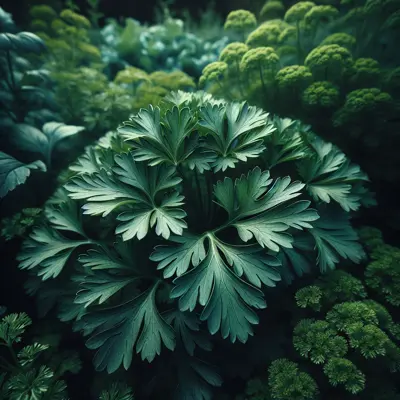
Also known as Italian parsley, this variety offers superior flavor compared to curly parsley with its clean, bright taste that doesn't overpower dishes. The flat, deeply-cut leaves are easier to chop and provide a fresh, grassy flavor that's essential in Mediterranean cooking. This hardy biennial is incredibly productive and continues growing through light frosts, making it a kitchen garden staple.
Harvest
70-90d
Days to harvest
Sun
Full sun
Zones
3–9
USDA hardiness
Height
0-3 feet
Planting Timeline
Showing dates for Flat-Leaf Parsley in USDA Zone 7
All Zone 7 herb →Zone Map
Click a state to update dates
Flat-Leaf Parsley · Zones 3–9
Growing Details
Succession Planting
Start seeds indoors in February–March (zone 7) and count on 70–90 days to first harvest, landing you at June. Because parsley germinates slowly, a second sowing in late March or early April gives you a backup flush without much overlap. Sow every 3–4 weeks through mid-April if you want a continuous supply; after that, rising heat pushes biennial plants toward bolting in their second year.
Plants that overwinter will bolt and go to seed by late spring of year two — pull those and start fresh. In zone 7, seeds started indoors in late July and transplanted out in September will produce through November and often hold through light frosts down to about 28°F under row cover, closing the harvest gap without any complicated timing.
Complete Growing Guide
Light: Full sun (6 or more hours of direct sunlight a day). Soil: Clay, Loam (Silt), Sand. Soil pH: Acid (<6.0), Neutral (6.0-8.0). Drainage: Good Drainage, Moist. Height: 0 ft. 8 in. - 3 ft. 0 in.. Spread: 0 ft. 8 in. - 1 ft. 0 in.. Spacing: 12 inches-3 feet. Growth rate: Medium. Maintenance: Medium. Propagation: Seed. Regions: Coastal, Mountains, Piedmont.
Harvesting
The small, ridged seeds are formed in the second year from July to September. The fruit and seeds are poisonous to birds.
Type: Schizocarp.
Harvest time: Fall, Summer
Edibility: Leaves as flavoring and garnish
Storage & Preservation
Fresh flat-leaf parsley stores best treated like cut flowers—trim stems and place in a jar of water, then cover loosely with a plastic bag and refrigerate. This method maintains peak flavor for 7-10 days. Alternatively, wrap unwashed parsley in slightly damp paper towels and store in the crisper drawer for 5-7 days.
For preservation, flat-leaf parsley excels at freezing. Wash, thoroughly dry, and freeze whole sprigs in freezer bags—frozen parsley works beautifully in cooked dishes though it loses crispness. Ice cube freezing works wonderfully: chop leaves finely, pack into ice cube trays with a little water or olive oil, and freeze for convenient cooking portions.
Drying works but reduces the vibrant flavor that makes flat-leaf parsley superior to curly varieties. Air-dry small bundles in a dark, well-ventilated area, or use a dehydrator at 95°F. For maximum flavor retention, consider making parsley paste by blending fresh leaves with olive oil—freeze in small portions for up to six months.
History & Origin
Origin: Europe
Advantages
- +Attracts: Butterflies
- +Edible: Leaves as flavoring and garnish
Considerations
- -Toxic: Low severity
Companion Plants
Tomatoes and parsley work well planted 6–8 inches apart along the bed edge — parsley draws in predatory wasps that prey on tomato hornworm (Manduca quinquemaculata), and the dense low foliage gives ground beetles somewhere to shelter. Asparagus is a similar fit: asparagus crowns sit 12–18 inches deep, so parsley's shallow roots don't compete with them, and both plants benefit from the same beneficial insect traffic. Carrots are fine neighbors too, though keep at least 8 inches between them — parsley and carrots share the Apiaceae family and attract some of the same pests, including carrot fly, so crowding them invites trouble rather than solving it.
Mint stays out of the bed entirely — not because of any chemical interaction, but because it spreads by underground runners and will physically displace parsley within one growing season. Pot it if you want it nearby. Caraway produces allelopathic compounds that can suppress germination and stunt early growth in neighboring herbs, parsley included, so give it its own section of the garden at least 18–24 inches away.
Plant Together
Tomatoes
Parsley repels tomato hornworms and aphids while tomatoes provide light shade
Carrots
Parsley improves carrot flavor and growth, while carrots help loosen soil for parsley roots
Asparagus
Parsley attracts beneficial insects that protect asparagus from asparagus beetles
Roses
Parsley repels rose beetles and aphids while attracting beneficial predatory insects
Chives
Both herbs repel similar pests and enhance each other's growth without competition
Peppers
Parsley provides ground cover and attracts beneficial insects that control pepper pests
Corn
Parsley attracts parasitic wasps that control corn borers and other corn pests
Broccoli
Parsley attracts beneficial insects that prey on cabbage worms and other brassica pests
Keep Apart
Lettuce
Parsley's strong root system can compete for nutrients and stunt lettuce growth
Mint
Both are aggressive spreaders that compete for space and nutrients
Caraway
Inhibits parsley seed germination and can stunt established parsley growth
Nutrition Facts
Per 100g serving. % Daily Value based on 2,000 calorie diet. Source: USDA FoodData Central (FDC #170416)
Pests & Disease Resistance
Resistance
Generally resistant to most diseases when grown in well-drained conditions
Common Pests
Aphids, carrot fly, armyworms, swallowtail butterfly caterpillars
Diseases
Crown rot, leaf spot, powdery mildew in humid conditions
Troubleshooting Flat-Leaf Parsley
What you'll see, why it happens, and what to do about it.
Seeds take 3+ weeks to sprout, or germination is sparse and uneven
Likely Causes
- Parsley's notoriously slow germination — oils in the seed coat delay water absorption
- Soil temperature below 50°F slows the process further; ideal range is 65–70°F
- Seed planted too deep (more than ¼ inch)
What to Do
- 1.Soak seeds in warm water for 24 hours before sowing to soften the seed coat
- 2.Use a heat mat to hold soil at 65–70°F — germination can drop to 14 days at that range
- 3.Sow at ¼ inch depth or barely press seed into the surface and keep consistently moist
Stems collapsing at the soil line on seedlings or young transplants
Likely Causes
- Crown rot — typically Pythium or Phytophthora spp. — triggered by waterlogged soil or poor drainage
- Damping off in seedling trays from overwatering and low airflow
What to Do
- 1.Let the top ½ inch of soil dry between waterings; parsley wants 1 inch per week, not constant saturation
- 2.Improve drainage by amending heavy clay with compost before planting, or raise beds 4–6 inches
- 3.For seedling trays, run a small fan for 30 minutes daily and water only from the bottom
Small tan or brown spots on leaves, sometimes with a yellow halo, spreading across the plant
Likely Causes
- Leaf spot — caused by Septoria petroselini or similar fungal pathogens — worsens in wet, humid conditions
- Overhead watering splashing spores from soil or infected debris onto foliage
What to Do
- 1.Remove and trash (don't compost) affected leaves as soon as you spot them
- 2.Switch to drip irrigation or water at the base; keep foliage dry
- 3.Space plants at least 6–8 inches apart for airflow, and rotate out of the same bed each season
Clusters of tiny soft-bodied insects on new growth, leaves curling or sticky to the touch
Likely Causes
- Aphids — most commonly green peach aphid (Myzus persicae) — colonize tender new stems
- Ants farming aphids, protecting the colony and ferrying them to fresh growth
What to Do
- 1.Knock aphids off with a firm spray of water from a hose — do this in the morning so foliage dries quickly
- 2.Apply insecticidal soap (diluted per label, typically 2–3% solution) directly to colonies; repeat every 5–7 days
- 3.Check for ant trails at the base of stems — if ants are present, a sticky barrier around the stem base breaks the cycle
Frequently Asked Questions
How long does flat-leaf parsley take to grow from seed?▼
Can you grow flat-leaf parsley in containers?▼
What's the difference between flat-leaf and curly parsley?▼
Is flat-leaf parsley good for beginners?▼
When should I plant flat-leaf parsley?▼
Does flat-leaf parsley come back every year?▼
Zone-by-Zone Planting Calendar
| Zone | Indoor Start | Transplant | Direct Sow | Harvest |
|---|---|---|---|---|
| Zone 3 | April – May | June – July | — | July – October |
| Zone 4 | March – April | June – July | — | July – October |
| Zone 5 | March – April | May – June | — | June – October |
| Zone 6 | March – April | May – June | — | June – November |
| Zone 7 | February – March | April – June | — | June – November |
| Zone 8 | February – March | April – May | — | May – December |
| Zone 9 | January – February | March – April | — | April – December |
Growing Guides from Wind River Greens
Sources & References
External authority sources used in compiling this guide.
See the Methodology page for how this data is sourced, what's AI-assisted, and known limitations.