Purple Majesty
Cenchrus americanus
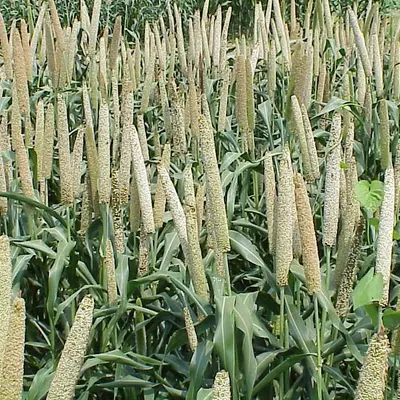
Add architecture and color to floral arrangements or containers. Deep purple foliage, stems, and cattail-like spikes. 1-3 main stems and 12-14" secondary plumes. Suited to 4" pots up to gallon containers. Also known as pearl millet. FleuroSelect Gold Award Winner. AAS Winner.
Harvest
120d
Days to harvest
Sun
Full sun
Zones
2–11
USDA hardiness
Height
3-6 feet
Planting Timeline
Showing dates for Purple Majesty in USDA Zone 7
All Zone 7 grass →Zone Map
Click a state to update dates
Purple Majesty · Zones 2–11
Growing Details
Succession Planting
Purple Majesty is a warm-season annual grown for its foliage and ornamental seed heads, not a cut-and-come-again crop — succession sowing doesn't apply here. Direct sow once in spring after soil temps hit 65°F (March through May in zone 7), give it its full 120 days, and pull it after the first hard frost takes it down in fall.
Complete Growing Guide
Light: Full sun (6 or more hours of direct sunlight a day). Soil: Clay, Loam (Silt), Sand, Shallow Rocky. Soil pH: Acid (<6.0), Neutral (6.0-8.0). Drainage: Occasionally Dry, Very Dry. Height: 3 ft. 0 in. - 6 ft. 0 in.. Spread: 2 ft. 0 in. - 3 ft. 0 in.. Growth rate: Rapid. Maintenance: Low. Propagation: Seed. Regions: Coastal, Mountains, Piedmont.
Harvesting
The fruits are small, rounded grains that range in color from white to yellow and occasionally brown and purple.
Color: Brown/Copper, Gold/Yellow, White. Type: Caryopsis.
Garden value: Edible
Harvest time: Fall, Summer
Edibility: Seeds can be eaten raw or cooked or used like rice in sweet or savoury dishes. It can be ground into a powder and used as a flour for making bread or porridge. The grain is often fermented to make various foods and the sweet tasting grains are eaten raw by children.
Storage & Preservation
Purple Majesty grass is primarily grown as an ornamental for fresh arrangements and displays. Fresh stems should be stored in a cool location (60-65°F) away from direct sunlight to preserve the deep purple color. For cut arrangements, place stems in water and keep in a cool environment with moderate humidity—they'll maintain quality for 2-3 weeks. Preservation methods include: (1) Air-drying upright in bundles in a cool, dry location for dried arrangements lasting months, (2) Pressing individual plumes between paper for flat displays, and (3) Silica gel drying to maintain color and texture for 6+ months. Avoid high humidity to prevent mold.
History & Origin
Origin: Central Africa
Advantages
- +Attracts: Songbirds
- +Edible: Seeds can be eaten raw or cooked or used like rice in sweet or savoury dishes. It can be ground into a powder and used as a flour for making bread or porridge. The grain is often fermented to make various foods and the sweet tasting grains are eaten raw by children.
- +Fast-growing
- +Low maintenance
Companion Plants
In our zone 7 Georgia garden, Purple Majesty does best alongside drought-tolerant, full-sun perennials that aren't going to fight it for water once the roots settle in. Black-Eyed Susan and Coneflower (Echinacea spp.) bloom at compatible heights and pull the same pollinators without shading the millet's lower leaves — the purple-gold color contrast is genuinely good, and that alone is reason enough to plant them together. Lavender and Russian Sage share its preference for lean, well-drained soil and look sharper next to the dark foliage than they do in a mixed border on their own. Hosta is a mismatch at a basic cultural level: it wants consistent moisture and overhead shade, and the two plants simply can't share a bed without one of them losing. Black Walnut is a harder problem — juglone produced by the roots moves through the soil and will stunt or kill most annual grasses planted within the canopy's reach.
Plant Together
Black-Eyed Susan
Complementary golden blooms create striking contrast with purple foliage
Sedum
Similar drought tolerance and low maintenance requirements
Lavender
Shares preference for well-draining soil and attracts beneficial pollinators
Russian Sage
Complementary purple-blue flowers and similar drought tolerance
Ornamental Kale
Purple and pink foliage creates cohesive color scheme
Catmint
Deer resistant like Purple Majesty and provides season-long purple blooms
Coneflower
Attracts butterflies and provides vertical structure contrast
Coral Bells
Colorful foliage complements purple grass in shade conditions
Keep Apart
Hosta
Requires consistently moist soil while Purple Majesty prefers drier conditions
Impatiens
Needs frequent watering and rich soil that can cause root rot in drought-tolerant grass
Black Walnut
Produces juglone toxin that inhibits growth of many ornamental grasses
Troubleshooting Purple Majesty
What you'll see, why it happens, and what to do about it.
Seedlings emerge spindly and pale, leaning toward light, collapsing at the soil line within the first 2 weeks
Likely Causes
- Damping off (Pythium or Rhizoctonia spp.) from overwatering in cool, poorly drained starting mix
- Sowing too early indoors before soil temps can support fast germination — Purple Majesty wants soil at 65°F or warmer
What to Do
- 1.Direct sow outside after your last frost date when soil has warmed; this grass doesn't benefit much from indoor starts
- 2.If starting in containers, use a well-draining seed-starting mix and water only when the top inch is dry
- 3.Thin to 18–24 inches early — crowded seedlings damp off faster and never catch up
Leaves developing orange or rust-colored pustules on the undersides, mid to late summer
Likely Causes
- Rust fungus (Puccinia spp.) — common on ornamental millets in humid summers, spreads by wind and water splash
- Poor air circulation from tight spacing or planting in a low-lying spot that holds humidity overnight
What to Do
- 1.Remove and trash (don't compost) affected leaves as soon as you spot pustules
- 2.Space plants the full 24 inches apart and avoid overhead irrigation in the evening
- 3.Severe cases can be slowed with a copper-based fungicide, but at 120 days to maturity the plant is often nearly done — weigh whether spraying is worth the effort at that point
Foliage fading from deep purple to muddy green-bronze through the growing season
Likely Causes
- Insufficient direct sun — Purple Majesty needs 6+ hours of full sun to hold its color; anything less and anthocyanin production drops off
- Excess nitrogen from over-fertilizing, which pushes green vegetative growth at the expense of pigmentation
What to Do
- 1.Relocate the next planting to a spot that isn't shaded by taller crops or structures after 10 a.m.
- 2.Skip the heavy nitrogen fertilizer; one side-dress of balanced compost at planting is plenty for this grass
- 3.If the bed is stuck in part shade, accept the color loss or pull the plant — it won't recover mid-season
Frequently Asked Questions
How long does Purple Majesty grass take to grow?▼
Can you grow Purple Majesty grass in containers?▼
Is Purple Majesty grass good for beginners?▼
What does Purple Majesty grass look like and how is it used?▼
When should I plant Purple Majesty grass?▼
How much space does Purple Majesty grass need?▼
Zone-by-Zone Planting Calendar
| Zone | Indoor Start | Transplant | Direct Sow | Harvest |
|---|---|---|---|---|
| Zone 3 | — | June – August | May – July | — |
| Zone 4 | — | June – July | April – June | — |
| Zone 5 | — | May – July | April – June | — |
| Zone 6 | — | May – July | April – June | — |
| Zone 7 | — | May – June | March – May | — |
| Zone 8 | — | April – June | March – May | — |
| Zone 9 | — | March – May | February – April | — |
| Zone 10 | — | March – April | January – March | — |
| Zone 2 | — | July – August | May – July | — |
| Zone 11 | — | February – March | January – February | — |
Growing Guides from Wind River Greens
Sources & References
External authority sources used in compiling this guide.
- ExtensionNC State Extension
- BreederJohnny's Selected Seeds
See the Methodology page for how this data is sourced, what's AI-assisted, and known limitations.