Sweet Pepper 'Cubanelle'
Capsicum annuum 'Cubanelle'
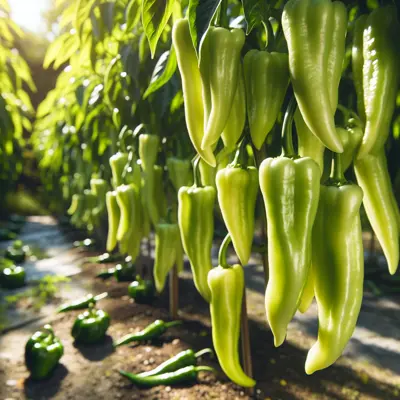
Often called the 'Italian Frying Pepper,' this sweet, thin-walled variety is prized for its exceptional flavor and tender texture that makes it perfect for quick cooking. Popular in Caribbean and Italian cuisine, Cubanelle peppers offer a mild, sweet taste with just a hint of heat that appeals to all palates. Their elongated shape and vibrant color make them as beautiful in the garden as they are delicious on the plate.
Harvest
60-70d
Days to harvest
Sun
Full sun
Zones
4–11
USDA hardiness
Height
1-3 feet
Planting Timeline
Showing dates for Sweet Pepper 'Cubanelle' in USDA Zone 7
All Zone 7 pepper →Zone Map
Click a state to update dates
Sweet Pepper 'Cubanelle' · Zones 4–11
Growing Details
Complete Growing Guide
Cubanelle peppers mature quickly at 60-70 days, allowing for succession planting every two weeks in warm climates to ensure continuous harvests through the season. These thin-walled peppers demand consistent warmth—soil temperatures between 70-85°F—and will slow dramatically if temperatures drop below 60°F, so avoid early planting. Unlike thicker-walled bell pepper varieties, Cubanelles are prone to sunscald and cracking during extreme heat or irregular watering, making mulching and consistent moisture essential. They're relatively pest-resistant but watch for spider mites in hot, dry conditions, which can stress the tender foliage. The compact 1-3 foot plants tend toward leggy growth in insufficient light, so provide full sun (6-8 hours minimum) and pinch young growth once to encourage bushier development. A practical tip: harvest peppers when they're still firm and green rather than waiting for full color development; this encourages more prolific fruiting throughout the season.
Light: Full sun (6 or more hours of direct sunlight a day). Soil: Clay, High Organic Matter, Loam (Silt), Sand. Soil pH: Acid (<6.0), Alkaline (>8.0), Neutral (6.0-8.0). Drainage: Good Drainage. Height: 1 ft. 0 in. - 3 ft. 8 in.. Spread: 0 ft. 6 in. - 1 ft. 0 in.. Spacing: 12 inches-3 feet. Growth rate: Medium. Maintenance: Low. Propagation: Seed. Regions: Coastal, Mountains, Piedmont.
Harvesting
Cubanelle peppers reach peak harvest readiness when they develop their characteristic vibrant red or golden-yellow color and reach four to six inches in length, with skin that yields slightly to gentle pressure but remains firm. Begin harvesting when peppers are still tender and glossy, before the walls become too thick, as this cultivar's appeal lies in its delicate texture ideal for frying. Practice continuous harvesting by picking mature peppers regularly rather than waiting for all fruits to ripen simultaneously; this encourages the plant to produce additional blooms and extend your harvest through the season. A useful timing tip: harvest in early morning when peppers are fully hydrated and crisp, which maximizes their tender quality and ensures the best flavor for cooking.
Fruits are a non-pulpy berry and vary considerably across cultivars. Some are long, thin, bright red, and spicy; others are thick, large, and sweet-tasting; others still are small and in ornamental shapes and colors, grown as decoration.
Color: Black, Gold/Yellow, Green, Orange, Red/Burgundy. Type: Berry. Length: 1-3 inches. Width: < 1 inch.
Garden value: Edible, Good Dried, Showy
Harvest time: Summer
Edibility: Fruits edible, but spiciness is unpredictable in intensity.
Storage & Preservation
Store freshly harvested Cubanelle peppers in a perforated plastic bag in the refrigerator crisper drawer at 45–50°F with 90–95% humidity, where they'll keep for two to three weeks. For longer storage, freezing works exceptionally well: simply dice or slice the peppers raw, spread them on a baking sheet to freeze individually, then transfer to freezer bags for up to eight months. Roasting and freezing intensifies their natural sweetness and works beautifully for later use in soups and stews. Canning in a vinegar-based brine preserves their mild flavor and crisp texture, while dehydration concentrates sweetness for snacking or grinding into powder. These thin-walled peppers dry quickly compared to thicker varieties, typically in 6–8 hours at 135°F. Their delicate skin makes them particularly prone to shriveling during storage, so harvest at peak ripeness when the pepper walls are still firm.
History & Origin
The Cubanelle pepper's exact origins remain somewhat obscure in formal horticultural records, though its name and popularity suggest Caribbean roots, particularly Cuba. This variety belongs to the broader Capsicum annuum lineage and appears to have emerged through traditional cultivation practices in Caribbean and Mediterranean regions rather than formal breeding programs. Italian and Cuban communities likely selected and perpetuated these thin-walled peppers for their superior flavor and cooking qualities, making them a heritage variety refined through generations of seed-saving. While specific breeder documentation is limited, the Cubanelle's presence across American seed catalogs by the mid-twentieth century indicates its establishment as a recognized commercial variety by that period.
Origin: Tropical North and South America
Advantages
- +Exceptionally mild and sweet flavor makes Cubanelle ideal for all palates
- +Thin-walled design enables quick, even cooking in frying applications
- +Matures quickly at 60-70 days with reliable production
- +Elongated shape and vibrant color provide outstanding ornamental garden appeal
- +Very easy to grow, suitable for beginner gardeners
Considerations
- -Vulnerable to multiple serious diseases including bacterial spot and phytophthora blight
- -Attracts multiple pest species that require consistent monitoring and management
- -Thin walls make peppers more susceptible to sunscald and environmental stress
Companion Plants
Marigolds (Tagetes spp.) and nasturtiums both earn space in the pepper bed for different reasons — marigolds suppress soil nematodes at the root level, while nasturtiums take the hit for aphids, drawing colonies away from your Cubanelles before they vector pepper mottle virus. Basil is fine nearby and convenient at harvest, but don't count on it to do much pest-wise. Fennel is allelopathic and will stunt peppers planted within a few feet, so keep it on the far end of the garden. One practical note from NC State Extension: hot peppers planted within pollinator range of sweet peppers can cross-pollinate, and since the capsaicin gene is dominant, a Cubanelle that gets crossed can taste noticeably hot — so if you're growing both, give them 300+ feet of separation or cage the blossoms.
Plant Together
Nasturtiums
Act as trap crop for aphids and cucumber beetles while repelling whiteflies
Basil
Repels aphids, spider mites, and thrips while potentially improving pepper flavor
Tomatoes
Share similar growing conditions and can help shade pepper roots from intense sun
Marigolds
Repel nematodes, aphids, and whiteflies while attracting beneficial insects
Oregano
Deters pests like aphids and spider mites with strong aromatic compounds
Carrots
Help break up soil for pepper roots and don't compete for nutrients
Onions
Repel aphids, cutworms, and other pests that commonly attack peppers
Parsley
Attracts beneficial insects like parasitic wasps that control pepper pests
Keep Apart
Fennel
Releases allelopathic compounds that inhibit pepper growth and development
Black Walnut
Produces juglone toxin that severely stunts or kills pepper plants
Brassicas
Compete heavily for nutrients and may stunt pepper growth through root competition
Nutrition Facts
Per 100g serving. % Daily Value based on 2,000 calorie diet. Source: USDA FoodData Central (FDC #169394)
Pests & Disease Resistance
Resistance
Moderate resistance to common pepper diseases
Common Pests
Aphids, pepper weevil, European corn borer, flea beetles
Diseases
Bacterial spot, phytophthora blight, pepper mottle virus
Troubleshooting Sweet Pepper 'Cubanelle'
What you'll see, why it happens, and what to do about it.
Sunken, leathery, pale or dark patches on the bottom or side of the fruit — fruit still on the plant
Likely Causes
- Blossom end rot — localized calcium deficiency in the developing fruit
- Uneven watering or drought stress preventing calcium uptake
- High ammonium-nitrogen fertilizer blocking calcium movement
What to Do
- 1.Water consistently — 1 to 1.5 inches per week — and mulch heavily before dry spells hit, ideally by the time plants are blooming (UGA Extension recommends applying mulch before dry spells but after plants are well established)
- 2.Test soil pH; calcium uptake drops below pH 6.0, so lime if needed to stay in the 6.0–6.8 range
- 3.Ease off high-nitrogen synthetic fertilizers mid-season; switch to a balanced or low-ammonium source
Leaves mottled yellow-green, puckered, or streaked; plants stunted with no obvious pest present
Likely Causes
- Pepper mottle virus (PepMoV) — transmitted by aphids feeding on infected plants nearby
- Aphid pressure from dense plantings or weedy borders
What to Do
- 1.Inspect the undersides of leaves for aphid colonies and knock them off with a firm stream of water, or apply insecticidal soap
- 2.Pull and bag any plant showing severe mosaic symptoms — there's no cure once the virus is systemic
- 3.Cut back weeds and grass around the bed; they harbor the aphid populations that carry the disease from plant to plant
Dark, water-soaked spots on leaves and stems that spread fast; stems may collapse at or near the soil line
Likely Causes
- Phytophthora blight (Phytophthora capsici) — a water mold that thrives in wet, poorly drained soil
- Planting peppers in the same bed as other nightshades (tomatoes, eggplant, potatoes) season after season
What to Do
- 1.Remove and trash affected plant material immediately — do not compost it
- 2.Improve drainage; raised beds or hilled rows reduce standing water at the crown
- 3.Rotate nightshades out of the affected bed for at least 2 seasons; NC State Extension notes that cycling through non-host families, including legumes, helps break soilborne disease cycles
Frequently Asked Questions
How long does Cubanelle pepper take to grow from seed?▼
Can you grow Cubanelle peppers in containers?▼
What does Cubanelle pepper taste like compared to bell pepper?▼
When should I plant Cubanelle pepper seeds?▼
Is Cubanelle pepper good for beginners?▼
Cubanelle vs banana pepper — what's the difference?▼
Zone-by-Zone Planting Calendar
| Zone | Indoor Start | Transplant | Direct Sow | Harvest |
|---|---|---|---|---|
| Zone 1 | May – May | July – August | — | September – August |
| Zone 2 | April – May | June – July | — | September – September |
| Zone 11 | January – January | January – February | — | April – June |
| Zone 12 | January – January | January – February | — | April – June |
| Zone 13 | January – January | January – February | — | April – June |
| Zone 3 | April – April | June – July | — | August – October |
| Zone 4 | March – April | June – June | — | August – October |
| Zone 5 | March – March | May – June | — | August – October |
| Zone 6 | March – March | May – June | — | July – September |
| Zone 7 | February – March | April – May | — | July – September |
| Zone 8 | February – February | April – May | — | June – August |
| Zone 9 | January – January | March – April | — | May – July |
| Zone 10 | January – January | February – March | — | May – July |
Growing Guides from Wind River Greens
Sources & References
External authority sources used in compiling this guide.
See the Methodology page for how this data is sourced, what's AI-assisted, and known limitations.
More Peppers
Carolina Reaper
Sweet Pepper 'Carmen'
Ghost Pepper 'Bhut Jolokia'
Scotch Bonnet 'Scotch Bonnet Orange'
Chocolate Habanero
Sweet Italian Pepper 'Marconi Rosso'
Purple Beauty Bell Pepper
Mad Hatter