Burgess Buttercup Squash
Cucurbita maxima 'Burgess Buttercup'
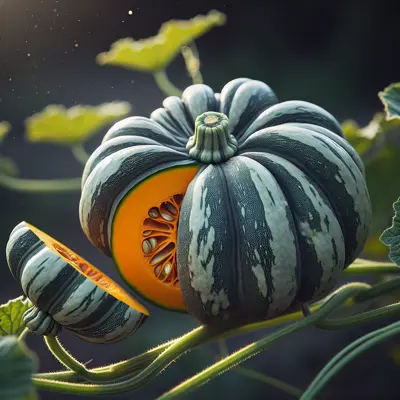
A premium winter squash variety prized by gardeners for its exceptional sweet, nutty flavor and vibrant orange flesh that rivals the best sweet potatoes. This reliable heirloom produces dark green, turban-shaped fruits with distinctive gray "caps" that store beautifully through winter months. The dense, dry flesh and outstanding flavor make it the gold standard for pies, soups, and gourmet cooking.
Harvest
100-110d
Days to harvest
Sun
Full sun
Zones
3–11
USDA hardiness
Difficulty
Moderate
Planting Timeline
Showing dates for Burgess Buttercup Squash in USDA Zone 7
All Zone 7 squash →Zone Map
Click a state to update dates
Burgess Buttercup Squash · Zones 3–11
Growing Details
Succession Planting
Buttercup squash runs 100–110 days to harvest and occupies 6–8 feet per plant, so it isn't a candidate for succession sowing — one planting per bed per season is the right model. A late-April direct sow in zone 7 puts harvest squarely in September through October. A second sowing started in June would push into peak squash vine borer egg-laying in July — NC State Extension IPM flags this explicitly — and 100-day fruit still on the vine in November will catch a hard freeze before it cures properly.
Complete Growing Guide
This exceptional heirloom requires 100–110 frost-free days, so start seeds indoors 3–4 weeks before your last spring frost in cooler climates, as direct sowing often fails to mature fruit before fall. Burgess Buttercup thrives in rich, well-draining soil with consistent moisture during vine growth, though excessive nitrogen encourages foliage over fruiting. Unlike some winter squash, this cultivar shows moderate susceptibility to powdery mildew in humid conditions—space vines generously for airflow and avoid overhead watering. The distinctive turban-shaped fruits mature reliably even in shorter seasons compared to larger Cucurbita maxima varieties, but the dense vines demand substantial garden space. A key cultivation secret: once vines flower, reduce watering gradually to concentrate sugars in the flesh, intensifying that signature nutty sweetness. Harvest when the rind is deep green and the stem begins hardening, then cure in a warm location before storage.
Light: Full sun (6 or more hours of direct sunlight a day). Soil: High Organic Matter, Loam (Silt). Soil pH: Neutral (6.0-8.0). Drainage: Good Drainage, Moist. Spacing: 12 inches-3 feet. Growth rate: Rapid. Maintenance: Medium. Propagation: Seed. Regions: Coastal, Mountains, Piedmont.
Harvesting
Harvest Burgess Buttercup squash when the skin deepens to a rich dark green with gray freckling on the turban cap, and the fruit feels hard and woody when pressed with a fingernail. Mature fruits typically reach 4–5 pounds and develop a tan, corky spot where the blossom end meets the fruit. These squash mature progressively throughout the season, allowing for continuous harvesting rather than a single pick, though waiting until after the first light frost concentrates sugars and deepens flavor. Cut fruits with 2–3 inches of stem attached using a sharp knife rather than twisting, which can damage the vine and reduce overall yield.
Soft or hard-shelled berries called pepos come in a variety of colors, shapes, and sizes and are harvested in the fall. The stems of the fruits generally have a soft corky texture compared to other species.
Color: Blue, Cream/Tan, Gold/Yellow, Gray/Silver, Orange, Pink, Red/Burgundy, Variegated, White. Type: Berry. Length: > 3 inches. Width: > 3 inches.
Garden value: Edible, Long-lasting, Showy
Harvest time: Fall
Storage & Preservation
Burgess Buttercup squash stores exceptionally well in cool, dry conditions around 50–60°F with moderate humidity, ideally in a single layer on shelves or in shallow boxes rather than stacked. Properly cured squash keeps for three to four months, sometimes longer if stored in ideal cellar conditions. For longer preservation, freeze the cooked flesh in portions—roast halves until tender, scoop the meat into freezer bags, and store for up to eight months. The dense, creamy texture also freezes well as prepared puree for pies and soups. Canning is viable for purees using pressure-canning methods, though home canning of plain squash puree carries specific safety requirements. Dehydrating thin slices creates a shelf-stable product suitable for soups and grains. Because this variety's exceptional sweetness concentrates during storage, resist the urge to harvest early; allowing full maturity and proper curing yields the richest flavor and longest storage life.
History & Origin
The Burgess Buttercup Squash emerges from the broader buttercup squash lineage, which became established as a distinct type within Cucurbita maxima during the early twentieth century. While specific documentation of its original breeder and exact year of introduction remains limited in readily available horticultural records, the variety carries the Burgess name, suggesting its commercial introduction through Burgess Seed and Plant Company, a prominent American seed house. The cultivar likely developed through selection within existing buttercup germplasm, emphasizing the characteristic turban shape, gray cap markings, and superior flavor qualities that distinguish it from standard winter squash varieties. Its heirloom status reflects its sustained cultivation and appreciation among home gardeners across generations.
Origin: Central and South America
Advantages
- +Exceptional sweet, nutty flavor rivals premium sweet potatoes for desserts
- +Dense, dry flesh ideal for pies, soups, and gourmet cooking
- +Beautiful dark green turban shape with gray caps stores months
- +Reliable heirloom variety produces consistent yields with moderate growing difficulty
Considerations
- -Highly susceptible to squash bugs, cucumber beetles, and vine borers
- -Vulnerable to powdery mildew, downy mildew, and bacterial wilt diseases
- -Requires full 100-110 days for proper maturity in short seasons
Companion Plants
Nasturtiums pull double duty near Buttercup squash — they draw aphids away from the main crop and their strong scent disrupts cucumber beetle orientation. French marigolds (Tagetes patula) produce thiophenes in their roots that suppress soil-dwelling pests and add another layer of surface confusion for squash bugs. Beans fix atmospheric nitrogen at their root nodules, which feeds a heavy feeder like Cucurbita maxima without a mid-season side-dress, and corn provides a windbreak that incidentally mimics the structure of a traditional Three Sisters planting. Keep potatoes out of this bed entirely — in our zone 7 Georgia gardens, both crops hit their disease peak at the same time in late summer, and crowding them concentrates blight pressure on both. Fennel is broadly allelopathic and slows germination and growth of most vegetables; it doesn't belong in a production bed, full stop.
Plant Together
Nasturtiums
Trap crop for squash bugs and cucumber beetles, repels aphids
Marigolds
Repel cucumber beetles, squash bugs, and nematodes with their strong scent
Radishes
Deter squash vine borers and cucumber beetles, mature before squash spreads
Beans
Fix nitrogen in soil to benefit heavy-feeding squash plants
Corn
Provides natural trellis support and creates beneficial microclimate
Catnip
Repels squash bugs, cucumber beetles, and ants effectively
Oregano
Repels cucumber beetles and provides ground cover to retain soil moisture
Sunflowers
Attract beneficial insects and provide natural windbreak protection
Keep Apart
Potatoes
Compete for space and nutrients, both are heavy feeders requiring similar soil resources
Fennel
Releases allelopathic compounds that inhibit squash growth and development
Aromatic herbs (mint, sage)
Strong oils can inhibit squash growth and compete aggressively for root space
Nutrition Facts
Per 100g serving. % Daily Value based on 2,000 calorie diet. Source: USDA FoodData Central (FDC #168040)
Pests & Disease Resistance
Resistance
Good general disease resistance
Common Pests
Squash bugs, cucumber beetles, vine borers
Diseases
Powdery mildew, downy mildew, bacterial wilt
Troubleshooting Burgess Buttercup Squash
What you'll see, why it happens, and what to do about it.
Wilted vines that don't recover overnight, even with adequate soil moisture, sometime after mid-summer
Likely Causes
- Bacterial wilt (Erwinia tracheiphila), transmitted by cucumber beetles feeding on the vines
- Squash vine borer (Melittia cucurbitae) — larvae tunneling inside the main stem, often visible as frass at the base
What to Do
- 1.Cut a wilted stem near the base and touch the cut ends together — if you pull them apart slowly and see stringy bacterial threads stretching between them, it's bacterial wilt; pull the plant and trash it, there's no recovery
- 2.For vine borer, slit the stem lengthwise near the entry hole, dig out the larva, and bury that section of stem under moist soil — it may re-root
- 3.NC State Extension IPM notes that planting squash as early as possible helps the crop get established before borers begin laying eggs in July, so direct sow by late April in zone 7
Leaves covered in a white, powdery coating, usually starting on older foliage in late summer
Likely Causes
- Powdery mildew — multiple fungal species including Podosphaera xanthii, which thrives in warm days and cool nights with low leaf wetness
- Dense canopy with poor airflow from vines that have piled up on themselves
What to Do
- 1.Remove the worst-affected leaves and bin them — don't compost
- 2.Apply a potassium bicarbonate product or a diluted baking soda spray (1 tablespoon per gallon of water) as a stopgap; it won't cure existing infection but slows spread on healthy tissue
- 3.Give plants the full 6–8 feet of spacing at planting and keep the surrounding bed clear of weeds — airflow is doing a lot of work here
Yellow, angular leaf spots that look water-soaked at first, then turn brown, with a grayish-purple fuzz on the underside of the leaf during humid weather
Likely Causes
- Downy mildew (Pseudoperonospora cubensis) — a water mold that moves fast in wet conditions and can sweep through a planting in under a week
- NC State Extension notes downy mildew arrives at different times each season depending on where regional spore pressure is building, so there's no fixed calendar date to watch for
What to Do
- 1.Remove affected leaves at first sign and trash them
- 2.Switch to drip or soaker hose irrigation if you're wetting the foliage overhead
- 3.Copper hydroxide or copper sulfate applied on a 7-day interval can slow the spread if you're early enough; they won't reverse damage already done
Ragged holes in leaves and stems, with clusters of gray-brown, shield-shaped insects on leaf undersides and around the base of the plant
Likely Causes
- Squash bugs (Anasa tristis) — they feed in groups and their toxic saliva causes leaves to wilt and blacken in patches over several days
- Bronze-colored egg masses laid in neat rows on leaf undersides, hatching in roughly 10–14 days
What to Do
- 1.Check leaf undersides every few days starting at transplant; scrape egg masses off into a bucket of soapy water
- 2.Hand-pick adults and nymphs in the morning when they're slow — drop them into soapy water
- 3.Clear all plant debris from the bed immediately after harvest; NC State Extension notes that squash bug populations overwinter in discarded plant material, so a clean bed in fall cuts pressure the following season
Frequently Asked Questions
How long does Burgess Buttercup squash take to grow?▼
Can you grow Burgess Buttercup squash in containers?▼
What does Burgess Buttercup squash taste like?▼
When should I plant Burgess Buttercup squash seeds?▼
Is Burgess Buttercup squash good for beginners?▼
How do you know when Burgess Buttercup squash is ripe?▼
Zone-by-Zone Planting Calendar
| Zone | Indoor Start | Transplant | Direct Sow | Harvest |
|---|---|---|---|---|
| Zone 3 | — | — | June – July | October – October |
| Zone 4 | — | — | June – July | October – October |
| Zone 5 | — | — | May – June | September – October |
| Zone 6 | — | — | May – June | September – November |
| Zone 7 | — | — | April – June | September – October |
| Zone 8 | — | — | April – May | August – October |
| Zone 9 | — | — | March – April | July – September |
| Zone 10 | — | — | February – April | July – August |
| Zone 1 | — | — | July – August | November – August |
| Zone 2 | — | — | June – August | November – September |
| Zone 11 | — | — | January – March | June – July |
| Zone 12 | — | — | January – March | June – July |
| Zone 13 | — | — | January – March | June – July |
Growing Guides from Wind River Greens
Sources & References
External authority sources used in compiling this guide.
See the Methodology page for how this data is sourced, what's AI-assisted, and known limitations.