Buttercrunch Bibb
Lactuca sativa 'Buttercrunch'
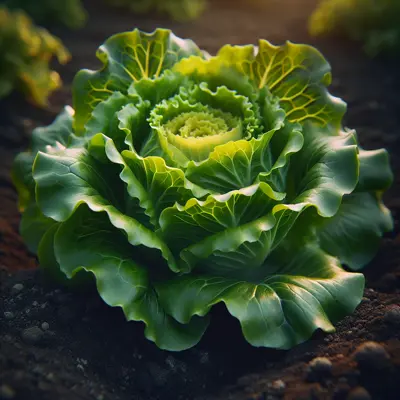
A premium butterhead lettuce that's been delighting gardeners for decades with its exceptional tenderness and sweet, buttery flavor. This variety forms perfect, compact heads with thick, succulent leaves that practically melt in your mouth. Heat-tolerant and bolt-resistant, Buttercrunch is ideal for gardeners who want restaurant-quality lettuce from their own backyard.
Harvest
65-75d
Days to harvest
Sun
Full sun to partial shade
Zones
2–11
USDA hardiness
Height
6-12 inches
Planting Timeline
Showing dates for Buttercrunch Bibb in USDA Zone 7
All Zone 7 lettuce →Zone Map
Click a state to update dates
Buttercrunch Bibb · Zones 2–11
Growing Details
Succession Planting
Direct sow Buttercrunch every 14 days starting around March 1 in zone 7, and keep going through late April. Once daytime highs are consistently above 75-80°F, the heads bolt fast and turn bitter — stop succession planting by early May for the spring run. Pick back up in late August or early September for fall, sowing again every 14 days through early October; the shortening days and cooling nights slow bolting and the heads hold longer before going bitter.
In zone 8 or 9, compress that spring window — start in February and wrap up by mid-April. For fall, wait until soil temps drop below 75°F before direct sowing; Buttercrunch seed germinates poorly above that threshold and you'll get patchy, frustrating stands if you rush it.
Complete Growing Guide
Buttercrunch Bibb performs best when direct-seeded in spring as soon as soil is workable, or succession-planted every two weeks for continuous harvest through fall; it truly shines in cool seasons (50-70°F) but tolerates heat better than most butterheads, though excessive warmth accelerates bolting. Plant in rich, well-draining soil with consistent moisture—irregular watering causes bitter flavor and premature flowering, so mulch around plants to maintain even soil temperature and hydration. While generally disease-resistant, watch for aphids, which cluster in the dense inner leaves, and fungal issues in humid conditions by ensuring adequate spacing for air circulation. Unlike looser lettuces, Buttercrunch's compact head formation means you can judge harvest readiness by gently squeezing the crown for firmness rather than waiting for maximum size. A practical tip: thin seedlings to 8-10 inches apart early; cramped plants develop elongated, weak heads instead of the characteristic dense, buttery texture this cultivar is prized for.
Light: Full sun (6 or more hours of direct sunlight a day), Partial Shade (Direct sunlight only part of the day, 2-6 hours). Soil: High Organic Matter. Soil pH: Neutral (6.0-8.0). Drainage: Good Drainage, Moist. Height: 0 ft. 6 in. - 1 ft. 0 in.. Spread: 0 ft. 6 in. - 1 ft. 0 in.. Spacing: Less than 12 inches. Growth rate: Rapid. Maintenance: Medium. Propagation: Seed. Regions: Coastal, Mountains, Piedmont.
Harvesting
Buttercrunch Bibb reaches peak harvest when heads feel firm and compact to gentle pressure, typically at 6-10 inches across with leaves displaying a rich, creamy yellow-green center. The outer leaves should remain tender and pliable rather than tough or fibrous, signaling optimal maturity around 65-75 days from planting. For continuous harvests, remove outer leaves progressively while leaving the heart intact, allowing the plant to produce new growth for weeks. Alternatively, cut entire heads at soil level for a single harvest. Timing your harvest in early morning ensures maximum crispness and sugar content, as leaves are fully hydrated and flavor compounds peak before heat stress sets in during the day.
Tiny seeds with a dandelion-like tuft (pappus) to aid in wind dispersal.
Color: Brown/Copper. Type: Achene. Length: < 1 inch. Width: < 1 inch.
Harvest time: Summer
Edibility: Leaves can be used raw or cooked in salads, sandwiches, and other dishes. Head lettuce can be stored for 2-3 weeks while leaf and butterhead store for 1-2 weeks.
Storage & Preservation
Store freshly harvested Buttercrunch in the refrigerator wrapped in damp paper towels inside a perforated plastic bag. This maintains optimal humidity while preventing moisture buildup that causes rot. Properly stored heads last 7-10 days, significantly longer than most lettuce varieties due to their dense structure.
Never store Buttercrunch with ethylene-producing fruits like apples or tomatoes, as this accelerates deterioration. For best flavor and texture, use within 3-5 days of harvest.
While lettuce doesn't preserve well through traditional methods, you can freeze Buttercrunch for cooked applications like soups or stir-fries. Blanch leaves for 30 seconds, shock in ice water, drain thoroughly, and freeze in portions. Frozen lettuce works well in green smoothies but loses its fresh texture. Dehydrating creates crispy leaf chips – wash, dry thoroughly, and dehydrate at 125°F until completely crisp.
History & Origin
Buttercrunch emerged from the American seed industry's mid-twentieth-century focus on improving butterhead lettuce for home gardeners. Introduced by Burpee Seeds during the 1960s, this variety represents deliberate breeding work aimed at combining the tender, delicate qualities of Bibb-type lettuces with superior heat tolerance and bolt resistance—traits earlier butterheads often lacked. While comprehensive breeding documentation remains limited in publicly available sources, Buttercrunch's development reflected broader horticultural efforts by major American seed companies to create reliable, consistent performers for home cultivation. Its decades-long popularity in seed catalogs testifies to successful achievement of these breeding goals, though the specific lineage and breeders remain less documented than some heirloom varieties.
Origin: Mediterranean to Siberia
Advantages
- +Buttercrunch produces tender, buttery leaves that melt in your mouth with exceptional flavor.
- +This variety tolerates heat and resists bolting better than most butterhead lettuces.
- +Compact heads form quickly in 65-75 days, perfect for succession planting.
- +Restaurant-quality results make Buttercrunch ideal for home gardeners seeking premium lettuce.
- +Easy to grow with minimal skill required, making it beginner-friendly.
Considerations
- -Susceptible to downy mildew and lettuce drop in cool, wet conditions.
- -Aphids, slugs, and snails frequently target tender Buttercrunch leaves throughout season.
- -Tip burn develops when soil calcium is inconsistent or watering fluctuates.
- -Bottom rot poses serious risk in poorly-draining soil or overwatered beds.
Companion Plants
Radishes and carrots are the most practical companions here. Radishes germinate in 5-7 days and mark your rows while the slower Buttercrunch fills in — once the radishes are pulled at 30 days, the lettuce has room to head up without competition. Carrots share almost no root depth with shallow-rooted lettuce and don't pull the same nutrients. Chives and garlic at the bed edges do pull double duty: their sulfur compounds confuse aphids, which are the most consistent pest on Buttercrunch. Nasturtiums work as a trap crop — aphids tend to pile onto them first, so plant a row a few feet away and check it regularly to catch pressure before it moves to the lettuce.
Keep Buttercrunch well clear of fennel, which produces allelopathic root exudates that suppress germination and stunt nearby plants — NC State Extension flags it as broadly incompatible in the vegetable garden. Broccoli is a subtler problem: it's a heavy feeder that strips nitrogen from the top 6 inches of soil, exactly where lettuce roots sit, and it can harbor cabbage aphids (Brevicoryne brassicae) that migrate to adjacent beds.
Plant Together
Chives
Repels aphids and improves lettuce flavor while taking up minimal space
Radishes
Fast-growing crop that breaks up soil and deters cucumber beetles
Carrots
Different root depths allow efficient space use without competition
Marigolds
Repels aphids, whiteflies, and nematodes that damage lettuce roots
Spinach
Similar growing requirements and harvest times, efficient garden space use
Garlic
Natural pest deterrent against aphids and slugs that commonly attack lettuce
Nasturtiums
Acts as trap crop for aphids and cucumber beetles, protecting lettuce
Dill
Attracts beneficial insects like ladybugs that control aphid populations
Keep Apart
Broccoli
Heavy feeder that competes for nutrients and creates too much shade
Sunflowers
Allelopathic compounds inhibit lettuce germination and growth
Fennel
Inhibits growth of most garden plants including lettuce through allelopathy
Nutrition Facts
Per 100g serving. % Daily Value based on 2,000 calorie diet. Source: USDA FoodData Central (FDC #2346388)
Pests & Disease Resistance
Resistance
Good resistance to tip burn, moderate bolt resistance in cool weather
Common Pests
Aphids, slugs, snails, cutworms, flea beetles
Diseases
Downy mildew, lettuce drop, bottom rot, tip burn
Troubleshooting Buttercrunch Bibb
What you'll see, why it happens, and what to do about it.
Seedlings collapse at soil level within 7-10 days of transplanting or germination — stems look pinched or rotted at the base
Likely Causes
- Damping off (Pythium or Rhizoctonia spp.) — soil-borne fungal pathogens that thrive in cold, wet, poorly drained conditions
- Overwatering or planting into waterlogged soil
What to Do
- 1.Pull the dead seedlings and check the roots — blackened, mushy roots confirm a fungal cause rather than cutworm damage
- 2.Improve drainage before replanting; raised beds or loosened soil with added compost help considerably
- 3.Start fresh seed rather than trying to save affected seedlings; sow into a sterile seed-starting mix if starting indoors
Grayish-purple fuzzy coating on the undersides of outer leaves, with pale yellow patches on the upper surface
Likely Causes
- Downy mildew (Bremia lactucae) — spreads fast in cool, humid conditions with poor airflow, typically below 65°F nights
What to Do
- 1.Remove and trash (don't compost) any affected leaves immediately
- 2.Space plants the full 8-10 inches apart and avoid overhead watering after midday — wet foliage overnight is the main driver
- 3.Rotate lettuce out of the same bed for at least one season; Bremia spores persist in soil debris
Frequently Asked Questions
How long does Buttercrunch lettuce take to grow?▼
Can you grow Buttercrunch lettuce in containers?▼
Is Buttercrunch lettuce good for beginners?▼
What does Buttercrunch lettuce taste like?▼
When should I plant Buttercrunch lettuce?▼
Buttercrunch vs Boston lettuce - what's the difference?▼
Zone-by-Zone Planting Calendar
| Zone | Indoor Start | Transplant | Direct Sow | Harvest |
|---|---|---|---|---|
| Zone 3 | — | — | May – June | July – October |
| Zone 4 | — | — | April – June | July – October |
| Zone 5 | — | — | April – May | June – November |
| Zone 6 | — | — | April – May | June – November |
| Zone 7 | — | — | March – May | May – November |
| Zone 8 | — | — | March – April | May – December |
| Zone 9 | — | — | February – March | April – December |
| Zone 10 | — | — | January – March | March – December |
| Zone 1 | — | — | June – July | August – September |
| Zone 2 | — | — | May – July | July – September |
| Zone 11 | — | — | January – February | February – December |
| Zone 12 | — | — | January – February | February – December |
| Zone 13 | — | — | January – February | February – December |
Growing Guides from Wind River Greens
Sources & References
External authority sources used in compiling this guide.
See the Methodology page for how this data is sourced, what's AI-assisted, and known limitations.