Arugula 'Rocket'
Eruca vesicaria subsp. sativa 'Rocket'
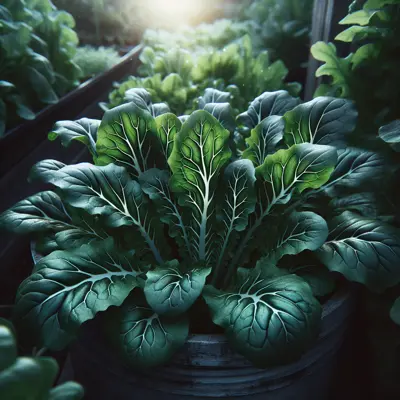
This fast-growing salad green delivers a peppery, nutty punch that transforms ordinary salads into gourmet experiences. The deeply lobed leaves are ready to harvest in just weeks, making it perfect for succession planting and continuous fresh salads. Cool weather brings out the best flavor, while hot weather intensifies the spiciness for those who love bold, peppery greens.
Harvest
20-40d
Days to harvest
Sun
Full sun to partial shade
Zones
2–11
USDA hardiness
Height
0-3 feet
Planting Timeline
Showing dates for Arugula 'Rocket' in USDA Zone 7
All Zone 7 brassica →Zone Map
Click a state to update dates
Arugula 'Rocket' · Zones 2–11
Growing Details
Succession Planting
Direct sow every 14–18 days starting March 1 in zone 7, and keep going through mid-May. Once daytime highs push past 80°F consistently, 'Rocket' bolts fast — the leaves turn narrow, bitter, and tough within days of the flower stalk forming. Stop spring sowings by May 15 at the latest, or accept that you're growing it for the blossoms (which are edible, just sharp).
Pick back up with a late-summer sow around August 20–September 1, after the worst heat breaks. Fall arugula grows more slowly, stays tender longer, and you can often cut it 3 or 4 times before a hard freeze finishes it off. A light frost — down to about 28°F — actually mellows the bitterness. Keep sowing every 2 weeks through early October; plants started then will slow down considerably but often overwinter under a low tunnel and give you a first cut by late February.
Complete Growing Guide
Light: Full sun (6 or more hours of direct sunlight a day), Partial Shade (Direct sunlight only part of the day, 2-6 hours). Soil: Clay, High Organic Matter, Loam (Silt), Sand. Soil pH: Neutral (6.0-8.0). Drainage: Good Drainage, Moist, Occasionally Wet. Height: 0 ft. 8 in. - 3 ft. 0 in.. Spread: 0 ft. 8 in. - 1 ft. 6 in.. Spacing: Less than 12 inches, 12 inches-3 feet. Growth rate: Rapid. Maintenance: Medium. Propagation: Seed. Regions: Coastal, Mountains, Piedmont.
Harvesting
Long, beaked pods 0.5-1.5" containing two rows of several seeds.
Color: Green. Type: Siliqua. Length: 1-3 inches. Width: < 1 inch.
Garden value: Edible
Harvest time: Summer
Edibility: Leaves, flowers, seed pods, and seeds are edible. Harvest leaves and seed pods when young as they get tough and bitter with age. Harvest only as needed as leaves do not keep long in the refrigerator after harvesting.
Storage & Preservation
Fresh arugula 'Rocket' stays crisp for 5-7 days when stored properly in the refrigerator. After harvesting, rinse leaves gently in cool water, spin dry thoroughly, and store in perforated plastic bags or wrapped loosely in paper towels inside storage containers. Keep refrigerated at 35-40°F—any colder and leaves develop black spots.
For longer preservation, arugula freezes well in pestos, sauces, or soups, though the texture changes too much for fresh eating. Blanch leaves for 30 seconds, shock in ice water, drain completely, and freeze in portions. Dehydrating works for seasoning powder—dry leaves completely and grind for a concentrated peppery spice. Unlike many greens, arugula's strong flavor holds up well in fermented preparations like kimchi or sauerkraut, adding a spicy complexity to traditional recipes.
History & Origin
Origin: Mediterranean to China and Arabian Peninsula
Advantages
- +Harvest peppery leaves in just 20-40 days for quick kitchen-to-table satisfaction.
- +Deeply lobed 'Rocket' leaves add striking visual appeal and gourmet texture to salads.
- +Succession planting enables continuous fresh arugula harvests throughout the growing season.
- +Very easy cultivation makes 'Rocket' ideal for beginner and busy gardeners.
- +Cool weather intensifies the nutty, pungent flavor that defines this variety.
Considerations
- -Flea beetles and cabbage worms frequently damage young 'Rocket' seedlings without protection.
- -Hot weather causes rapid bolting and intensified spiciness that masks delicate flavors.
- -Humid conditions trigger downy mildew infections that can devastate entire plantings quickly.
Companion Plants
Lettuce, spinach, and arugula are a natural trio — they share the same cool-season window, stay under 12 inches tall, and neither crowds the other out. Alternating them in short rows also helps slow aphid buildup: NC State Extension's IPM guidance notes that mixing differently-scented plants can interrupt a pest's attack by diluting the attractive odor of the preferred host. In our zone 7 Georgia garden, that matters most during the October and March shoulder seasons, when aphid pressure tends to spike right as arugula is hitting its stride.
Chives along the bed edge pull their weight. Their sulfur compounds deter aphids through proximity — that's a documented mechanism, not folk wisdom — and they don't compete for root space since arugula stays shallow. Radishes are worth tucking in too: they germinate in 3–5 days and get pulled before arugula reaches full size, so they double as a flea beetle decoy and a row marker while the slower crop fills in.
Skip planting arugula next to broccoli, kale, or other brassicas. Flea beetles and cabbage worms (Pieris rapae) don't distinguish between family members, and grouping them just concentrates the damage into one patch instead of spreading it thin. Fennel is a blanket problem regardless of what's nearby — it releases allelopathic compounds that suppress germination in many surrounding plants, arugula included. Give it its own corner at least 18 inches from anything you actually want to eat.
Plant Together
Lettuce
Provides ground cover and shade for arugula roots, reducing soil temperature
Spinach
Similar growing requirements and helps maximize space utilization
Chives
Repels aphids and flea beetles that commonly attack brassicas
Marigolds
Deters flea beetles and aphids while attracting beneficial insects
Nasturtiums
Acts as trap crop for flea beetles and aphids, protecting arugula
Dill
Attracts beneficial wasps that prey on cabbage worms and aphids
Carrots
Deep roots don't compete with shallow arugula roots, efficient space use
Radishes
Quick-growing companion that can be harvested before arugula matures
Keep Apart
Broccoli
Competes for same nutrients and attracts similar pests like flea beetles
Strawberries
May inhibit brassica growth and compete for nutrients
Fennel
Inhibits growth of most brassicas through allelopathic compounds
Nutrition Facts
Per 100g serving. % Daily Value based on 2,000 calorie diet. Source: USDA FoodData Central (FDC #747447)
Pests & Disease Resistance
Resistance
Generally disease-free due to quick growth cycle
Common Pests
Flea beetles, aphids, slugs, cabbage worms
Diseases
Downy mildew in humid conditions, rarely affected by diseases
Troubleshooting Arugula 'Rocket'
What you'll see, why it happens, and what to do about it.
Tiny, irregular holes scattered across leaves — looks like someone took a hole punch to the whole plant
Likely Causes
- Flea beetles (Phyllotreta spp.) — especially bad on young transplants and seedlings in warm, dry spells
- Heavy feeding can stunt or kill plants under 3 inches tall
What to Do
- 1.Cover seedlings immediately with row cover (Agribon AG-19 or similar) at planting — flea beetles find plants by smell and sight, and exclusion is more reliable than any spray
- 2.If you're past that point, hit plants with spinosad-based spray in the early morning when beetles are active
- 3.Direct sow in fall instead of spring — flea beetle pressure drops significantly once daytime temps fall below 70°F
White-gray fuzzy coating on the undersides of leaves, sometimes with pale yellow patches on top — usually showing up after a stretch of cool, wet nights
Likely Causes
- Downy mildew (Peronospora parasitica) — the classic brassica strain, spreads fast in humid conditions with temps between 50–65°F
- Crowded spacing that traps moisture around leaves
What to Do
- 1.Pull and bag affected leaves — don't compost them
- 2.Thin plants to at least 4 inches apart so air can move through the bed
- 3.Avoid overhead watering in the evening; drip or morning watering gives foliage time to dry
- 4.NC State Extension's IPM guidance recommends rotating brassica-family crops out of the same bed for at least 3 years — downy mildew spores persist in soil and debris
Seedlings collapsing at soil level, stems pinched or rotted at the base — often happens in the first 7–10 days after germination
Likely Causes
- Damping off — typically Pythium spp. or Rhizoctonia solani, both soil-borne fungi that thrive in wet, poorly-drained conditions
- Sowing too deep (over ¼ inch) or overwatering right after germination
What to Do
- 1.Don't seed into cold, waterlogged soil — wait until soil temps are at least 45°F
- 2.If starting indoors, use a sterile seed-starting mix, not garden soil pulled from a bed with a history of brassicas
- 3.Water gently and let the surface dry slightly between waterings once sprouts are up — standing moisture at the stem base is what triggers the rot
Frequently Asked Questions
How long does arugula Rocket take to grow?▼
Can you grow arugula Rocket in containers?▼
What does arugula Rocket taste like compared to regular arugula?▼
When should I plant arugula Rocket seeds?▼
Is arugula Rocket good for beginners?▼
Why does my arugula Rocket taste so bitter?▼
Zone-by-Zone Planting Calendar
| Zone | Indoor Start | Transplant | Direct Sow | Harvest |
|---|---|---|---|---|
| Zone 3 | March – April | May – June | May – June | June – October |
| Zone 4 | March – April | May – June | April – June | May – October |
| Zone 5 | February – March | April – May | April – May | May – November |
| Zone 6 | February – March | April – May | April – May | May – November |
| Zone 7 | February – March | April – May | March – May | April – November |
| Zone 8 | January – February | March – April | March – April | April – December |
| Zone 9 | January – January | February – March | February – March | March – December |
| Zone 10 | January – January | February – March | January – March | February – December |
| Zone 1 | April – May | June – July | June – July | July – September |
| Zone 2 | April – May | June – July | May – July | June – September |
| Zone 11 | January – January | January – February | January – February | January – December |
| Zone 12 | January – January | January – February | January – February | January – December |
| Zone 13 | January – January | January – February | January – February | January – December |
Growing Guides from Wind River Greens
Sources & References
External authority sources used in compiling this guide.
- ExtensionNC State Extension
- USDAUSDA FoodData Central
See the Methodology page for how this data is sourced, what's AI-assisted, and known limitations.