Kabocha Winter Squash
Cucurbita maxima 'Kabocha'
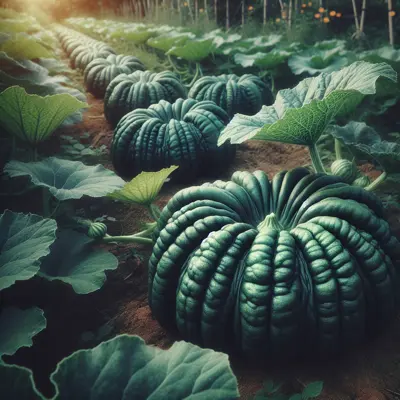
Often called Japanese pumpkin, this incredibly sweet winter squash has a texture like sweet potato and chestnut combined. The dense, bright orange flesh is naturally creamy and requires no butter or seasoning to be absolutely delicious. A favorite among chefs and health-conscious gardeners.
Harvest
95-105d
Days to harvest
Sun
Full sun
Zones
3–11
USDA hardiness
Difficulty
Moderate
Planting Timeline
Showing dates for Kabocha Winter Squash in USDA Zone 7
All Zone 7 squash →Zone Map
Click a state to update dates
Kabocha Winter Squash · Zones 3–11
Growing Details
Succession Planting
Kabocha doesn't benefit from succession planting the way salad greens or radishes do — each plant sets a fixed number of fruits and then it's done. Direct sow one planting between April and early June in zone 7, giving yourself enough runway to hit the 95–105 day harvest window before hard frost. Sowing after mid-June risks pushing harvest into November, when cold and wet weather can rot fruit on the vine before the skin fully cures. One well-timed planting per season is the move.
Complete Growing Guide
With a 95-105 day growing season, Kabocha requires starting seeds indoors 3-4 weeks before your last frost date to ensure full maturity before cool fall weather arrives; delayed planting often results in immature fruit with inferior flavor and texture. This cultivar thrives in warm soil (70-85°F) and full sun with consistent moisture, though it's more drought-tolerant than other winter squashes once established. Kabochas are particularly susceptible to powdery mildew in humid conditions, so ensure excellent air circulation and avoid overhead watering. Unlike many squash varieties, Kabocha vines are vigorous and sprawling—they rarely bolt or stretch, but they do demand significant garden space; plan for 4-6 feet between hills. A practical tip: harvest Kabochas only when the skin develops a deep blue-green color and becomes hard to puncture with a fingernail, as premature picking prevents the distinctive creamy texture from fully developing.
Light: Full sun (6 or more hours of direct sunlight a day). Soil: High Organic Matter, Loam (Silt). Soil pH: Neutral (6.0-8.0). Drainage: Good Drainage, Moist. Spacing: 12 inches-3 feet. Growth rate: Rapid. Maintenance: Medium. Propagation: Seed. Regions: Coastal, Mountains, Piedmont.
Harvesting
Kabocha squash reaches peak harvest maturity when the skin develops a deep, matte dark green color with minimal glossiness and the characteristic bumpy texture feels hard when pressed with a fingernail. Fruits typically reach 4-6 inches in diameter and should feel heavy for their size, indicating dense flesh development. These squash produce continuously throughout the season, allowing for successive harvests rather than a single picking, though waiting until the vine begins to decline ensures maximum sugar concentration in the flesh. A crucial timing tip: harvest before the first frost by cutting the stem with a sharp knife rather than pulling, which prevents damage and extends storage life considerably.
Soft or hard-shelled berries called pepos come in a variety of colors, shapes, and sizes and are harvested in the fall. The stems of the fruits generally have a soft corky texture compared to other species.
Color: Blue, Cream/Tan, Gold/Yellow, Gray/Silver, Orange, Pink, Red/Burgundy, Variegated, White. Type: Berry. Length: > 3 inches. Width: > 3 inches.
Garden value: Edible, Long-lasting, Showy
Harvest time: Fall
Storage & Preservation
Store freshly harvested kabocha squash in a cool, dry place between 50-60°F with moderate humidity, ideally in a single layer on shelves or in crates that allow air circulation. Avoid cold storage below 45°F, which damages the flesh. Under these conditions, properly cured kabocha keeps for three to four months, making it one of the longest-storing winter squashes available.
For longer preservation, freeze roasted and cubed flesh in airtight containers for up to ten months, which works well for soups and purees. You can also freeze the puree directly in ice cube trays for convenient portioning. Canning as a puree requires pressure canning due to low acidity. Dried kabocha chips make excellent snacks and store well in airtight containers. The dense, dry flesh of this variety freezes exceptionally well compared to watery squashes, retaining its creamy texture when thawed for cooking.
History & Origin
Kabocha squash originated in Japan, where it has been cultivated for centuries as part of the country's rich squash-growing heritage. The variety name "kabocha" derives from the Japanese word for this type of pumpkin. While specific breeder information and introduction dates are not well documented in English-language horticultural records, the cultivar belongs to the Cucurbita maxima species and represents a distinct Japanese selection within that lineage. The variety gained international recognition during the mid-to-late twentieth century as Japanese cuisine and agriculture became more widely appreciated globally. Seed companies began offering kabocha to Western gardeners in the latter half of the 1900s, where it has since become popular among specialty growers and culinary professionals.
Origin: Central and South America
Advantages
- +Exceptionally sweet flavor requires no added butter or seasoning.
- +Dense, creamy flesh resembles sweet potato and chestnut combined.
- +Long storage life keeps kabocha fresh for months indoors.
- +Highly prized by professional chefs for culinary applications.
- +Naturally nutrient-dense with impressive vitamin and mineral content.
Considerations
- -Requires 95-105 days, limiting cultivation in short-season climates.
- -Vulnerable to squash vine borer and cucumber beetle damage.
- -Susceptible to powdery mildew, bacterial wilt, and black rot.
- -Moderate difficulty demands careful pest and disease management.
Companion Plants
Corn, beans, and squash together form the Three Sisters planting — the squash leaves shade the soil, cutting moisture loss and suppressing weeds, while beans fix nitrogen at roughly 2–4 inches deep where squash feeder roots can access it. Nasturtiums and marigolds pull aphid pressure away from the vines and draw in predatory wasps that will also hit cucumber beetles (Acalymma vittatum and Diabrotica undecimpunctata). Radishes tucked at the bed edge act as a trap crop for those same beetles. NC State Extension recommends rotating out of cucurbit crops for at least three years, so pairing with non-cucurbit companions like sunflowers — which attract beneficial insects and buffer wind on long trailing vines — makes that rotation easier to manage.
Potatoes compete at similar root depths and draw enough overlapping pest pressure that keeping them 10–15 feet apart is worth the planning effort. Fennel is genuinely allelopathic — it releases root exudates that suppress growth in most vegetable neighbors, and squash shows the effects clearly enough that it's not worth the gamble. Sage slows vine development for reasons that aren't fully pinned down, but the pattern shows up consistently enough to leave it on the avoid list.
Plant Together
Corn
Provides natural trellis support and the three sisters planting method creates beneficial microclimate
Beans
Fixes nitrogen in soil which squash needs, part of traditional three sisters companion planting
Nasturtiums
Acts as trap crop for cucumber beetles and squash bugs, repels aphids
Radishes
Repels cucumber beetles and squash vine borers, helps break up compacted soil
Marigolds
Deters cucumber beetles, squash bugs, and nematodes with natural compounds
Catnip
Repels cucumber beetles, ants, and aphids more effectively than DEET
Oregano
Repels cucumber beetles and provides ground cover to retain soil moisture
Sunflowers
Attracts beneficial predatory insects and provides windbreak protection
Keep Apart
Potatoes
Compete for space and nutrients, both are heavy feeders that deplete soil
Fennel
Releases allelopathic compounds that inhibit growth of squash and most garden plants
Aromatic Herbs (Sage)
Strong essential oils can inhibit squash growth and germination
Nutrition Facts
Per 100g serving. % Daily Value based on 2,000 calorie diet. Source: USDA FoodData Central (FDC #168040)
Pests & Disease Resistance
Resistance
Good resistance to common squash diseases
Common Pests
Squash vine borer, cucumber beetles, squash bugs
Diseases
Powdery mildew, bacterial wilt, black rot
Troubleshooting Kabocha Winter Squash
What you'll see, why it happens, and what to do about it.
Wilting vines with sawdust-like frass at the stem base, usually July or later
Likely Causes
- Squash vine borer (Melittia cucurbitae) — larvae tunnel into the main stem and cut off water transport
- Late planting that puts vulnerable young vines directly in the peak egg-laying window
What to Do
- 1.Slit the stem lengthwise where you see the frass, dig out the larvae with a toothpick or knife, then mound soil over the wound and keep it moist so the vine re-roots
- 2.Next season, direct sow as early as your last frost allows — NC State Extension notes that squash planted early can mature before borers peak in July
- 3.If you want a longer-term workaround, butternut squash (Cucurbita moschata) carries much stronger borer resistance than Kabocha; one row interplanted gives you a backup crop if the borers find you anyway
White powdery coating on upper leaf surfaces, spreading from older leaves inward through mid-season
Likely Causes
- Powdery mildew — a fungal infection common on cucurbits during warm days with cool nights
- Leaves lying on bare soil or vines packed too tightly to dry out between waterings
What to Do
- 1.Pull off the worst-affected leaves and bag them for trash — not the compost pile
- 2.Lay black plastic mulch under the vines to keep foliage off the ground; NC State Extension specifically cites this practice for reducing disease in squash
- 3.For active spread, apply potassium bicarbonate or diluted neem oil on a 7-day schedule; neither reverses existing infection, but both slow colonization of new tissue
Frequently Asked Questions
How long does kabocha winter squash take to grow?▼
Can you grow kabocha squash in containers?▼
What does kabocha winter squash taste like?▼
When should I plant kabocha winter squash?▼
Is kabocha winter squash good for beginners?▼
How do you know when kabocha squash is ripe?▼
Zone-by-Zone Planting Calendar
| Zone | Indoor Start | Transplant | Direct Sow | Harvest |
|---|---|---|---|---|
| Zone 3 | — | — | June – July | October – October |
| Zone 4 | — | — | June – July | October – October |
| Zone 5 | — | — | May – June | September – October |
| Zone 6 | — | — | May – June | September – October |
| Zone 7 | — | — | April – June | August – October |
| Zone 8 | — | — | April – May | August – September |
| Zone 9 | — | — | March – April | July – August |
| Zone 10 | — | — | February – April | June – August |
| Zone 1 | — | — | July – August | November – August |
| Zone 2 | — | — | June – August | October – September |
| Zone 11 | — | — | January – March | May – July |
| Zone 12 | — | — | January – March | May – July |
| Zone 13 | — | — | January – March | May – July |
Growing Guides from Wind River Greens
Sources & References
External authority sources used in compiling this guide.
See the Methodology page for how this data is sourced, what's AI-assisted, and known limitations.