Pincushion Formula Mix
Scabiosa atropurpurea
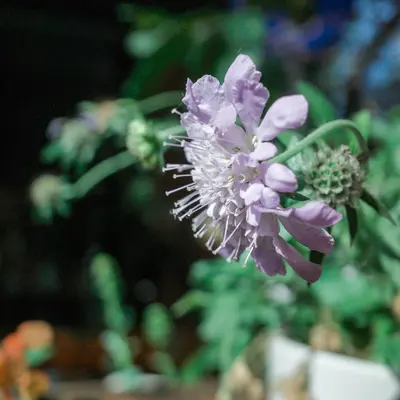
Sturdy, uniform, annual Scabiosa mix in a wide range of colors. 1 1/2-2 1/2" blooms. Formula mix of black, blue, creamy yellow, pink, bright red, deep blue, salmon rose, and pure white. Also known as mourningbride.
Harvest
90-100d
Days to harvest
Sun
Full sun
Zones
4–11
USDA hardiness
Height
2-3 feet
Planting Timeline
Showing dates for Pincushion Formula Mix in USDA Zone 7
All Zone 7 flower →Zone Map
Click a state to update dates
Pincushion Formula Mix · Zones 4–11
Growing Details
Succession Planting
Scabiosa atropurpurea blooms continuously from a single sowing as long as you keep deadheading, so you don't need multiple successions the way you would with lettuce or radishes. That said, staggering two sowings — one indoors in February and a second direct-sown in April or May — gets you an earlier flush from transplants and a later one from direct-sown plants, extending the cutting window by 3–4 weeks without much extra effort.
Stop direct sowing once daytime highs are consistently above 85°F; germination drops off and seedlings struggle to establish in that heat. In zone 7, that cutoff typically falls around late June. For a fall crop, a late-July indoor sow with an August transplant is possible, though the window before first frost is tight and total bloom numbers will be lower than a spring planting.
Complete Growing Guide
Sturdy, uniform, annual Scabiosa mix in a wide range of colors. 1 1/2-2 1/2" blooms. Formula mix of black, blue, creamy yellow, pink, bright red, deep blue, salmon rose, and pure white. Also known as mourningbride. According to Johnny's Selected Seeds, Pincushion Formula Mix is 90 - 100 days to maturity, annual, open pollinated. Notable features: Cold Tolerant, Use for Cut Flowers and Bouquets, Attracts Beneficial Insects.
Light: Full sun (6 or more hours of direct sunlight a day). Soil: High Organic Matter, Loam (Silt), Sand. Soil pH: Alkaline (>8.0), Neutral (6.0-8.0). Drainage: Good Drainage. Height: 2 ft. 0 in. - 3 ft. 0 in.. Spread: 0 ft. 9 in. - 1 ft. 0 in.. Spacing: Less than 12 inches. Growth rate: Medium. Maintenance: Low. Propagation: Seed. Regions: Coastal, Mountains, Piedmont.
Harvesting
Pincushion Formula Mix reaches harvest at 90 - 100 days from sowing per Johnny's Selected Seeds. Expect 1 1/2-2 1/2" at peak. As an annual, harvest continues until frost ends the season.
Bloom time: Fall, Spring, Summer
Storage & Preservation
For fresh flowers, store Pincushion blooms in a cool location (32-45°F) in a vase with clean water, replacing water every 2-3 days. Refrigeration extends vase life to 7-10 days; room temperature blooms last 5-7 days. Preservation methods: (1) Air-dry by hanging stems upside-down in a warm, dark, well-ventilated space for 2-3 weeks—ideal for dried arrangements; (2) Press flowers between newspaper under weight for 1-2 weeks for crafts and scrapbooking; (3) Freeze in water in ice cube trays to preserve for later floral art projects. Avoid direct sunlight and ethylene-producing fruits.
History & Origin
Pincushion Formula Mix is open-pollinated, meaning seed saved from healthy plants will produce true-to-type offspring. Listed in the Johnny's Selected Seeds catalog.
Origin: Southern Europe, Western Asia and Northern Africa
Advantages
- +Wide color range formula mix provides diverse garden visual interest
- +Sturdy uniform growth makes plants reliable and easy to maintain
- +90-100 day timeline allows multiple successive plantings per season
- +Easy difficulty level suits beginner and experienced gardeners alike
- +Distinctive pincushion blooms attract pollinators and work as cut flowers
Considerations
- -Moderate disease susceptibility requires good air circulation and prevention
- -Blooms relatively small at 1.5-2.5 inches compared to other Scabiosa
- -Requires consistent deadheading to maintain continuous flower production
Companion Plants
Marigolds and Sweet Alyssum are the most useful companions here. Tagetes patula specifically deters aphids and whiteflies through both root exudates and foliar compounds, and it blooms on roughly the same schedule as Scabiosa, so the combination makes practical sense in a cutting bed. Sweet Alyssum draws in parasitic wasps and hoverflies — whose larvae consume aphids — and tops out at 6–8 inches, so it won't compete for light or elbow room.
Cosmos and Zinnias round out a pollinator-friendly planting without creating resource conflicts, since all four share a full-sun, moderate-water preference and don't occupy the same root depth. The three to avoid — Black Walnut, Eucalyptus, and Fennel — all release allelopathic compounds. Black Walnut produces juglone, which damages a wide range of ornamentals. Fennel is the subtler problem: it suppresses nearby plants chemically and tends to pull beneficial insects toward itself rather than distributing them across the bed.
Plant Together
Marigolds
Repel nematodes and aphids while attracting beneficial insects
Zinnias
Attract pollinators and beneficial predatory insects, similar growing conditions
Cosmos
Attract beneficial insects and provide complementary heights and textures
Sweet Alyssum
Ground cover that attracts beneficial insects and retains soil moisture
Nasturtiums
Trap crop for aphids and attract beneficial predatory insects
Lavender
Repels pests with aromatic oils and attracts pollinators
Catmint
Deters aphids, ants, and rodents while attracting beneficial insects
Sunflowers
Provide beneficial shade and attract pollinators and birds
Keep Apart
Black Walnut
Produces juglone toxin that inhibits growth of many flowering plants
Eucalyptus
Releases allelopathic compounds that suppress nearby plant growth
Fennel
Inhibits growth of most garden plants through allelopathic root secretions
Troubleshooting Pincushion Formula Mix
What you'll see, why it happens, and what to do about it.
Seedlings collapse at soil level, stems pinched or rotted at the base
Likely Causes
- Damping off (Pythium or Rhizoctonia spp.) — soil-borne fungi that thrive in cold, wet, poorly drained seed-starting mix
- Overwatering combined with low airflow around flats
What to Do
- 1.Water from the bottom of the tray rather than overhead, and let the mix surface dry slightly between waterings
- 2.Run a small fan near your seed-starting setup for at least a few hours a day
- 3.Start fresh with a sterile seed-starting mix — don't reuse last year's soil from the flats
Powdery white coating on leaves and stems, showing up mid-summer as temperatures swing between warm days and cool nights
Likely Causes
- Powdery mildew (Erysiphe cichoracearum) — common on Scabiosa in humid conditions with poor airflow
- Crowded spacing under 18 inches that prevents leaves from drying between plants
What to Do
- 1.Space plants at the full 18–24 inches; crowding is where this starts
- 2.Apply a dilute solution of potassium bicarbonate or neem oil at first sign — don't wait until the whole plant is coated
- 3.Remove and bag heavily infected foliage; don't compost it
Buds forming but few flowers opening, or flowers opening small and pale after a strong start
Likely Causes
- Nitrogen overload from too-rich soil or excess fertilizer — pushes leafy growth at the expense of bloom
- Skipping deadheading on spent flowers, which signals the plant to stop producing
What to Do
- 1.Cut spent blooms back to a lateral bud or leaf node every 3–5 days during peak season — skip this and flower output drops fast
- 2.Hold off on nitrogen-heavy fertilizers once plants are established; a low-nitrogen bloom formula like 5-10-10 is plenty
- 3.If plants have gone fully to seed, cut back by about one-third to push a second flush
Leaves stippled or bronzed, tiny webbing visible on undersides during hot, dry spells
Likely Causes
- Two-spotted spider mites (Tetranychus urticae) — populations spike fast when temperatures exceed 85°F and humidity is low
- Dusty, drought-stressed foliage, which mites actively prefer
What to Do
- 1.Blast the undersides of leaves with a firm stream of water every couple of days — it knocks mite numbers back significantly
- 2.Apply insecticidal soap or neem oil to leaf undersides, repeating every 5–7 days for at least 2–3 applications
- 3.Mulch around the base of plants and keep soil moisture consistent; stressed Scabiosa is far more vulnerable than a well-watered one
Frequently Asked Questions
How long do Pincushion Formula Mix flowers last in a vase?▼
Is Pincushion Formula Mix good for beginner gardeners?▼
Can you grow Pincushion flowers in containers?▼
When should I plant Pincushion Formula Mix seeds?▼
What colors does Pincushion Formula Mix produce?▼
How do I dry Pincushion flowers for crafts?▼
Zone-by-Zone Planting Calendar
| Zone | Indoor Start | Transplant | Direct Sow | Harvest |
|---|---|---|---|---|
| Zone 3 | April – May | June – July | June – August | — |
| Zone 4 | March – April | June – June | June – July | — |
| Zone 5 | March – April | May – June | May – July | — |
| Zone 6 | March – April | May – June | May – July | — |
| Zone 7 | February – March | April – May | April – June | — |
| Zone 8 | February – March | April – May | April – June | — |
| Zone 9 | January – February | March – April | March – May | — |
| Zone 10 | January – January | February – March | February – April | — |
| Zone 1 | May – June | July – August | July – September | — |
| Zone 2 | April – May | June – July | June – August | — |
| Zone 11 | January – January | January – February | January – March | — |
| Zone 12 | January – January | January – February | January – March | — |
| Zone 13 | January – January | January – February | January – March | — |
Growing Guides from Wind River Greens
Sources & References
External authority sources used in compiling this guide.
- BreederJohnny's Selected Seeds
See the Methodology page for how this data is sourced, what's AI-assisted, and known limitations.