Bell Pepper 'King of the North'
Capsicum annuum 'King of the North'
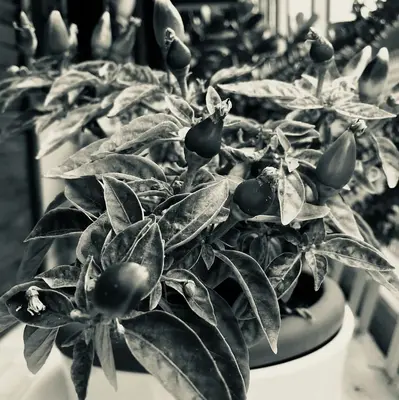
A reliable early-maturing bell pepper bred specifically for cooler climates and short seasons. This compact variety produces thick-walled, blocky peppers that ripen from green to brilliant red even in challenging northern conditions. Perfect for gardeners who struggle with traditional bell peppers in cooler regions.
Harvest
65-75d
Days to harvest
Sun
Full sun
Zones
4–11
USDA hardiness
Height
1-3 feet
Planting Timeline
Showing dates for Bell Pepper 'King of the North' in USDA Zone 7
All Zone 7 pepper →Zone Map
Click a state to update dates
Bell Pepper 'King of the North' · Zones 4–11
Growing Details
Succession Planting
King of the North keeps producing from a single planting, so you don't succession-sow it the way you would lettuce or radishes. Start seeds indoors in February or early March — 10 to 14 days to germination at 75–85°F soil temperature — and transplant out in April once nighttime lows are reliably above 50°F. One planting carries you through the July to September harvest window.
If you want a fall insurance round, start a second set of transplants indoors in late May and get them in the ground by early July. That gives you 65 to 75 days before first frost in zone 7 (typically mid-October). Don't push the transplant date much past July 10 — 'King of the North' was bred for short northern seasons, but it still needs warm soil to set fruit reliably, and a cool September will stall ripening fast.
Complete Growing Guide
This early-maturing cultivar thrives when started indoors 8–10 weeks before your last frost, since its 65–75 day timeline is optimized for short seasons where traditional peppers would fail to set fruit. Plant seedlings outdoors only after soil reaches 60°F consistently, as this variety is sensitive to cold temperatures below that threshold. Unlike full-size bell peppers, 'King of the North' prefers slightly cooler growing conditions (70–80°F daytime) and tolerates partial shade better, making it ideal for northern gardens or cloudy regions. Watch for spider mites and aphids in warm spells, as compact foliage can trap humidity; ensure good air circulation around plants. The main peculiarity is its tendency to produce peppers simultaneously rather than sequentially, so harvest blocky fruits promptly at green or red stage to encourage continued flowering. A practical tip: mulch heavily to regulate soil temperature fluctuations, which stabilizes fruit development in regions prone to temperature swings.
Light: Full sun (6 or more hours of direct sunlight a day). Soil: Clay, High Organic Matter, Loam (Silt), Sand. Soil pH: Acid (<6.0), Alkaline (>8.0), Neutral (6.0-8.0). Drainage: Good Drainage. Height: 1 ft. 0 in. - 3 ft. 8 in.. Spread: 0 ft. 6 in. - 1 ft. 0 in.. Spacing: 12 inches-3 feet. Growth rate: Medium. Maintenance: Low. Propagation: Seed. Regions: Coastal, Mountains, Piedmont.
Harvesting
Harvest King of the North peppers when they reach full blocky size and the skin feels firm and glossy to the touch, typically at the thick-walled stage whether still green or fully ripened to brilliant red. The peppers are ready when they achieve their characteristic squared shoulders and feel substantial in your hand rather than lightweight or thin-skinned. For maximum productivity, adopt a continuous-harvest approach by picking mature peppers regularly rather than waiting for all fruit to ripen simultaneously, which encourages the plant to produce additional blooms throughout the season. A key timing tip specific to this northern cultivar: harvest your first peppers at the mature green stage rather than insisting on full red color, as this allows the plant to direct energy into setting new fruit before the season's end, ultimately increasing your total yield in shorter growing windows.
Fruits are a non-pulpy berry and vary considerably across cultivars. Some are long, thin, bright red, and spicy; others are thick, large, and sweet-tasting; others still are small and in ornamental shapes and colors, grown as decoration.
Color: Black, Gold/Yellow, Green, Orange, Red/Burgundy. Type: Berry. Length: 1-3 inches. Width: < 1 inch.
Garden value: Edible, Good Dried, Showy
Harvest time: Summer
Edibility: Fruits edible, but spiciness is unpredictable in intensity.
Storage & Preservation
Fresh Bell Pepper 'King of the North' peppers keep best in the refrigerator's crisper drawer at 45–50°F with moderate humidity, ideally in a perforated plastic bag to balance moisture retention and air circulation. Expect a fresh shelf life of one to two weeks before quality declines. For longer storage, freezing works excellently: dice or slice the peppers raw and freeze on a sheet tray before transferring to freezer bags for up to eight months; they soften slightly but retain flavor well for cooked dishes. Roasting and freezing intensifies sweetness and works particularly well with this mild variety—char them whole, cool, peel, and store in oil. Drying is also viable; slice thin and use a dehydrator or low oven until brittle for concentrated flavor. Canning requires acidification due to low natural acidity, so follow tested recipes carefully. This variety's consistent sweetness makes it particularly suited to roasting whole for freezer storage, as the peppers hold their shape and flavor exceptionally well through this method.
History & Origin
This variety emerged from northern European and North American breeding programs focused on adapting bell peppers to cool-climate gardening, though specific documentation of its exact origin remains limited. 'King of the North' represents the practical outcome of decades of work by plant breeders seeking to extend pepper cultivation into regions where traditional varieties struggle with short growing seasons and cooler temperatures. The variety draws from the broader lineage of cold-hardy Capsicum annuum selections, likely incorporating genetics from earlier northern breeding efforts. While the exact breeder and introduction year are not definitively recorded in widely accessible sources, the cultivar has become established within the cold-climate gardening community, distributed by specialty seed companies serving northern gardeners. Its reliable early maturation and compact growth reflect deliberate selection for these northern-adapted traits.
Origin: Tropical North and South America
Advantages
- +Matures in just 65-75 days, ideal for short growing seasons
- +Bred specifically for cool climates where standard peppers fail
- +Compact plant size fits well in small garden spaces
- +Thick-walled peppers have excellent flavor and crisp texture
- +Reliable red color development even in challenging northern conditions
Considerations
- -Susceptible to tobacco mosaic virus without careful disease management
- -Vulnerable to bacterial spot in wet, humid growing conditions
- -Compact size may limit total yield compared to larger varieties
- -Requires consistent moisture and well-draining soil to prevent phytophthora
Companion Plants
Basil is the one I'd plant 12 inches away, alternating down the row. The pest-confusion claims are hard to pin down in trials, but basil's shallow roots don't compete with peppers, and the two want nearly identical water and fertility schedules — convenient when you're managing a busy summer bed. French marigolds (Tagetes patula specifically) belong along the bed edge; their roots produce alpha-terthienyl, a compound with documented nematode-suppressing activity in the soil. That's a real mechanism, not folklore. Tomatoes work as neighbors because the timing lines up and they want similar fertility, though around here in zone 7 Georgia, a wet June will hammer both with bacterial spot — give them 18 inches of air between them so you're not spreading inoculum every time you brush through.
Fennel produces allelopathic root exudates that suppress most vegetables, and peppers are no exception — keep it out of the same bed entirely. Brassicas (cabbage, broccoli, kale) cause a different problem: they're heavy feeders whose roots compete at the same 6–12 inch depth where peppers do most of their foraging. The two families end up fighting over calcium and phosphorus at exactly the wrong time — right when pepper fruit is sizing up and needs steady calcium uptake to avoid blossom end rot.
Plant Together
Basil
Repels aphids, spider mites, and thrips while potentially improving pepper flavor
Tomatoes
Similar growing requirements and can share space efficiently, mutual pest deterrence
Marigolds
Repel nematodes, aphids, and whiteflies with their strong scent
Oregano
Deters pests like aphids and spider mites while attracting beneficial insects
Onions
Repel aphids, thrips, and other pests that commonly attack peppers
Carrots
Help break up soil for pepper roots and don't compete for nutrients
Parsley
Attracts beneficial insects like parasitic wasps that control pepper pests
Nasturtiums
Act as trap crops for aphids and cucumber beetles, protecting peppers
Keep Apart
Fennel
Produces allelopathic compounds that inhibit pepper growth and development
Black Walnut
Releases juglone toxin that causes wilting and stunted growth in peppers
Brassicas
Compete for similar nutrients and may stunt pepper growth through root competition
Nutrition Facts
Per 100g serving. % Daily Value based on 2,000 calorie diet. Source: USDA FoodData Central (FDC #2258588)
Pests & Disease Resistance
Resistance
Good cold tolerance, moderate disease resistance
Common Pests
Aphids, flea beetles, pepper weevil, hornworms
Diseases
Bacterial spot, phytophthora blight, tobacco mosaic virus
Troubleshooting Bell Pepper 'King of the North'
What you'll see, why it happens, and what to do about it.
Sunken, dark, leathery patch on the bottom or side of the fruit — shows up as peppers are sizing up
Likely Causes
- Blossom end rot — localized calcium deficiency in the developing fruit, as described by NC State Extension
- Inconsistent watering causing water stress that blocks calcium uptake
- High ammonium nitrogen fertilizer salts interfering with calcium availability
What to Do
- 1.Water deeply and consistently — 1 inch per week, no skipping — especially during fruit set
- 2.Mulch the bed with 2-3 inches of straw to hold soil moisture even during July dry spells
- 3.Pull back on high-nitrogen synthetic fertilizers once plants are flowering; switch to a balanced or low-N formula
Small, water-soaked spots on leaves and fruit that turn brown and scabby, sometimes with yellowing halos
Likely Causes
- Bacterial spot (Xanthomonas campestris pv. vesicatoria) — splashes between plants in wet weather
- Overhead irrigation wetting foliage repeatedly
What to Do
- 1.Switch to drip irrigation or water at the base; keep leaves dry whenever possible
- 2.Remove and bag (don't compost) heavily infected leaves to reduce inoculum
- 3.Rotate peppers out of this bed for at least 2 seasons — NC State Extension notes that tomatoes, eggplants, and potatoes share many of the same pathogens, so keep the whole nightshade family out of that spot
Stunted plants with puckered, mottled leaves — mosaic pattern of light and dark green — showing up mid-season
Likely Causes
- Tobacco mosaic virus (TMV) — mechanically transmitted via hands, tools, or aphids feeding on infected plants
- Aphid pressure acting as a vector between plants
What to Do
- 1.Pull and trash infected plants immediately; there's no cure once a plant is infected
- 2.Wash hands and wipe tools with a 10% bleach solution before moving between plants
- 3.Control aphid populations with a strong water spray or insecticidal soap — cutting aphid numbers slows TMV spread to healthy plants nearby
Frequently Asked Questions
How long does King of the North pepper take to grow?▼
Can you grow King of the North peppers in containers?▼
Is King of the North good for beginners?▼
What does King of the North pepper taste like?▼
King of the North vs regular bell peppers — what's the difference?▼
When should I plant King of the North pepper seeds?▼
Zone-by-Zone Planting Calendar
| Zone | Indoor Start | Transplant | Direct Sow | Harvest |
|---|---|---|---|---|
| Zone 1 | May – May | July – August | — | September – August |
| Zone 2 | April – May | June – July | — | September – September |
| Zone 11 | January – January | January – February | — | April – June |
| Zone 12 | January – January | January – February | — | April – June |
| Zone 13 | January – January | January – February | — | April – June |
| Zone 3 | April – April | June – July | — | August – October |
| Zone 4 | March – April | June – June | — | August – October |
| Zone 5 | March – March | May – June | — | August – October |
| Zone 6 | March – March | May – June | — | July – September |
| Zone 7 | February – March | April – May | — | July – September |
| Zone 8 | February – February | April – May | — | June – August |
| Zone 9 | January – January | March – April | — | May – July |
| Zone 10 | January – January | February – March | — | May – July |
Growing Guides from Wind River Greens
Sources & References
External authority sources used in compiling this guide.
See the Methodology page for how this data is sourced, what's AI-assisted, and known limitations.
More Peppers
Carolina Reaper
Sweet Pepper 'Carmen'
Ghost Pepper 'Bhut Jolokia'
Scotch Bonnet 'Scotch Bonnet Orange'
Chocolate Habanero
Sweet Italian Pepper 'Marconi Rosso'
Purple Beauty Bell Pepper
Mad Hatter