Wega
Petroselinum crispum
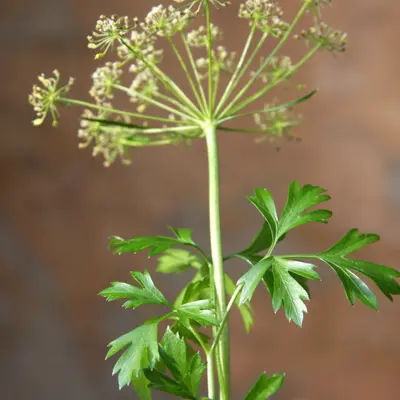
Wega's upright habit makes it easy to harvest the dark green leaves. Suitable for field or container production. Curled-leaf type. Plant Variety Protected. Ht. 12-18".
Harvest
75d
Days to harvest
Sun
Full sun
Zones
3–11
USDA hardiness
Height
0-3 feet
Planting Timeline
Showing dates for Wega in USDA Zone 7
All Zone 7 herb →Zone Map
Click a state to update dates
Wega · Zones 3–11
Growing Details
Succession Planting
Wega is a biennial — it produces leaves through its first full season and into the following spring before bolting to seed, so you don't sow it on a 14-day cycle like radishes. One indoor sow in February–March, transplanted out between April and June, carries you from a June harvest through November. If you want a backup plant in case the first bolts early or takes a hard winter hit, start a second round indoors in late July for a fall transplant; beyond that, two sowings a year is about all most gardens need.
Complete Growing Guide
Wega's upright habit makes it easy to harvest the dark green leaves. Suitable for field or container production. Curled-leaf type. Plant Variety Protected. Ht. 12-18". According to Johnny's Selected Seeds, Wega is 75 days to maturity, biennial, open pollinated. Notable features: Easy Choice, Grows Well in Containers, Plant Variety Protected.
Light: Full sun (6 or more hours of direct sunlight a day). Soil: Clay, Loam (Silt), Sand. Soil pH: Acid (<6.0), Neutral (6.0-8.0). Drainage: Good Drainage, Moist. Height: 0 ft. 8 in. - 3 ft. 0 in.. Spread: 0 ft. 8 in. - 1 ft. 0 in.. Spacing: 12 inches-3 feet. Growth rate: Medium. Maintenance: Medium. Propagation: Seed. Regions: Coastal, Mountains, Piedmont.
Harvesting
Wega reaches harvest at 75 days from sowing per Johnny's Selected Seeds. Expect 12-18". at peak.
The small, ridged seeds are formed in the second year from July to September. The fruit and seeds are poisonous to birds.
Type: Schizocarp.
Harvest time: Fall, Summer
Edibility: Leaves as flavoring and garnish
Storage & Preservation
Freshly harvested Wega parsley keeps best in the refrigerator at 32–40°F in a sealed plastic bag or container lined with paper towels to absorb excess moisture; expect a fresh shelf life of 7–10 days under these conditions. For longer storage, freezing works exceptionally well—blanch sprigs briefly in boiling water for 2–3 minutes, shock in ice water, pat dry, and freeze on a tray before transferring to freezer bags for up to three months. Alternatively, air-dry bundles hung in a warm, well-ventilated space for two weeks, then store in airtight jars away from light. Wega's tightly curled leaves retain their flavor particularly well when dried, making this method especially worthwhile if you're processing a large harvest. Avoid canning parsley alone due to safety concerns; it's best preserved frozen or dried.
History & Origin
Wega is open-pollinated, meaning seed saved from healthy plants will produce true-to-type offspring. Listed in the Johnny's Selected Seeds catalog.
Origin: Europe
Advantages
- +Upright growth habit enables convenient harvesting of dark green leaves
- +Versatile for both field cultivation and container gardening production
- +Plant Variety Protected status ensures consistent quality and genetic stability
- +Reaches mature height of 12-18 inches in approximately 75 days
- +Curled-leaf type provides attractive appearance for fresh market sales
Considerations
- -Requires consistent moisture to prevent bolting in hot weather
- -May develop powdery mildew in humid greenhouse or container conditions
- -Slower establishment compared to flat-leaf parsley varieties
Companion Plants
Tomatoes and peppers are the most practical neighbors for Wega parsley — the taller nightshades cast just enough afternoon shade to slow second-year bolting, and parsley's scent is said to disrupt aphids that would otherwise colonize both crops. French marigolds nearby pull double duty by suppressing soil nematodes; NC State Extension recommends a dense marigold planting for nematode-prone beds, and parsley benefits from the same treatment. Rue and sage are the ones to skip — both release allelopathic compounds that inhibit germination and stunt young parsley roots, and sage competes hard for dry, well-drained soil that parsley, which wants consistent moisture, can't share without losing.
Plant Together
Tomatoes
Basil repels tomato hornworms and aphids, enhances tomato flavor and growth
Peppers
Basil deters aphids, spider mites, and thrips that commonly attack pepper plants
Oregano
Shares similar growing conditions and attracts beneficial insects while repelling pests
Parsley
Compatible herb that attracts beneficial insects and doesn't compete for nutrients
Lettuce
Basil provides light shade and pest protection for lettuce during hot weather
Marigolds
Repel nematodes and other soil pests, complement basil's pest-deterrent properties
Chives
Repel aphids and enhance basil's flavor while sharing similar care requirements
Asparagus
Basil repels asparagus beetles and doesn't interfere with asparagus root system
Keep Apart
Rue
Allelopathic herb that inhibits basil growth and can stunt development
Sage
Competes for similar nutrients and may inhibit basil's growth through root competition
Thyme
Can overpower young basil plants and compete for space and nutrients
Nutrition Facts
Per 100g serving. % Daily Value based on 2,000 calorie diet. Source: USDA FoodData Central (FDC #172232)
Pests & Disease Resistance
Common Pests
Spider mites (especially indoors), aphids, slugs
Diseases
Powdery mildew, leaf spot
Troubleshooting Wega
What you'll see, why it happens, and what to do about it.
White powdery coating on leaves, usually appearing mid-summer or when plants are crowded
Likely Causes
- Powdery mildew — a fungal disease that spreads via airborne spores and thrives when humidity is high but leaves are dry
- Poor air circulation from tight spacing (under 6 inches)
What to Do
- 1.Strip and trash (don't compost) affected leaves as soon as you spot them
- 2.Space plants at least 6–8 inches apart and make sure nothing is overhanging them
- 3.NC State Extension's cultural guidance recommends avoiding overhead watering; if you must use it, water early in the morning so leaves dry before nightfall
Irregular tan or brown spots on leaves, sometimes with a yellow halo, appearing any time after the plant is 4–6 weeks old
Likely Causes
- Leaf spot (fungal) — typically splashes up from the soil surface during rain or overhead irrigation
- Prolonged leaf wetness from watering late in the day
What to Do
- 1.Remove spotted leaves promptly and dispose of them — dead tissue left on the soil invites further spread
- 2.Lay a 2-inch layer of straw mulch around the base of plants to reduce soil splash
- 3.Rotate parsley out of the same bed for at least one season; the pathogen overwinters in debris
Ragged holes in lower leaves, seedlings clipped at the base overnight, slime trails visible in the morning
Likely Causes
- Slugs — especially common in wet springs or beds with heavy mulch that stays damp
- Overcrowded planting that keeps the soil surface shaded and moist all day
What to Do
- 1.Set out iron phosphate bait (Sluggo or equivalent) in the evening around affected plants
- 2.Pull mulch back 2–3 inches from stem bases to let the soil surface dry out during the day
- 3.Hand-pick slugs after dark with a flashlight — unpleasant but effective when populations are high
Frequently Asked Questions
How long does Wega parsley take to grow from seed to harvest?▼
Can you grow Wega parsley in containers or pots?▼
Is Wega a good parsley variety for beginners?▼
How much space does Wega parsley need between plants?▼
What does Wega parsley taste like and how do you use it?▼
When should I plant Wega parsley, and can I grow it year-round?▼
Zone-by-Zone Planting Calendar
| Zone | Indoor Start | Transplant | Direct Sow | Harvest |
|---|---|---|---|---|
| Zone 11 | January – January | January – March | — | March – December |
| Zone 3 | April – May | June – July | — | July – October |
| Zone 4 | March – April | June – July | — | July – October |
| Zone 5 | March – April | May – June | — | June – October |
| Zone 6 | March – April | May – June | — | June – November |
| Zone 7 | February – March | April – June | — | June – November |
| Zone 8 | February – March | April – May | — | May – December |
| Zone 9 | January – February | March – April | — | April – December |
| Zone 10 | January – January | February – April | — | April – December |
Growing Guides from Wind River Greens
Sources & References
External authority sources used in compiling this guide.
- BreederJohnny's Selected Seeds
- USDAUSDA FoodData Central
See the Methodology page for how this data is sourced, what's AI-assisted, and known limitations.