Elephant Garlic
Allium ampeloprasum
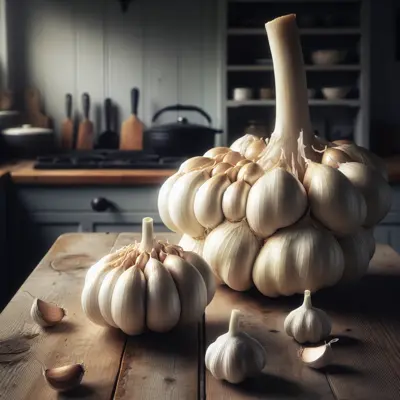
Despite its name, Elephant Garlic is actually more closely related to leeks than true garlic, producing massive bulbs that can weigh up to one pound each. The flavor is much milder and sweeter than regular garlic, making it perfect for roasting whole or for those who want garlic flavor without the bite. Each enormous clove can be as large as a regular garlic bulb.
Harvest
240-270d
Days to harvest
Sun
Full sun
Zones
5–10
USDA hardiness
Height
3-4 feet
Planting Timeline
Showing dates for Elephant Garlic in USDA Zone 7
All Zone 7 allium →Zone Map
Click a state to update dates
Elephant Garlic · Zones 5–10
Growing Details
Complete Growing Guide
Elephant Garlic requires a longer growing season than standard garlic varieties, demanding 240–270 days from planting to harvest, so plant cloves in fall for summer maturity in most climates. This cultivar prefers well-draining soil rich in organic matter and full sun exposure to develop those massive one-pound bulbs. Unlike true garlic, Elephant Garlic is more prone to bolting during temperature fluctuations, so consistent moisture and moderate fertility help prevent premature flowering that reduces bulb size. Watch for root rot in overly wet conditions and spider mites during dry spells, though overall disease pressure remains low. Space cloves 8–10 inches apart to accommodate the enlarged bulbs and vigorous foliage reaching 3–4 feet tall. A practical tip: harvest when the lower leaves brown but upper leaves remain green, then cure in a warm, airy location for three weeks to develop papery skin and extend storage life significantly.
Light: Full sun (6 or more hours of direct sunlight a day). Soil: High Organic Matter, Loam (Silt). Drainage: Good Drainage, Moist. Height: 3 ft. 0 in. - 4 ft. 0 in.. Spread: 1 ft. 0 in. - 2 ft. 0 in.. Spacing: Less than 12 inches, 12 inches-3 feet. Growth rate: Medium. Maintenance: Medium. Regions: Coastal, Mountains, Piedmont.
Harvesting
Harvest Elephant Garlic when the lower leaves begin turning brown and papery while upper leaves remain green, typically in late spring or early summer after 240-270 days of growth. The massive bulbs should feel firm and solid when gently squeezed, and the soil may crack slightly around the plant as the bulb matures. Unlike some garlic varieties, Elephant Garlic is best harvested all at once rather than in stages, as the enormous cloves continue developing throughout the season. For optimal storage and flavor development, wait until at least half the foliage has dried before digging, which ensures the protective outer skin has fully cured and will keep the bulbs fresh for months.
Type: Capsule.
Edibility: The leaves and bulbs can be eaten raw or cooked in small quantities.
Storage & Preservation
Cure elephant garlic immediately after harvest by laying bulbs in a single layer in a warm, dry, well-ventilated area for 2-3 weeks. Ideal curing conditions are 70-80°F with good airflow. Once the outer skins are papery and the neck area feels completely dry, trim roots and cut stalks to 1 inch above the bulb.
Properly cured elephant garlic stores 4-6 months at room temperature in a dark, dry location with good ventilation. Never refrigerate whole bulbs as this triggers sprouting. Once you break apart the bulb, individual cloves keep 1-2 weeks in the refrigerator.
For long-term preservation, slice cloves and dehydrate at 115°F until crisp, then grind into powder. Elephant garlic also freezes well when minced—freeze in ice cube trays with olive oil for convenient portions. The mild flavor makes it excellent for pickling whole small cloves in vinegar brine, creating a gourmet condiment that keeps 6 months refrigerated.
History & Origin
Elephant Garlic's precise origins remain somewhat obscured by incomplete historical documentation, though it is widely accepted to be a cultivar of Allium ampeloprasum, a species with Mediterranean roots that also gave rise to leeks and kurrat. The variety likely emerged through either natural selection or intentional breeding among ampeloprasum populations, possibly in the Mediterranean or Central Asian regions where related species flourished. Its introduction to North American cultivation became more prominent during the twentieth century, with seed companies and gardeners recognizing its ornamental qualities and mild flavor as desirable traits. However, definitive records of a specific breeder, institution, or introduction date have not been widely documented in available horticultural literature.
Origin: Macronesia, Mediterranean, Asia
Advantages
- +Massive bulbs weighing up to one pound provide substantial harvests per plant
- +Mild, sweet flavor appeals to garlic-averse cooks and families
- +Each enormous clove rivals regular garlic bulbs in size for easy handling
- +Roasts beautifully whole, creating impressive presentation for entertaining
- +Easy to grow with minimal skill required for successful cultivation
Considerations
- -Long 240-270 day season ties up garden space for most of year
- -Vulnerable to white rot and fusarium basal rot fungal diseases
- -Requires well-draining soil to prevent rot, limiting planting flexibility
- -Lower pungency means unsuitable for recipes needing traditional garlic intensity
Companion Plants
Tomatoes, peppers, and cabbage are the strongest pairings. Garlic's sulfur compounds — allicin chief among them — deter aphids and cabbage loopers (Trichoplusia ni), which matters a lot for brassicas that take insect pressure all season. Carrots and lettuce fit in without any drama because they don't share major pests with Allium ampeloprasum and their root systems run at different depths, so there's no real competition underground.
Beans and peas are the ones to pull off the list. Garlic's allelopathic compounds suppress legume growth and interfere with the Rhizobium bacteria living in bean and pea root nodules — the bacteria responsible for fixing nitrogen. Plant them together and you're actively undermining the reason you grew legumes in the first place. Asparagus is a problem for a different reason: it's a semi-permanent crop that'll sit in the same bed for 10–15 years, and alliums planted nearby consistently stunt its crown development over time.
Plant Together
Tomatoes
Elephant garlic repels aphids, spider mites, and other pests that commonly attack tomatoes
Cabbage
Deters cabbage worms, aphids, and other brassica pests while improving growth
Carrots
Repels carrot flies and root maggots, while carrots help break up soil for garlic bulbs
Lettuce
Provides pest protection without competing for nutrients, maximizes garden space
Roses
Repels aphids, spider mites, and may reduce fungal diseases like black spot
Peppers
Deters aphids, spider mites, and other common pepper pests
Spinach
Benefits from pest protection while maturing before garlic needs full space
Strawberries
Repels slugs, aphids, and other pests that damage strawberry plants
Keep Apart
Beans
Garlic can inhibit nitrogen fixation and overall growth of legumes
Peas
Allelopathic compounds in garlic can stunt pea growth and reduce yields
Asparagus
Can inhibit asparagus growth and interfere with root development
Nutrition Facts
Per 100g serving. % Daily Value based on 2,000 calorie diet. Source: USDA FoodData Central (FDC #1104647)
Pests & Disease Resistance
Resistance
Generally disease resistant, more robust than regular garlic
Common Pests
Aphids, thrips, onion maggot
Diseases
White rot, fusarium basal rot, rust
Troubleshooting Elephant Garlic
What you'll see, why it happens, and what to do about it.
Bulbs are small at harvest — lots of leaves, but cloves barely developed
Likely Causes
- Cloves planted in spring instead of fall — elephant garlic needs 240–270 days and a cold vernalization period to size up properly
- Spacing too tight (under 8 inches), forcing competition for nutrients and root space
What to Do
- 1.Plant cloves in October or November, pointy end up, 2 inches deep — they need that winter chill to trigger bulb development
- 2.Space every 8–10 inches; crowding is the most common reason home growers get marble-sized bulbs
- 3.Side-dress with a balanced fertilizer (10-10-10) in early spring when green shoots are 4–6 inches tall
Leaves turning yellow and collapsing from the base up, with soft or rotted tissue at the stem near soil level
Likely Causes
- Fusarium basal rot (Fusarium culmorum or F. oxysporum) — a soil-borne fungus that moves in through root wounds or damaged clove tissue
- White rot (Sclerotium cepivorum) — produces white fluffy mycelium and tiny black sclerotia on the bulb surface; those sclerotia can persist in soil for 20+ years
What to Do
- 1.Dig and discard affected plants immediately — don't compost them
- 2.Avoid replanting alliums in that bed for at least 4 years; white rot sclerotia are nearly impossible to eradicate once established
- 3.Start with certified disease-free seed stock next season; don't replant cloves saved from a bed that showed symptoms
Orange or yellow powdery streaks running lengthwise along the leaves in mid-spring
Likely Causes
- Garlic rust (Puccinia allii) — a fungal disease that spreads by airspores and thrives in cool, humid conditions around 50–65°F
- Overhead irrigation or dense planting that keeps foliage wet and cuts airflow between plants
What to Do
- 1.Strip heavily infected leaves and bin them — not the compost pile
- 2.If rust is spreading fast, a copper-based fungicide applied every 7–10 days can slow it, though it won't reverse damage already done
- 3.Switch to drip irrigation and hold spacing to a full 8–10 inches; dry foliage is the single biggest factor in keeping rust pressure low
Frequently Asked Questions
How long does elephant garlic take to grow?▼
Can you grow elephant garlic in containers?▼
What does elephant garlic taste like?▼
Is elephant garlic good for beginners?▼
When should I plant elephant garlic?▼
Elephant garlic vs regular garlic - what's the difference?▼
Zone-by-Zone Planting Calendar
| Zone | Indoor Start | Transplant | Direct Sow | Harvest |
|---|---|---|---|---|
| Zone 3 | — | — | May – June | December – October |
| Zone 4 | — | — | April – June | December – October |
| Zone 5 | — | — | April – May | December – November |
| Zone 6 | — | — | April – May | December – November |
| Zone 7 | — | — | March – May | December – November |
| Zone 8 | — | — | March – April | November – December |
| Zone 9 | — | — | February – March | October – December |
| Zone 10 | — | — | January – March | October – December |
| Zone 1 | — | — | June – July | December – September |
| Zone 2 | — | — | May – July | December – September |
| Zone 11 | — | — | January – February | September – December |
| Zone 12 | — | — | January – February | September – December |
| Zone 13 | — | — | January – February | September – December |
Growing Guides from Wind River Greens
Sources & References
External authority sources used in compiling this guide.
- ExtensionNC State Extension
- USDAUSDA FoodData Central
See the Methodology page for how this data is sourced, what's AI-assisted, and known limitations.