Helenor
Brassica napus
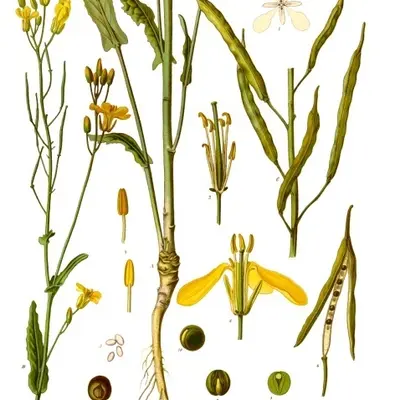
Helenor is a heirloom root vegetable that matures in 90 days, featuring light orange flesh with a distinctive sweet flavor and mild taste profile. This variety thrives in full sun to partial shade conditions and prefers well-drained loam soil with neutral pH, making it ideal for gardeners of all skill levels. The defining characteristic of Helenor is its exceptional versatility—equally suited for fresh eating straight from the garden or for cooking applications. With an easy difficulty rating and reliable performance, Helenor represents a dependable choice for both novice and experienced growers seeking a flavorful, heirloom root vegetable.
Harvest
90d
Days to harvest
Sun
Full sun to part shade
Zones
8–9
USDA hardiness
Height
4 feet
Planting Timeline
Showing dates for Helenor in USDA Zone 7
All Zone 7 root-vegetable →Zone Map
Click a state to update dates
Helenor · Zones 8–9
Growing Details
Succession Planting
Direct sow Helenor every 3 weeks from March through early May in zones 8–9. Staggering plantings gives you a harvest window that stretches into November rather than everything sizing up at once in June. Stop sowing once daytime highs are consistently above 85°F — roots sized up through Georgia's full summer heat turn woody, and the tops will bolt before the root is worth pulling.
Complete Growing Guide
Nicely round bulbs with light orange flesh and sweet flavor. Develops good color early in root development. Stores well. Sized seed. Also available in organic seed. According to Johnny's Selected Seeds, Helenor is 90 days to maturity, annual, open pollinated.
Light: Full sun (6 or more hours of direct sunlight a day), Partial Shade (Direct sunlight only part of the day, 2-6 hours). Soil: Clay, Loam (Silt), Sand. Soil pH: Acid (<6.0), Neutral (6.0-8.0). Drainage: Good Drainage, Moist. Height: 0 ft. 10 in. - 2 ft. 0 in.. Spread: 1 ft. 0 in. - 2 ft. 0 in.. Spacing: 12 inches-3 feet. Growth rate: Medium. Maintenance: Medium. Propagation: Seed, Stem Cutting. Regions: Coastal, Mountains, Piedmont.
Harvesting
Helenor reaches harvest at 90 days from sowing per Johnny's Selected Seeds. As an annual, harvest continues until frost ends the season.
The fruits dry and split when ripe.
Color: Brown/Copper, Green. Type: Siliqua. Length: > 3 inches.
Garden value: Edible
Harvest time: Fall, Summer
Bloom time: Spring, Summer
Edibility: The foliage is edible raw or cooked but when cooked can emit an unpleasant odor.
Storage & Preservation
# Storage and Preservation
Helenor roots store best at 32–40°F with 90–95% humidity in perforated plastic bags within a root cellar, cold storage, or refrigerator crisper drawer. Expect 3–4 months of fresh storage under these conditions. For longer preservation, freezing works well: blanch peeled, cubed roots for 3–4 minutes, cool immediately, then freeze in airtight containers for up to 10 months. Alternatively, roots can be roasted and frozen, or thinly sliced and dried at 140°F until brittle for winter soups and stocks. Pickling is also effective—slice roots, pack into jars with vinegar brine, and process for shelf stability. Helenor's dense flesh resists moisture loss better than many Brassica napus varieties, making it particularly suited to long-term cold storage without significant quality decline, even if not harvested until late autumn.
History & Origin
Rapeseed, also known as rape and oilseed rape and canola, is a yellow-flowered member of the Brassicaceae family.
Advantages
- +Sweet flavor and light orange flesh distinguish Helenor from other rutabaga varieties.
- +Nicely round bulbs develop good color early, reducing guessing on harvest time.
- +90-day maturity allows two crops in longer growing seasons.
- +Excellent storage capability means fresh rutabagas available months after harvest.
- +Sized seed improves planting efficiency and reduces thinning labor.
Considerations
- -Requires consistent soil moisture or flesh becomes woody and bitter.
- -Susceptible to clubroot disease in acidic or contaminated soils.
- -90-day timeline demands succession planting to ensure continuous supply.
Companion Plants
Carrots and Helenor share a bed without much conflict because their root activity occupies different depths — carrots work the 6–12 inch zone while Helenor's taproot pushes well past that, so competition for moisture stays low. Peas fix nitrogen at the root level, which matters for a heavy feeder that's in the ground 90 days. In our zone 8–9 Georgia gardens, nasturtiums and marigolds pull aphid and whitefly pressure away from the main crop starting in May, when pest populations start climbing fast — worth the row space. Skip hyssop entirely; it's allelopathic to brassicas and will stall establishment. Neighboring brassicas are the bigger mistake — they carry the same Fusarium and Sclerotinia load, so planting them adjacent just concentrates disease pressure in one spot.
Plant Together
Carrots
Different root depths prevent competition, carrots help break up soil for radish growth
Lettuce
Shallow roots don't compete, provides ground cover and efficient space utilization
Spinach
Fast-growing leafy green that can be harvested before radishes need full space
Peas
Fix nitrogen in soil benefiting radish growth, different growth habits complement each other
Chives
Repel root maggots and other pests that attack radishes
Nasturtiums
Act as trap crop for flea beetles and aphids that commonly attack radishes
Marigolds
Repel nematodes and other soil pests, deter flea beetles
Cucumber
Radishes can deter cucumber beetles while cucumbers provide shade for cool-season radishes
Lettuce
Shallow roots don't compete with beet taproots, provides living mulch
Keep Apart
Brassicas
Same family plants compete for nutrients and attract similar pests like flea beetles and clubroot
Hyssop
Inhibits growth of radishes and other root vegetables through allelopathic compounds
Nutrition Facts
Per 100g serving. % Daily Value based on 2,000 calorie diet. Source: USDA FoodData Central (FDC #170393)
Pests & Disease Resistance
Common Pests
Root maggots, onion thrips, carrot rust flies
Diseases
Fusarium rot, white rot, damping off
Troubleshooting Helenor
What you'll see, why it happens, and what to do about it.
Seedlings collapse at the soil line within days of germinating — stems look pinched or water-soaked, sometimes a fuzzy white mold on the soil surface nearby
Likely Causes
- Damping off — a complex of soil-borne fungi (Pythium, Rhizoctonia, Fusarium) that spike when humidity is high and air circulation is poor
- Overwatering combined with cool, compacted soil that stays wet too long
What to Do
- 1.Thin seedlings to at least 2–3 inches as soon as they're up — crowded stems trap moisture and make the problem worse
- 2.Start with treated seed or treat your own before sowing; NC State Extension's Organic Gardening notes specifically flag seed treatment as a first line against damping off and soil insects
- 3.Rotate the bed — don't direct-sow Brassica napus in the same spot two years running, since damping-off fungi build up in soil over repeated plantings
Roots are brown, slimy, and soft when you pull the plant — aboveground leaves have gone yellow-brown first, and the outer root tissue peels away from the central core easily
Likely Causes
- Fusarium rot — a soil-borne pathogen that enters through the root system, especially in waterlogged or poorly drained beds
- White rot (Sclerotinia sclerotiorum) — forms white cottony mycelium at the crown and root junction; favored by cool, wet conditions
What to Do
- 1.Pull and trash affected plants immediately — do not compost them
- 2.Improve drainage before the next planting: raised beds, or a single pass with a broadfork plus 2–3 inches of compost worked in
- 3.Rotate out of root vegetables entirely for at least 2 seasons; Sclerotinia sclerotia persist in soil for years and won't disappear on their own
Stunted plants with distorted new growth; tiny silvery streaks or stippling on leaves, especially during dry stretches in May and June
Likely Causes
- Onion thrips (Thrips tabaci) — rasping insects that feed on leaf tissue and vector several viruses; populations climb fast during hot, dry spells
- Carrot rust fly (Psila rosae) larvae tunneling in the root — the above-ground symptom is often just general decline until you pull the root and find the galleries
What to Do
- 1.For thrips: knock them back with a strong water spray early in the morning, 3 days running; follow up with insecticidal soap if counts stay high after that
- 2.For carrot rust fly: cover newly sown beds with row cover (Reemay or similar) before germination — the fly lays eggs at the soil surface, and physical exclusion beats any spray option
- 3.When you thin at 30–40 days, pull a few plants and check the roots; if you're already seeing tunneling, move the row cover earlier in the next sowing cycle
Frequently Asked Questions
How long does Helenor take to grow from seed to harvest?▼
Is Helenor a good variety for beginner gardeners?▼
Can you grow Helenor in containers?▼
What does Helenor taste like?▼
When should I plant Helenor seeds?▼
How should Helenor bulbs be stored after harvest?▼
Zone-by-Zone Planting Calendar
| Zone | Indoor Start | Transplant | Direct Sow | Harvest |
|---|---|---|---|---|
| Zone 3 | — | — | May – June | August – October |
| Zone 4 | — | — | April – June | July – October |
| Zone 5 | — | — | April – May | July – November |
| Zone 6 | — | — | April – May | July – November |
| Zone 7 | — | — | March – May | June – November |
| Zone 8 | — | — | March – April | June – December |
| Zone 9 | — | — | February – March | May – December |
| Zone 10 | — | — | January – March | April – December |
| Zone 1 | — | — | June – July | September – September |
| Zone 2 | — | — | May – July | August – September |
| Zone 11 | — | — | January – February | March – December |
| Zone 12 | — | — | January – February | March – December |
| Zone 13 | — | — | January – February | March – December |
Growing Guides from Wind River Greens
Sources & References
External authority sources used in compiling this guide.
- BreederJohnny's Selected Seeds
- USDAUSDA FoodData Central
See the Methodology page for how this data is sourced, what's AI-assisted, and known limitations.