Cutting Celery
Apium graveolens var. secalinum
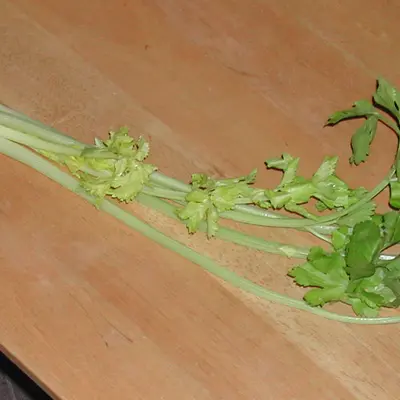
Easier to grow than standard celery. A versatile ingredient for salads, soups, stews, and vegetable medleys. Can be marketed in bunches or salad mixes. Also known as leaf celery. Also available in organic seed.
Harvest
80-85d
Days to harvest
Sun
Full sun
Zones
3–6
USDA hardiness
Height
1-3 feet
Planting Timeline
Showing dates for Cutting Celery in USDA Zone 7
All Zone 7 herb →Zone Map
Click a state to update dates
Cutting Celery · Zones 3–6
Growing Details
Succession Planting
Cutting celery doesn't produce a single harvest and quit — you clip leaves as needed and the plant regrows — but flavor turns bitter and stems get stringy once heat sets in hard. Start seeds indoors in February or March (germination takes 7–14 days at around 70°F soil temperature), then transplant out April through early June. A second round started indoors in July and transplanted out in August will carry you into fall; cutting celery tolerates light frost well, and the cooler temperatures actually sharpen the flavor rather than dulling it.
Two plantings per season — one spring, one late summer — covers most household needs without a lot of fuss. Don't push spring transplants past mid-June; anything going in the ground after that is likely to turn bitter or bolt before it gives you much worth cutting.
Complete Growing Guide
Easier to grow than standard celery. A versatile ingredient for salads, soups, stews, and vegetable medleys. Can be marketed in bunches or salad mixes. Also known as leaf celery. Also available in organic seed. According to Johnny's Selected Seeds, Cutting Celery is 80 - 85 days to maturity, annual, open pollinated.
Light: Full sun (6 or more hours of direct sunlight a day). Soil: High Organic Matter. Soil pH: Neutral (6.0-8.0). Drainage: Good Drainage, Moist. Height: 1 ft. 6 in. - 3 ft. 0 in.. Spread: 1 ft. 0 in. - 1 ft. 6 in.. Spacing: Less than 12 inches. Maintenance: Medium. Propagation: Seed.
Harvesting
Cutting Celery reaches harvest at 80 - 85 days from sowing per Johnny's Selected Seeds. As an annual, harvest continues until frost ends the season.
The fruits are black when ripened. The tiny seeds are ovoid-shaped.
Color: Black. Type: Schizocarp. Length: < 1 inch. Width: < 1 inch.
Harvest time: Fall
Edibility: Celery Seed comes from Wild Celery. The bitter-tasting leaves are inedible.
Storage & Preservation
Harvest cutting celery at 80 days and store unwashed bundles in a perforated plastic bag in the refrigerator's crisper drawer at 32–40°F with 95% humidity. Fresh stems remain crisp for 2–3 weeks when kept this way. For preservation, freezing works best: blanch cut stems for 3 minutes, cool in ice water, drain thoroughly, and pack into freezer bags. Dried celery also stores well—hang-dry bundles in a warm, airy space or use a dehydrator at 95–105°F until brittle, then crumble and store in airtight containers. Fermentation is another option; pack chopped stems with salt (5% by weight) in jars and let sit at room temperature for 1–2 weeks. Because cutting celery regrows from the crown when harvested properly, you can extend your fresh supply by succession harvesting rather than storing, simply cutting outer stems every 7–10 days throughout the season.
History & Origin
Cutting Celery is open-pollinated, meaning seed saved from healthy plants will produce true-to-type offspring. Listed in the Johnny's Selected Seeds catalog.
Origin: Macaronesia to North Africa, Europe to West Himalaya
Advantages
- +Significantly easier to cultivate than standard celery varieties
- +Versatile culinary uses in salads, soups, stews, and medleys
- +Can be harvested continuously for extended production periods
- +Multiple marketing options through bunches or salad mix channels
- +Organic seed availability appeals to specialty and premium markets
Considerations
- -Produces lower total yields compared to heading celery types
- -Prone to bolting prematurely in hot summer temperatures
- -Susceptible to celery leaf spot and fungal diseases
- -Requires consistent moisture; drought stress causes bitter, tough leaves
Companion Plants
Cabbage and other brassicas are the most practical neighbors for cutting celery. Celery's volatile oils — primarily phthalides — are thought to deter the white cabbage moth (Pieris rapae) and the aphids that pile onto brassicas in spring. Onions, leeks, and chives work on a related principle: the sulfur compounds they release interfere with how pest insects locate host plants by scent, which benefits both crops. Nasturtiums pull their weight as a trap crop, drawing aphid colonies away from the celery so you can see the problem building before it gets out of hand. Marigolds (Tagetes spp.) along the bed edge add root-secretion pressure against soil nematodes — useful here because cutting celery's constant moisture needs put it in ground that can get biologically stagnant fast.
Carrots and parsley are the companions to avoid. Both are Apiaceae — the same botanical family as cutting celery — which means they share identical pest and pathogen pressure. Celery leaf miner doesn't care which Apiaceae it lands on, and Septoria apiicola moves freely between them. Grouping these three together concentrates the problem in one spot and makes it harder to break the cycle with rotation.
Plant Together
Tomatoes
Celery repels hornworms and other tomato pests, while tomatoes provide shade
Cabbage
Celery deters cabbage worms and flea beetles that attack brassicas
Onions
Strong scent repels celery flies and aphids that commonly attack celery
Leeks
Repel carrot flies and celery flies through aromatic compounds
Nasturtiums
Act as trap crops for aphids and cucumber beetles, protecting celery
Marigolds
Deter nematodes and various flying insects that damage celery
Chives
Repel aphids and may improve celery's flavor and growth
Spinach
Compatible growth habits and helps retain soil moisture for celery
Keep Apart
Carrots
Both attract carrot flies and compete for similar nutrients in the soil
Parsley
Same family as celery, attracts identical pests and competes for nutrients
Corn
Heavy feeder that depletes nitrogen needed by celery, creates too much shade
Nutrition Facts
Per 100g serving. % Daily Value based on 2,000 calorie diet. Source: USDA FoodData Central (FDC #172232)
Pests & Disease Resistance
Common Pests
Celery leaf miners, aphids, slugs
Diseases
Leaf spot, septoria, early blight
Troubleshooting Cutting Celery
What you'll see, why it happens, and what to do about it.
Pale, winding tunnels or blotches on leaves, sometimes with a small maggot visible inside when you tear the leaf open
Likely Causes
- Celery leaf miner (Euleia heraclei) — the adult fly lays eggs on leaves and the larvae tunnel through the tissue
- Stressed or drought-affected plants, which are more attractive to egg-laying adults
What to Do
- 1.Pick off and trash any mined leaves immediately — don't compost them
- 2.Cover transplants with row cover (lightweight, 0.9 oz/yd²) right after planting to block the adult fly
- 3.Keep soil consistently moist; plants under drought stress get hit harder
Small, water-soaked spots on leaves that turn tan or gray with a darker border, showing up on older leaves first
Likely Causes
- Septoria leaf spot (Septoria apiicola) — a fungal pathogen that spreads by splashing water from the soil surface or infected debris
- Overhead irrigation late in the day, which extends leaf wetness overnight
What to Do
- 1.Strip affected leaves and bin them — NC State Extension notes that prompt removal of diseased leaves slows septoria's spread significantly
- 2.Water at the base of the plant, not overhead; if overhead watering is unavoidable, do it in the morning so leaves dry before nightfall
- 3.Mulch with 2–3 inches of straw to cut down on soil splash onto lower leaves
Lower leaves showing dark brown bullseye-pattern spots with yellowing around them, progressing upward over 1–2 weeks
Likely Causes
- Early blight (Alternaria solani) — a soil-borne fungus that overwinters in the soil and spreads via insects, irrigation, or tools, per NC State Extension
- Dense planting that restricts airflow, keeping foliage wet longer after rain or irrigation
What to Do
- 1.Remove and discard — do not compost — all affected lower leaves at first sign
- 2.Space plants at least 12 inches apart, 18 inches if your beds stay humid, to let air move through
- 3.Rotate cutting celery out of any bed where Apiaceae have grown for at least 2 full seasons
Irregular holes in leaves and stem bases near soil level, slime trails visible in the morning, damage worst after rain
Likely Causes
- Slugs — most active at night and after wet weather, especially where mulch or dense foliage holds moisture close to the ground
What to Do
- 1.Set out shallow traps (old tuna cans work fine) filled with cheap beer at soil level; check and empty every morning
- 2.Pull mulch back 3–4 inches from the base of each plant to reduce slug hiding spots during the day
- 3.Hand-pick at night with a headlamp — tedious but effective when the population is still small
Frequently Asked Questions
How long does cutting celery take to grow?▼
Is cutting celery good for beginners?▼
Can you grow cutting celery in containers?▼
What does cutting celery taste like?▼
When should I plant cutting celery?▼
How is cutting celery different from regular celery?▼
Zone-by-Zone Planting Calendar
| Zone | Indoor Start | Transplant | Direct Sow | Harvest |
|---|---|---|---|---|
| Zone 3 | April – May | June – July | — | July – October |
| Zone 4 | March – April | June – July | — | July – October |
| Zone 5 | March – April | May – June | — | June – October |
| Zone 6 | March – April | May – June | — | June – November |
| Zone 7 | February – March | April – June | — | June – November |
| Zone 8 | February – March | April – May | — | May – December |
| Zone 9 | January – February | March – April | — | April – December |
| Zone 10 | January – January | February – April | — | April – December |
Growing Guides from Wind River Greens
Sources & References
External authority sources used in compiling this guide.
- ExtensionNC State Extension
- BreederJohnny's Selected Seeds
- USDAUSDA FoodData Central
See the Methodology page for how this data is sourced, what's AI-assisted, and known limitations.