Dinosaur Kale
Lagenaria siceraria
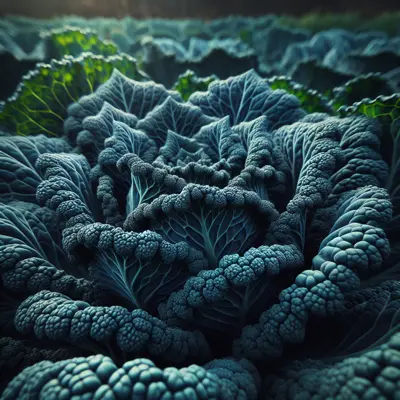
Dinosaur Kale is a heirloom Brassica featuring distinctive bumpy, deeply textured dark green leaves that resemble dinosaur skin—the source of its charming name. Maturing in 125 days under full sun, this variety stands out for its remarkably sweet, nutty flavor with significantly less bitterness than curly kale varieties, making it exceptionally palatable both raw and cooked. The tender leaves are ideal for salads, smoothies, and sautéed dishes. Thriving in rich, well-drained soil amended with organic matter, Dinosaur Kale is an easy-to-grow variety perfect for both beginners and experienced gardeners.
Harvest
125d
Days to harvest
Sun
Full sun
Zones
2–11
USDA hardiness
Height
9-18 inches
Planting Timeline
Showing dates for Dinosaur Kale in USDA Zone 7
All Zone 7 brassica →Zone Map
Click a state to update dates
Dinosaur Kale · Zones 2–11
Growing Details
Succession Planting
Dinosaur kale is worth succession planting because individual plants get tough and slow at the height of summer. In zone 7, direct sow or transplant every 3–4 weeks from late March through early May, then stop once daytime highs are reliably above 85°F — leaves turn bitter and new growth stalls. Start a second round of indoor sowings in late July for transplanting in mid-August; that fall planting often outperforms spring because the plants hit their stride as temperatures drop back into the 60s, and the leaves sweeten noticeably through October and into November.
Complete Growing Guide
Light: Full sun (6 or more hours of direct sunlight a day). Soil: Clay, High Organic Matter, Loam (Silt), Sand. Soil pH: Acid (<6.0), Alkaline (>8.0), Neutral (6.0-8.0). Drainage: Good Drainage, Moist. Height: 0 ft. 9 in. - 1 ft. 6 in.. Spread: 10 ft. 0 in. - 16 ft. 0 in.. Spacing: 3 feet-6 feet. Growth rate: Rapid. Maintenance: Medium. Propagation: Seed. Regions: Coastal, Mountains, Piedmont.
Harvesting
Fruit (a pepo to 3 feet long) has a smooth, light green skin when young, but matures to yellow or light brown. Mature fruits take a variety of shapes, including rounded, dumbbell-shaped, bottle-shaped or crookneck-shaped. The fruit is fleshy and dry but not split open.
Color: Cream/Tan. Length: > 3 inches. Width: > 3 inches.
Garden value: Edible, Showy
Harvest time: Summer
Edibility: Seeds, leaves, flowers, and young stems are all edible when the fruit is young. As it ages off the vine, the fruit hardens leaving the seeds inside.
Storage & Preservation
Store freshly harvested dinosaur kale in the refrigerator's crisper drawer at 32–40°F with humidity around 95 percent, ideally in a perforated plastic bag to maintain moisture while allowing air circulation. Whole leaves keep for up to two weeks under these conditions, though quality declines after about ten days. For longer preservation, freezing works exceptionally well—blanch leaves for two to three minutes, shock in ice water, pat dry, and pack flat in freezer bags for up to eight months. The sturdy texture of dinosaur kale holds up better to freezing than curly varieties and works particularly well in cooked dishes. Drying is another reliable option; strip leaves from the stem, arrange on screens in a warm, well-ventilated space, and store in airtight containers. Fermentation also suits this variety nicely—massage leaves with salt, pack tightly, and let sit at room temperature for several weeks to develop a pleasantly tangy product. Avoid canning, as kale's low acid content requires pressurized equipment for safety.
History & Origin
Origin: Western Tropical Africa to Ethiopia and Tanzania
Advantages
- +Attracts: Hummingbirds
- +Edible: Seeds, leaves, flowers, and young stems are all edible when the fruit is young. As it ages off the vine, the fruit hardens leaving the seeds inside.
- +Fast-growing
Companion Plants
Alliums — onions and garlic — are the workhorses here: their sulfur compounds confuse cabbage white butterflies and aphids that would otherwise locate your kale by scent. Dill draws in parasitic wasps (Braconidae and Ichneumonidae) that lay their eggs in cabbageworms and loopers, and in our zone 7 Georgia gardens it reseeds so aggressively you'll mostly just thin it. Nasturtiums function as a trap crop more than a repellent — aphids pile onto them and leave the kale alone, so plant them at bed edges and check them every few days. Tomatoes belong elsewhere; they're heavy calcium feeders with shallow-spreading roots that compete directly with kale at the 6–12 inch depth where both crops do most of their feeding.
Plant Together
Basil
Repels aphids and whiteflies, may improve flavor
Dill
Attracts beneficial insects like parasitic wasps that prey on cabbage pests
Onions
Repel cabbage worms and aphids with their strong scent
Garlic
Deters flea beetles and cabbage loopers
Nasturtiums
Act as trap crop for aphids and flea beetles
Marigolds
Repel nematodes and general garden pests
Lettuce
Provides ground cover and efficient space utilization
Carrots
Help break up soil and don't compete for nutrients
Keep Apart
Tomatoes
Heavy feeders that compete for nutrients and may stunt kale growth
Strawberries
May inhibit growth due to root competition and allelopathic effects
Pole Beans
Can shade kale and compete for nutrients, reducing leaf production
Nutrition Facts
Per 100g serving. % Daily Value based on 2,000 calorie diet. Source: USDA FoodData Central (FDC #168421)
Pests & Disease Resistance
Resistance
Good resistance to bolting and frost damage. Moderate resistance to common brassica diseases.
Common Pests
Cabbage worms, aphids, flea beetles, cabbage loopers
Diseases
Clubroot, black rot, downy mildew, white rust
Troubleshooting Dinosaur Kale
What you'll see, why it happens, and what to do about it.
Leaves riddled with small, irregular holes — worst on young transplants in April and May
Likely Causes
- Flea beetles (Phyllotreta spp.) — they overwinter in soil debris and jump to new brassica growth fast
- Seedlings under stress from inconsistent watering are hit harder
What to Do
- 1.Cover transplants immediately with row cover (Agribon-15 or similar) at planting — don't wait until you see damage
- 2.Keep soil consistently moist at 1–1.5 inches per week; stressed plants attract more feeding
- 3.If populations are heavy, spinosad-based sprays (such as Entrust) applied in the evening will knock them back without torching beneficials
Soft, pale green caterpillars chewing ragged holes through leaf centers, frass visible on upper leaves
Likely Causes
- Imported cabbageworm (Pieris rapae) — white butterflies laying eggs singly on leaves
- Cabbage looper (Trichoplusia ni) — moths active at night, larvae loop as they crawl
What to Do
- 1.Scout undersides of leaves twice a week starting at transplant; hand-pick eggs and small larvae
- 2.Apply Bt (Bacillus thuringiensis var. kurstaki) every 5–7 days once you see feeding damage — it only works on young larvae, so timing matters
- 3.Row cover kept on through mid-May blocks adult butterflies from laying eggs entirely
Yellowing leaves with V-shaped brown lesions pointing inward from leaf margins, starting on older leaves first
Likely Causes
- Black rot (Xanthomonas campestris pv. campestris) — a bacterial disease that enters through leaf margins and spreads through the vascular system
- Infected transplants or seed — black rot can be seed-borne
What to Do
- 1.Pull and trash affected plants immediately — don't compost them; the bacteria persist in debris
- 2.Switch to drip or soaker hoses; wet foliage from overhead irrigation accelerates spread
- 3.Rotate brassicas out of the affected bed for at least 2 seasons; NC State Extension notes crop rotation is the primary management tool for this pathogen
Yellow patches on upper leaf surface with grayish-purple fuzzy growth on the underside, appearing during cool, wet stretches in spring
Likely Causes
- Downy mildew (Peronospora parasitica) — thrives at 45–65°F with high humidity, common in Georgia before temperatures stabilize past April
- Overcrowded planting that traps moisture around foliage
What to Do
- 1.Space plants at least 12–18 inches apart and orient rows to catch prevailing airflow
- 2.Strip and bag heavily infected leaves; don't leave them sitting on the soil
- 3.Apply copper-based fungicide at first sign of symptoms, reapplying every 7 days through any prolonged wet spell
Frequently Asked Questions
How long does dinosaur kale take to grow from seed?▼
Can you grow dinosaur kale in containers?▼
Is dinosaur kale better than regular curly kale?▼
When should I plant dinosaur kale for fall harvest?▼
What does dinosaur kale taste like compared to spinach?▼
Why is my dinosaur kale turning yellow?▼
Zone-by-Zone Planting Calendar
| Zone | Indoor Start | Transplant | Direct Sow | Harvest |
|---|---|---|---|---|
| Zone 3 | March – April | May – June | May – June | September – October |
| Zone 4 | March – April | May – June | April – June | August – October |
| Zone 5 | February – March | April – May | April – May | August – November |
| Zone 6 | February – March | April – May | April – May | August – November |
| Zone 7 | February – March | April – May | March – May | July – November |
| Zone 8 | January – February | March – April | March – April | July – December |
| Zone 9 | January – January | February – March | February – March | June – December |
| Zone 10 | January – January | February – March | January – March | May – December |
| Zone 1 | April – May | June – July | June – July | October – September |
| Zone 2 | April – May | June – July | May – July | September – September |
| Zone 11 | January – January | January – February | January – February | April – December |
| Zone 12 | January – January | January – February | January – February | April – December |
| Zone 13 | January – January | January – February | January – February | April – December |
Growing Guides from Wind River Greens
Sources & References
External authority sources used in compiling this guide.
See the Methodology page for how this data is sourced, what's AI-assisted, and known limitations.