Purple de Lautrec Shallot
Allium cepa var. aggregatum 'Purple de Lautrec'
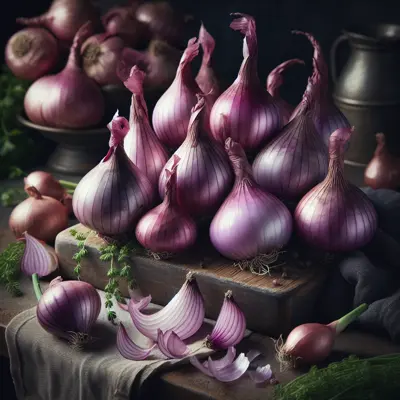
A prestigious French heirloom shallot with protected designation of origin status, prized by chefs worldwide for its complex, wine-like flavor. The elongated bulbs have beautiful purple-tinged skin and develop multiple cloves with incomparable taste. This is the shallot that elevates French cuisine to culinary art.
Harvest
90-110d
Days to harvest
Sun
Full sun
Zones
5–10
USDA hardiness
Height
12-18 inches
Planting Timeline
Showing dates for Purple de Lautrec Shallot in USDA Zone 7
All Zone 7 allium →Zone Map
Click a state to update dates
Purple de Lautrec Shallot · Zones 5–10
Growing Details
Succession Planting
Purple de Lautrec is planted from sets or small divisions, not seed, and each planting produces one bulb cluster at harvest — it doesn't keep producing through the season the way a cut-and-come-again crop does. You can stagger two batches across the spring window (roughly late February through late April in zone 7) to spread your cure dates and avoid having 50 shallots ready at once. Get the first round in as soon as the soil is workable and above 40°F, then follow up 3-4 weeks later.
Don't push past early May in most zones. Shallots need a sustained stretch of cool weather — ideally soil temps between 50°F and 65°F — to size up properly before summer heat triggers the tops to fall over prematurely. Sets planted too late tend to produce small, poorly-formed bulbs that don't store past a couple of months. Two batches, one spring window, is about all the succession this variety rewards.
Complete Growing Guide
Purple de Lautrec demands a long, cool fall and winter to develop its legendary complexity, so plant sets in early autumn rather than spring for superior flavor development and clove formation. This cultivar prefers rich, well-draining soil with consistent moisture and appreciates a cold period of 4-8 weeks below 50°F to trigger proper bulb maturation. Unlike hardier shallot varieties, Purple de Lautrec shows greater susceptibility to white rot and fusarium in humid conditions, making excellent drainage and air circulation essential; avoid overhead watering and rotate planting locations yearly. The variety has a notable tendency to bolt prematurely if temperatures spike unexpectedly in early spring, so choose a location with afternoon shade in warmer climates. For optimal results, harvest when foliage begins browning rather than waiting for complete drying, as this cultivar's thin skin makes it vulnerable to splitting if left too long in the ground.
Light: Full sun (6 or more hours of direct sunlight a day). Soil: High Organic Matter, Loam (Silt), Sand. Soil pH: Alkaline (>8.0), Neutral (6.0-8.0). Drainage: Good Drainage, Moist. Height: 1 ft. 0 in. - 1 ft. 6 in.. Spread: 0 ft. 6 in. - 1 ft. 0 in.. Spacing: Less than 12 inches, 12 inches-3 feet. Maintenance: Medium. Regions: Coastal, Mountains, Piedmont.
Harvesting
Harvest Purple de Lautrec shallots when the purple-tinged skin deepens to a rich mahogany hue and the outer layers papery, indicating full maturity around 90–110 days after planting. Watch for the foliage to yellow and flop naturally, signaling peak readiness, then gently lift bulbs to confirm they feel firm and fully sized with developed cloves. These shallots are typically harvested all at once when conditions align rather than selectively, as this heirloom variety's flavor complexity develops fully when allowed to mature completely before lifting. Time your harvest for a dry spell to avoid excess moisture on freshly dug bulbs, which ensures better curing and storage longevity for this prized French cultivar.
Flowers wither and convert to bulblets
Type: Capsule.
Harvest time: Summer
Edibility: The bulb and tops are edible raw or cooked. However, the plant also has poisonous characteristics as noted in the "Poisonous to Humans" section of this record. Toxicity can depend on the age of the person or animal, the age of the plant, the part of the plant ingested, how much is ingested, whether the person or animal has sensitivities or allergies, whether it's eaten raw or cooked, and so forth. Consult with a medical professional for further details.
Storage & Preservation
Cure harvested bulbs in a warm, dry, well-ventilated area (70-80°F) for 2-3 weeks until necks are completely dry and papery. Properly cured Purple de Lautrec shallots store 6-8 months in a cool (32-40°F), dry location with good air circulation—ideal humidity is 65-70%.
For preservation, these shallots excel when pickled whole in wine vinegar, maintaining their complex flavor profile. Slice and dehydrate at 125°F for 8-12 hours to create intensely flavored shallot flakes. Freezing works well for cooking use—peel and chop, then freeze in portions. The wine-like compounds in this variety actually intensify during proper storage, making 2-3 month old bulbs more flavorful than fresh ones.
History & Origin
The Purple de Lautrec shallot originates from the Occitanie region of southwestern France, particularly around the town of Lautrec in the Tarn département, where it has been cultivated as a local heirloom for generations. While detailed documentation of its exact breeding origins remains limited in English-language horticultural records, the variety emerged within France's rich tradition of shallot selection and cultivation. Its distinctive purple coloring and elongated bulb shape reflect centuries of farmer selection in its native region. The variety gained international recognition through French culinary reputation and eventually received protected designation of origin (AOC) status, cementing its cultural and agricultural significance as a heritage variety distinct to its geographic origin.
Origin: Central Asia and central Persia
Advantages
- +Complex wine-like flavor profile elevates French dishes to restaurant-quality cuisine.
- +Beautiful purple-tinged skin and multiple cloves make visually stunning harvest.
- +Protected French heirloom designation ensures authentic genetics and culinary prestige.
- +90-110 day season allows reliable cultivation in most temperate climates.
- +Prized by professional chefs worldwide for unmatched refined taste and versatility.
Considerations
- -White rot and downy mildew require excellent drainage and air circulation.
- -Moderate difficulty demands proper spacing, watering discipline, and pest monitoring vigilance.
- -Multiple pests including onion thrips and slugs necessitate preventative management strategies.
- -Extended storage may require careful conditions to prevent disease development.
Companion Plants
Carrots are a genuinely useful neighbor: they share the shallow-to-medium root zone without much competition, and the sulfur compounds shallots emit are thought to disrupt carrot fly (Psila rosae) host-finding. Lettuce tucks in well at the edges of a shallot bed — neither plant shades the other out, and the lettuce is usually pulled before the shallots need the full 6-8 inch spacing to finish sizing. Parsley draws predatory wasps that will take a run at the onion thrips (Thrips tabaci) shallots tend to attract, which makes it earn its spot more concretely than most "beneficial" listings do.
Beans and peas need to stay on the other end of the garden. Alliums produce root exudates that inhibit Rhizobium bacteria — the same bacteria legumes depend on to fix nitrogen — and a close planting will show up in your bean yield before you figure out why. Asparagus has documented two-way allelopathic tension with alliums; they suppress each other's growth over multiple seasons, so don't let them share a bed even temporarily.
Plant Together
Carrots
Shallots repel carrot fly while carrots help break up soil for shallot bulb development
Tomatoes
Shallots deter aphids, spider mites, and may reduce fungal diseases in tomatoes
Lettuce
Shallots repel aphids and slugs that commonly attack lettuce leaves
Cabbage
Shallots deter cabbage worms, aphids, and other brassica pests
Strawberries
Shallots repel slugs, snails, and aphids while improving strawberry flavor
Peppers
Shallots deter aphids and may reduce fungal diseases affecting pepper plants
Roses
Shallots repel aphids, Japanese beetles, and may reduce black spot disease
Parsley
Complementary root depths and shallots help repel pests that affect parsley
Keep Apart
Beans
Shallots can inhibit nitrogen fixation and stunt bean growth
Peas
Allelopathic compounds from shallots can reduce pea germination and growth
Asparagus
Shallots can stunt asparagus growth and compete for similar soil nutrients
Nutrition Facts
Per 100g serving. % Daily Value based on 2,000 calorie diet. Source: USDA FoodData Central (FDC #170499)
Pests & Disease Resistance
Resistance
Moderate resistance to common allium diseases
Common Pests
Onion thrips, onion fly larvae, slugs
Diseases
White rot, downy mildew, rust
Troubleshooting Purple de Lautrec Shallot
What you'll see, why it happens, and what to do about it.
Leaf tips silvered or streaked, tiny black specks visible on leaves around day 30-50
Likely Causes
- Onion thrips (Thrips tabaci) — they rasp the leaf surface and feed on the sap, leaving characteristic silver scarring
- Hot, dry spells that stress the plant and attract thrip populations
What to Do
- 1.Blast plants with a strong stream of water in the morning to knock thrips off — do this 3 days in a row
- 2.Apply spinosad-based spray (follow label rates) if populations are heavy; thrips build resistance fast, so don't use it as a first move
- 3.Keep beds consistently watered at 1 inch per week — drought-stressed shallots get hit harder
Bulbs rotting at the base with white fluffy mycelium visible, plants collapsing at soil level
Likely Causes
- White rot (Stromatinia cepivora) — a soil-borne fungus that can persist in the soil for 20+ years
- Cool, wet conditions below 65°F that favor sclerotia germination
What to Do
- 1.Pull and bag affected plants immediately — don't compost them, ever
- 2.Don't plant any allium in that bed for at least 8 years; white rot sclerotia survive a long time
- 3.Solarize the bed with clear plastic for 6-8 weeks the following summer to reduce sclerotia load
Gray-purple fuzzy coating on leaves, especially on the undersides, in cool wet weather
Likely Causes
- Downy mildew (Peronospora destructor) — an oomycete that spreads fast when nights are cool (50-65°F) and humidity is high
- Poor airflow from crowded or closely planted beds
What to Do
- 1.Space plants at least 6 inches apart — 8 inches if your site has poor airflow
- 2.Avoid overhead irrigation; switch to drip or water at the base in the morning
- 3.Remove and dispose of heavily infected foliage; copper-based fungicide can slow spread if applied early
Irregular yellow-orange pustules on leaf surfaces, leaves drying out prematurely before bulbs size up
Likely Causes
- Allium rust (Puccinia allii) — a fungal disease that overwinters on plant debris and spreads via wind-borne spores
- Prolonged leaf wetness from rain or overhead watering
What to Do
- 1.Strip off and trash any leaves showing pustules to slow spore spread
- 2.Apply a sulfur-based fungicide at the first sign of infection; repeat every 7-10 days during wet stretches
- 3.After harvest, clear all debris from the bed — rust survives on dead allium tissue
Frequently Asked Questions
How long does Purple de Lautrec shallot take to grow?▼
Can you grow Purple de Lautrec shallots in containers?▼
What does Purple de Lautrec shallot taste like?▼
When should I plant Purple de Lautrec shallot bulbs?▼
Are Purple de Lautrec shallots good for beginners?▼
Purple de Lautrec vs regular shallots - what's the difference?▼
Zone-by-Zone Planting Calendar
| Zone | Indoor Start | Transplant | Direct Sow | Harvest |
|---|---|---|---|---|
| Zone 1 | — | — | June – July | September – September |
| Zone 2 | — | — | May – July | August – September |
| Zone 11 | — | — | January – February | March – December |
| Zone 12 | — | — | January – February | March – December |
| Zone 13 | — | — | January – February | March – December |
| Zone 3 | — | — | May – June | August – October |
| Zone 4 | — | — | April – June | August – October |
| Zone 5 | — | — | April – May | July – November |
| Zone 6 | — | — | April – May | July – November |
| Zone 7 | — | — | March – May | June – November |
| Zone 8 | — | — | March – April | June – December |
| Zone 9 | — | — | February – March | May – December |
| Zone 10 | — | — | January – March | April – December |
Growing Guides from Wind River Greens
Sources & References
External authority sources used in compiling this guide.
See the Methodology page for how this data is sourced, what's AI-assisted, and known limitations.