Scallion, Evergreen Hardy White
Allium fistulosum
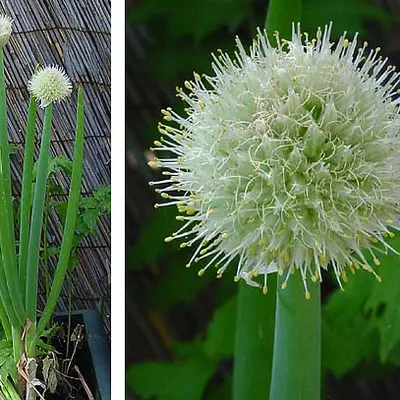
Green thread-like leaves. Adds delicate pungency where a mild onion flavor is needed.
Harvest
16-25d
Days to harvest
Sun
Full sun to partial shade
Zones
4–9
USDA hardiness
Height
1-3 feet
Planting Timeline
Showing dates for Scallion, Evergreen Hardy White in USDA Zone 7
All Zone 7 microgreen →Zone Map
Click a state to update dates
Scallion, Evergreen Hardy White · Zones 4–9
Growing Details
Succession Planting
Because Evergreen Hardy White scallion microgreens are ready to cut in 16–25 days and don't regrow meaningfully after a single harvest, succession sowing is how you keep a steady supply going. Start a new tray every 7–10 days and you'll always have one in early germination, one mid-growth, and one ready to cut. That three-tray rotation works year-round indoors — Allium fistulosum needs no cold stratification and no outdoor bed.
If you're growing on a windowsill through the shorter days of December and January, expect the slower end of that range — closer to 25 days. Under a grow light on a 16-hour cycle, you can reliably hit 16–18 days. Factor that difference into your sow schedule so you're not caught with a gap between trays.
Complete Growing Guide
Green thread-like leaves. Adds delicate pungency where a mild onion flavor is needed. According to Johnny's Selected Seeds, Scallion, Evergreen Hardy White is 16 - 25 days to maturity, annual, open pollinated. Notable features: Hydroponic Performer.
Light: Full sun (6 or more hours of direct sunlight a day), Partial Shade (Direct sunlight only part of the day, 2-6 hours). Soil: High Organic Matter, Loam (Silt), Sand. Drainage: Good Drainage. Height: 1 ft. 0 in. - 3 ft. 0 in.. Spread: 0 ft. 6 in. - 2 ft. 0 in.. Spacing: Less than 12 inches. Growth rate: Medium. Maintenance: Low. Propagation: Division. Regions: Coastal, Mountains, Piedmont.
Harvesting
Scallion, Evergreen Hardy White reaches harvest at 16 - 25 days from sowing per Johnny's Selected Seeds. As an annual, harvest continues until frost ends the season.
The capsule splits longitudinally and contains small round black seeds.
Type: Capsule.
Storage & Preservation
Harvest Evergreen Hardy White scallion microgreens at 16 days and store immediately in a breathable container lined with paper towels at 32–40°F with 90–95% humidity. A perforated plastic clamshell or open bag in the refrigerator works well. Expect 7–10 days of usable freshness before wilting becomes pronounced. For longer storage, freeze whole microgreens on a tray before transferring to freezer bags; they'll keep three months but lose crispness, making them best suited for cooked dishes, soups, and garnishes. Drying is also effective—spread on a screen in a warm, airy location for 5–7 days until completely brittle, then store in airtight containers for several months. Because this variety tolerates cool conditions better than most alliums, slightly lower refrigeration temperatures (closer to 32°F) extend shelf life without damage. Avoid moisture accumulation to prevent mold and slime.
History & Origin
Scallion, Evergreen Hardy White is open-pollinated, meaning seed saved from healthy plants will produce true-to-type offspring. Listed in the Johnny's Selected Seeds catalog.
Origin: Northern Hemisphere, North America and Eurasia
Advantages
- +Delicate mild onion flavor enhances dishes without overpowering other ingredients
- +Quick 16-25 day harvest fits fast production schedules efficiently
- +Easy difficulty level makes it ideal for beginner microgreen growers
- +Thread-like leaves add elegant visual presentation to finished plates
- +Hardy variety tolerates temperature fluctuations better than delicate microgreens
Considerations
- -Thin leaves prone to clumping when wet, requiring careful misting technique
- -Lower yield per tray compared to heartier microgreen varieties
- -Allium species susceptible to fusarium and root rot in humid conditions
- -Requires consistent airflow to prevent fungal issues during growth phase
Companion Plants
Scallion microgreens grow in trays, not beds, so traditional in-ground companion planting doesn't apply directly — but if you're running multiple microgreen trays at once, basil and lettuce are good ones to grow alongside. They share similar moisture needs and tolerate the same 4–6 hour light window, so one watering routine and one light position covers all three without anyone getting shortchanged. In our zone 7 Georgia garden, where summers push humidity indoors as well as out, keeping a potted marigold near your growing station genuinely cuts down on fungus gnat pressure across the whole setup.
Beans and peas are worth keeping well away from your Allium fistulosum trays. Alliums release compounds that suppress the nitrogen-fixing rhizobia bacteria legumes depend on — it's a documented allelopathic effect, not gardening folklore. In adjacent trays sharing a drip tray or drain mat, that root-zone chemistry can still transfer. Sow your legume microgreens on a separate shelf or station entirely.
Plant Together
Basil
Repels aphids and thrips that commonly attack scallions, enhances growth
Carrots
Scallions repel carrot flies while carrots help break up soil for shallow scallion roots
Tomatoes
Scallions deter aphids and spider mites from tomatoes, improve tomato flavor
Lettuce
Similar water and nutrient needs, scallions provide natural pest deterrent for lettuce
Cabbage
Scallions repel cabbage worms and flea beetles that damage brassicas
Spinach
Compatible growth habits and nutrient requirements, mutual pest protection
Marigolds
Attract beneficial insects and repel nematodes that can damage scallion roots
Parsley
Similar growing conditions, both herbs complement each other's pest-repelling properties
Keep Apart
Beans
Nitrogen fixation can cause excessive leaf growth in scallions at expense of bulb development
Peas
Heavy nitrogen production leads to weak, overly leafy scallion growth
Sage
Strong allelopathic compounds can inhibit scallion germination and growth
Nutrition Facts
Per 100g serving. % Daily Value based on 2,000 calorie diet. Source: USDA FoodData Central (FDC #170005)
Pests & Disease Resistance
Common Pests
Fungus gnats, spider mites (rare in microgreens); primarily a concern only if debris or old substrate is present
Diseases
Damping off (prevented by proper ventilation and moisture control), mold (prevented by air circulation and avoiding overwatering)
Troubleshooting Scallion, Evergreen Hardy White
What you'll see, why it happens, and what to do about it.
Pale, leggy seedlings flopping over by day 10–12, stems thin as thread
Likely Causes
- Insufficient light — microgreens need 4–6 hours minimum, and a weak grow light placed too far above the tray is a common setup mistake
- Sown too densely without enough airflow, causing stems to stretch toward any available light
What to Do
- 1.Move trays to your brightest south-facing window or drop a grow light to within 2–3 inches of the canopy
- 2.Next sow, back off seed density slightly — Evergreen Hardy White is a big seed for a microgreen; shoulder-to-shoulder coverage is fine but you don't need to pile them
- 3.A small fan on low for 30 minutes a day will thicken stems noticeably within 3–4 days
Gray or white fuzzy mold appearing on the substrate surface or at the base of stems, usually days 5–10
Likely Causes
- Botrytis cinerea or common surface mold from overwatering and poor air circulation
- Top-watering the canopy directly — it soaks the stems and creates the humidity mold needs to take hold
What to Do
- 1.Switch exclusively to bottom-watering: set the tray in a shallow pan of water for 10–15 minutes, then drain completely
- 2.Run a fan near the trays to keep surface air moving — even intermittently helps
- 3.If mold is already established, harvest immediately whatever looks clean; a fully affected tray isn't worth saving
Tiny dark flies hovering around trays, seedlings wilting or stunted despite adequate moisture
Likely Causes
- Fungus gnats (Bradysia spp.) — their larvae feed on root hairs in moist substrate, which collapses young seedlings fast
- Old or contaminated growing medium that wasn't pasteurized or was stored wet
What to Do
- 1.Let the top half-inch of substrate dry out between waterings — fungus gnat larvae can't survive without consistent surface moisture
- 2.Set yellow sticky traps at tray level to catch adults and confirm the ID before treating
- 3.Start fresh with a clean, sterile substrate (coconut coir or a purpose-made microgreen mix) and sanitize trays with a 10% bleach solution between cycles
Frequently Asked Questions
How long does Evergreen Hardy White scallion microgreen take to grow?▼
Can you grow Evergreen Hardy White scallion microgreens in containers indoors?▼
What does Evergreen Hardy White scallion microgreen taste like?▼
Is Evergreen Hardy White good for beginner microgreen growers?▼
Can Evergreen Hardy White scallion microgreens be grown outdoors?▼
What's the difference between Evergreen Hardy White and other scallion microgreen varieties?▼
Zone-by-Zone Planting Calendar
| Zone | Indoor Start | Transplant | Direct Sow | Harvest |
|---|---|---|---|---|
| Zone 1 | January – December | — | — | January – December |
| Zone 2 | January – December | — | — | January – December |
| Zone 11 | January – December | — | — | January – December |
| Zone 12 | January – December | — | — | January – December |
| Zone 13 | January – December | — | — | January – December |
| Zone 3 | January – December | — | — | January – December |
| Zone 4 | January – December | — | — | January – December |
| Zone 5 | January – December | — | — | January – December |
| Zone 6 | January – December | — | — | January – December |
| Zone 7 | January – December | — | — | January – December |
| Zone 8 | January – December | — | — | January – December |
| Zone 9 | January – December | — | — | January – December |
| Zone 10 | January – December | — | — | January – December |
Growing Guides from Wind River Greens
Sources & References
External authority sources used in compiling this guide.
- BreederJohnny's Selected Seeds
- USDAUSDA FoodData Central
See the Methodology page for how this data is sourced, what's AI-assisted, and known limitations.