Tower Violet
Callistephus chinensis
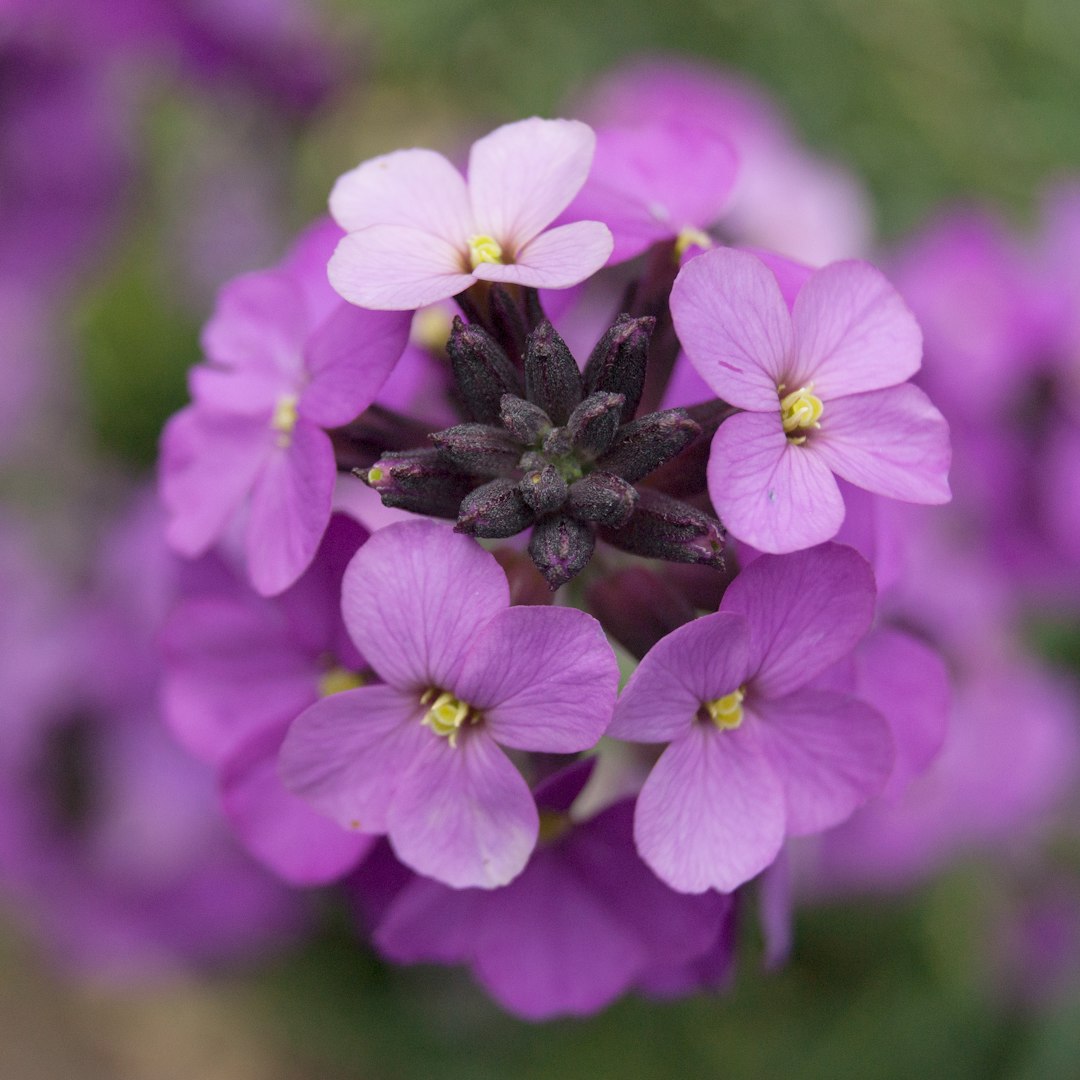
All the elegance and beauty of peonies and garden mums in an easy-to-grow annual. Rich plum-colored blooms avg. 2-3" with 13-20 stems per plant. Tower features uniform bloom time and plant height across the series and mix. Also known as summer aster.
Harvest
110-120d
Days to harvest
Sun
Full sun to partial shade
Zones
2–11
USDA hardiness
Height
1-3 feet
Planting Timeline
Showing dates for Tower Violet in USDA Zone 7
All Zone 7 flower →Zone Map
Click a state to update dates
Tower Violet · Zones 2–11
Growing Details
Succession Planting
Tower Violet takes 110–120 days from seed to bloom, which is long enough that two staggered indoor sowings will give you cut flowers across multiple weeks rather than one compressed flush. In zone 7, start a first batch indoors in late February, then a second batch in mid-March — you'll get roughly 3–4 weeks of staggered bloom from a single bed. Don't push a third sowing past late March; transplants going out after mid-May will hit bud set during the hottest part of summer, and aster leafhopper pressure — the main vector for aster yellows — spikes at the same time. In cooler zones (5–6), you can stretch indoor sowings through early April without that same disease risk.
Complete Growing Guide
All the elegance and beauty of peonies and garden mums in an easy-to-grow annual. Rich plum-colored blooms avg. 2-3" with 13-20 stems per plant. Tower features uniform bloom time and plant height across the series and mix. Also known as summer aster. According to Johnny's Selected Seeds, Tower Violet is 110 - 120 days to maturity, annual, open pollinated. Notable features: Use for Cut Flowers and Bouquets.
Light: Full sun (6 or more hours of direct sunlight a day), Partial Shade (Direct sunlight only part of the day, 2-6 hours). Soil: Clay, High Organic Matter, Loam (Silt), Sand. Soil pH: Acid (<6.0), Neutral (6.0-8.0). Drainage: Good Drainage, Moist. Height: 1 ft. 0 in. - 3 ft. 0 in.. Spread: 1 ft. 0 in. - 1 ft. 6 in.. Spacing: Less than 12 inches. Growth rate: Rapid. Maintenance: Medium. Regions: Coastal, Mountains, Piedmont.
Harvesting
Tower Violet reaches harvest at 110 - 120 days from sowing per Johnny's Selected Seeds. Expect 2-3" at peak. As an annual, harvest continues until frost ends the season.
The fruit is a rough-textured, glandular, purple-mottled cypsela that turns gray with age.
Storage & Preservation
Tower Violet blooms are best stored in a cool environment to extend vase life. Keep fresh-cut flowers in the refrigerator at 34-40°F with high humidity (80-90%) to preserve color and texture for 7-10 days. For longer preservation, air-dry flowers by hanging bundles upside-down in a warm, well-ventilated space away from direct sunlight for 2-3 weeks. Alternatively, press flowers between heavy books for 3-4 weeks for flattened specimens suitable for crafts or arrangements. Silica gel drying offers rapid preservation in 3-5 days, maintaining vibrant plum coloring.
History & Origin
Tower Violet is open-pollinated, meaning seed saved from healthy plants will produce true-to-type offspring. Listed in the Johnny's Selected Seeds catalog.
Origin: China and Southern Russia
Advantages
- +Rich plum blooms mimic expensive peonies and garden mums affordably
- +Produces 13-20 stems per plant for abundant cutting material
- +Easy-to-grow annual requires minimal gardening experience or special care
- +Uniform height and bloom time create professional-looking garden displays
- +2-3 inch flowers provide substantial size for floral arrangements
Considerations
- -110-120 day maturity requires long growing season in cool climates
- -Asters susceptible to powdery mildew in humid conditions
- -Plum color may fade or shift in intense afternoon sun
- -Requires consistent moisture; drought stress reduces stem production significantly
Companion Plants
Sweet Alyssum planted at the base of Tower Violet stays low enough not to compete for light, and its nectar draws parasitic wasps that knock back aphid populations before they build up on the aster foliage. Lobelia and Pansy work for the same reason — shallow roots, low canopy, no resource competition. Shade-tolerant companions like Hostas, Ferns, and Astilbe fit naturally as border plants in mixed beds where Tower Violet gets partial afternoon shade. Keep it away from Black Walnut (juglone toxicity kills most annuals within the root zone), Eucalyptus (allelopathic compounds leach from leaf litter), and Fennel, which suppresses most annuals growing within 18 inches of it.
Plant Together
Sweet Alyssum
Attracts beneficial insects and provides ground cover protection
Lobelia
Similar growing conditions and creates beautiful color combinations
Pansy
Compatible cool-season flowers with similar water and light needs
Primrose
Thrives in similar partial shade conditions and blooms simultaneously
Ferns
Provides complementary foliage texture and enjoys same moist, shaded conditions
Hostas
Creates layered planting with compatible shade and moisture requirements
Astilbe
Shares preference for moist soil and partial shade locations
Heuchera
Provides contrasting foliage color while enjoying similar growing conditions
Keep Apart
Black Walnut
Produces juglone toxin that inhibits growth of many flowering plants
Eucalyptus
Allelopathic properties suppress growth of nearby understory plants
Fennel
Releases compounds that inhibit growth of most companion plants
Troubleshooting Tower Violet
What you'll see, why it happens, and what to do about it.
Seedlings collapsing at soil level, stems pinched and dark at the base
Likely Causes
- Damping off (Pythium or Rhizoctonia solani) — soil-borne fungi that thrive in cold, wet, poorly drained seed-starting mix
- Overwatering in the germination tray
What to Do
- 1.Toss the affected tray — there's no saving damped-off seedlings
- 2.Start fresh with a sterile, soilless seed-starting mix and water only when the top layer feels dry
- 3.Run a small fan near your seed trays to keep air moving and surface moisture down
Leaves and buds covered in grayish-white powdery coating, especially in mid to late summer
Likely Causes
- Powdery mildew (Erysiphe cichoracearum) — common on China asters, spreads fast in warm days with cool nights
- Dense planting that restricts airflow between plants
What to Do
- 1.Remove and bag (don't compost) badly affected leaves immediately
- 2.Space plants at least 18 inches apart — crowding is the main driver here
- 3.Apply a dilute baking soda spray (1 tablespoon per gallon of water) weekly as a preventive if you've had problems before
Plant wilts suddenly and dies despite adequate water, roots show dark brown discoloration inside the stem
Likely Causes
- Fusarium wilt (Fusarium oxysporum f. sp. callistephi) — a vascular disease that blocks water uptake from inside the stem
- Reusing soil in the same bed where China asters grew the previous year
What to Do
- 1.Pull and dispose of the plant in the trash — Fusarium persists in soil for years
- 2.Do not replant China asters in that spot for at least 3 seasons
- 3.Source seed or transplants confirmed to come from disease-free stock; some commercial suppliers test for this
Flowers fail to open or buds turn brown and papery before blooming, foliage yellowed and distorted
Likely Causes
- Aster yellows — a phytoplasma disease carried by aster leafhoppers (Macrosteles quadrilineatus)
- Extended heat stress during bud set, particularly when daytime temps stay above 85°F
What to Do
- 1.Check undersides of leaves for leafhoppers — tiny, wedge-shaped, fast-moving — and install row cover early in the season before populations establish
- 2.Pull and trash any plant showing aster yellows symptoms; the phytoplasma has no cure and leafhoppers will keep spreading it to healthy plants
- 3.Time your sowing so Tower Violet blooms before peak summer heat — a February indoor start in zone 7 targets late-spring flowers, well ahead of leafhopper season
Frequently Asked Questions
How long do Tower Violet flowers last when cut?▼
Is Tower Violet a good flower for beginners?▼
Can you grow Tower Violet in containers?▼
When should I plant Tower Violet seeds?▼
What is Tower Violet also known as?▼
Zone-by-Zone Planting Calendar
| Zone | Indoor Start | Transplant | Direct Sow | Harvest |
|---|---|---|---|---|
| Zone 3 | April – May | June – July | June – August | — |
| Zone 4 | March – April | June – June | June – July | — |
| Zone 5 | March – April | May – June | May – July | — |
| Zone 6 | March – April | May – June | May – July | — |
| Zone 7 | February – March | April – May | April – June | — |
| Zone 8 | February – March | April – May | April – June | — |
| Zone 9 | January – February | March – April | March – May | — |
| Zone 10 | January – January | February – March | February – April | — |
| Zone 1 | May – June | July – August | July – September | — |
| Zone 2 | April – May | June – July | June – August | — |
| Zone 11 | January – January | January – February | January – March | — |
| Zone 12 | January – January | January – February | January – March | — |
| Zone 13 | January – January | January – February | January – March | — |
Growing Guides from Wind River Greens
Sources & References
External authority sources used in compiling this guide.
- BreederJohnny's Selected Seeds
See the Methodology page for how this data is sourced, what's AI-assisted, and known limitations.