Amish Paste
Solanum lycopersicum
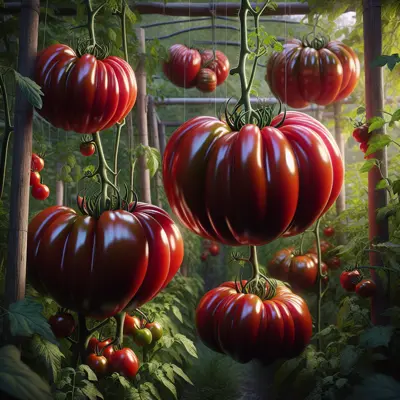
Large for a sauce tomato, Amish Paste's slightly irregular plum to strawberry-shaped fruits avg. 8-12 oz. with excellent flavor. These meaty tomatoes are good in salads and great for processing. A Slow Food USA Ark of Taste variety. Indeterminate.
Harvest
85d
Days to harvest
Sun
Full sun
Zones
10–11
USDA hardiness
Height
1-10 feet
Planting Timeline
Showing dates for Amish Paste in USDA Zone 7
All Zone 7 tomato →Zone Map
Click a state to update dates
Amish Paste · Zones 10–11
Growing Details
Complete Growing Guide
Large for a sauce tomato, Amish Paste's slightly irregular plum to strawberry-shaped fruits avg. 8-12 oz. with excellent flavor. These meaty tomatoes are good in salads and great for processing. A Slow Food USA Ark of Taste variety. Indeterminate. According to Johnny's Selected Seeds, Amish Paste is 85 days to maturity, annual, open pollinated, indeterminate growth habit. Notable features: Organic Seeds, Plants, and Supplies, Heirloom.
Light: Full sun (6 or more hours of direct sunlight a day). Soil: Clay, High Organic Matter, Loam (Silt), Sand. Soil pH: Acid (<6.0), Neutral (6.0-8.0). Drainage: Good Drainage, Moist. Height: 1 ft. 0 in. - 10 ft. 0 in. Spread: 1 ft. 0 in. - 4 ft. 0 in. Spacing: 3 feet-6 feet. Growth rate: Rapid. Maintenance: High. Propagation: Seed. Regions: Coastal, Mountains, Piedmont.
Harvesting
Amish Paste reaches harvest at 85 days from sowing per Johnny's Selected Seeds. Expect 8-12 oz. at peak. As an annual, harvest continues until frost ends the season.
The fruits are smooth, shiny, glossy, and are classified as berries. The size, shape, and color will vary depending on the variety or cultivar. The color of the fruits may be red, yellow, orange, green, purple, or pink. The fruits may contain over 100 yellow to light brown seeds.
Color: Gold/Yellow, Green, Orange, Pink, Purple/Lavender, Red/Burgundy, Variegated. Type: Berry. Length: > 3 inches. Width: > 3 inches.
Garden value: Edible, Showy
Harvest time: Fall, Summer
Edibility: The fruits or berries of the tomato are edible. They may be eaten raw, cooked, dried, or processed. They are a rich source of Vitamin A, Vitamin C, folic acid, and antioxidants. Lycopene is an antioxidant that gives the tomato its rich red color. Many plants will drop fruit when ripe or the fruit will come off easily. Tomatoes will continue to ripen once picked. Store them at room temperature.
Storage & Preservation
Store freshly harvested Amish Paste tomatoes at room temperature away from direct sunlight until fully ripe, as chilling below 55°F damages flavor and texture. Once ripe, they'll keep for 3-5 days at room temperature, or up to two weeks refrigerated if necessary, though cold storage diminishes the rich flavor these tomatoes are known for.
This variety shines in preservation. Freeze whole or crushed for long-term storage, or can using standard hot-water bath methods—the low acidity and meaty flesh make them ideal for pressure canning as sauce or paste. Dehydrate slices for concentrated flavor, or make tomato paste by cooking down the pulp. The thick flesh and low water content mean faster processing times than most varieties, saving both fuel and effort. For maximum flavor concentration, cook down preserved batches slowly to intensify the already-intense taste.
History & Origin
Amish Paste is open-pollinated, meaning seed saved from healthy plants will produce true-to-type offspring. Listed in the Johnny's Selected Seeds catalog.
Origin: Peru
Advantages
- +Excellent flavor makes it ideal for sauces and fresh eating
- +Large 8-12 oz fruits provide substantial yields per plant
- +Slow Food USA heritage variety with recognized superior quality
- +Meaty texture perfect for processing and canning applications
Considerations
- -Susceptible to late blight and early blight in wet conditions
- -Indeterminate growth requires consistent staking and pruning maintenance
- -Takes 85 days to maturity, limiting short-season growing regions
- -Multiple pest vulnerabilities including hornworms and flea beetles
Companion Plants
Basil is the most common pairing with paste tomatoes, and it's not wrong — but the pest-repellent claims are shakier than gardening lore suggests. The more defensible reason to put basil 12–18 inches off your Amish Paste plants is that it occupies the lower understory without competing for vertical space, and you end up harvesting both from the same 24-inch slot through August. Marigolds (Tagetes patula specifically) are worth a dedicated border row for their documented suppression of root-knot nematodes (Meloidogyne spp.) through thiophene compounds released from their roots — that matters with a variety that carries no nematode resistance of its own. Nasturtiums function as a trap crop for aphids, concentrating them on a plant you can sacrifice or spray rather than letting them work through your tomato canopy.
Borage attracts parasitic wasps that target tomato hornworm larvae, and its low sprawl doesn't shade the tomatoes above. Carrots share the bed cleanly as long as you're not direct-sowing them after transplanting — their roots run deeper than the tomato's feeder roots, so competition is minimal.
Fennel is allelopathic and will stunt tomato growth within a few feet; keep it on the far side of the garden entirely. Brassicas are a subtler problem — they share soilborne pathogens with tomatoes and will compress your effective rotation window if they cycle through the same bed year after year. Corn is worth mentioning too: it hosts both corn earworm (Helicoverpa zea) and fall armyworm (Spodoptera frugiperda), and once corn silks are done, those populations will move.
Plant Together
Basil
Repels aphids and whiteflies, may improve tomato flavor
Nasturtium
Acts as trap crop for aphids and cucumber beetles
Parsley
Attracts beneficial insects like hoverflies and parasitic wasps
Carrots
Helps break up soil without competing for nutrients
Oregano
Repels aphids and provides ground cover to retain moisture
Borage
Attracts pollinators and may repel tomato hornworms
Marigold
Deters nematodes and whiteflies with natural compounds
Chives
Repels aphids and may improve tomato growth and flavor
Keep Apart
Black Walnut
Produces juglone toxin that causes tomato wilt and stunted growth
Fennel
Inhibits growth of most garden plants through allelopathy
Brassicas
Compete for similar nutrients and may stunt tomato growth
Corn
Both attract corn earworm/tomato fruitworm, increasing pest pressure
Nutrition Facts
Per 100g serving. % Daily Value based on 2,000 calorie diet. Source: USDA FoodData Central (FDC #321360)
Pests & Disease Resistance
Resistance
Limited disease resistance typical of heirlooms. Some tolerance to cracking.
Common Pests
Tomato hornworm, aphids, flea beetles, stink bugs
Diseases
Late blight, early blight, fusarium wilt, bacterial canker
Troubleshooting Amish Paste
What you'll see, why it happens, and what to do about it.
Large areas of foliage turning gray-green and withering fast — sometimes overnight — with dark, water-soaked spots on fruit
Likely Causes
- Late blight (Phytophthora infestans) — an oomycete that spreads aggressively in cool, wet weather (nights below 60°F, humid days)
- Infected transplants or windborne spores from nearby potato or tomato plantings
What to Do
- 1.Pull and bag the entire plant — don't compost it — and remove it from the property; late blight spreads to neighboring plants within days
- 2.NC State Extension's PDIC monitors late blight spread year to year — check their alerts before the season to gauge pressure in your area
- 3.Don't replant tomatoes or potatoes in that bed for at least 3 years; Amish Paste carries no built-in late blight resistance, so site selection and airflow matter more than they would with a modern hybrid
Plant wilts during the day but soil is moist — no obvious stem lesions, no hornworm damage visible
Likely Causes
- Fusarium wilt (Fusarium oxysporum f. sp. lycopersici) — a soilborne fungus that clogs the vascular tissue; cut the stem near the base and look for brown discoloration inside
- Southern bacterial wilt (Ralstonia solanacearum) — suspect this if the collapse is sudden and the stem interior oozes a milky strand when placed in a glass of water
- Root-knot nematodes (Meloidogyne spp.) — pull the plant and check the roots for marble-sized galls
What to Do
- 1.Dig up and destroy affected plants including the roots — NC State Extension is explicit that these pathogens persist in soil for years
- 2.Amish Paste, like most heirloom varieties, lacks resistance to soilborne diseases per NC State Extension; grafting onto a resistant rootstock is a practical option if this bed has a history of wilt problems
- 3.Rotate out of tomatoes and all other Solanaceae for 5–7 years in that spot — NC State Extension IPM guidance recommends that specific window for tomato diseases
Frequently Asked Questions
How long does Amish Paste tomato take to grow?▼
Can you grow Amish Paste tomatoes in containers?▼
Is Amish Paste good for beginners?▼
What does Amish Paste tomato taste like?▼
Amish Paste vs San Marzano—what's the difference?▼
When should I plant Amish Paste tomatoes?▼
Zone-by-Zone Planting Calendar
| Zone | Indoor Start | Transplant | Direct Sow | Harvest |
|---|---|---|---|---|
| Zone 3 | April – April | June – July | — | September – October |
| Zone 4 | March – April | June – June | — | September – October |
| Zone 5 | March – March | May – June | — | August – October |
| Zone 6 | March – March | May – June | — | August – October |
| Zone 7 | February – March | April – May | — | July – September |
| Zone 8 | February – February | April – May | — | July – September |
| Zone 9 | January – January | March – April | — | June – August |
| Zone 10 | January – January | February – March | — | May – July |
| Zone 1 | May – May | July – August | — | October – August |
| Zone 2 | April – May | June – July | — | September – September |
| Zone 11 | January – January | January – February | — | April – June |
| Zone 12 | January – January | January – February | — | April – June |
| Zone 13 | January – January | January – February | — | April – June |
Growing Guides from Wind River Greens
Sources & References
External authority sources used in compiling this guide.
- BreederJohnny's Selected Seeds
- USDAUSDA FoodData Central
See the Methodology page for how this data is sourced, what's AI-assisted, and known limitations.