Striped German
Solanum lycopersicum
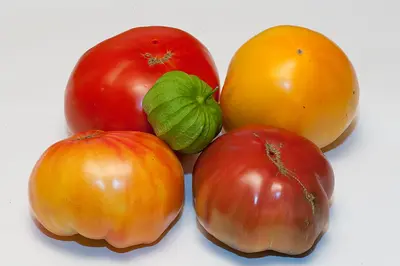
The flat medium-to-large tomatoes with variable shoulder ribbing are shaded yellow and red. The marbled interior looks beautiful sliced. Complex, fruity flavor and smooth texture. Medium-tall vines bear 12+ oz. fruit. Indeterminate.
Harvest
78d
Days to harvest
Sun
Full sun
Zones
10–10
USDA hardiness
Height
1-10 feet
Planting Timeline
Showing dates for Striped German in USDA Zone 7
All Zone 7 tomato →Zone Map
Click a state to update dates
Striped German · Zones 10–10
Growing Details
Complete Growing Guide
The flat medium-to-large tomatoes with variable shoulder ribbing are shaded yellow and red. The marbled interior looks beautiful sliced. Complex, fruity flavor and smooth texture. Medium-tall vines bear 12+ oz. fruit. Indeterminate. According to Johnny's Selected Seeds, Striped German is 78 days to maturity, annual, open pollinated, indeterminate growth habit. Notable features: Organic Seeds, Plants, and Supplies, Heirloom.
Light: Full sun (6 or more hours of direct sunlight a day). Soil: Clay, High Organic Matter, Loam (Silt), Sand. Soil pH: Acid (<6.0), Neutral (6.0-8.0). Drainage: Good Drainage, Moist. Height: 1 ft. 0 in. - 10 ft. 0 in. Spread: 1 ft. 0 in. - 4 ft. 0 in. Spacing: 3 feet-6 feet. Growth rate: Rapid. Maintenance: High. Propagation: Seed. Regions: Coastal, Mountains, Piedmont.
Harvesting
Striped German reaches harvest at 78 days from sowing per Johnny's Selected Seeds. As an annual, harvest continues until frost ends the season.
The fruits are smooth, shiny, glossy, and are classified as berries. The size, shape, and color will vary depending on the variety or cultivar. The color of the fruits may be red, yellow, orange, green, purple, or pink. The fruits may contain over 100 yellow to light brown seeds.
Color: Gold/Yellow, Green, Orange, Pink, Purple/Lavender, Red/Burgundy, Variegated. Type: Berry. Length: > 3 inches. Width: > 3 inches.
Garden value: Edible, Showy
Harvest time: Fall, Summer
Edibility: The fruits or berries of the tomato are edible. They may be eaten raw, cooked, dried, or processed. They are a rich source of Vitamin A, Vitamin C, folic acid, and antioxidants. Lycopene is an antioxidant that gives the tomato its rich red color. Many plants will drop fruit when ripe or the fruit will come off easily. Tomatoes will continue to ripen once picked. Store them at room temperature.
Storage & Preservation
Store freshly harvested Striped German tomatoes at room temperature away from direct sunlight until fully ripe, as refrigeration below 55°F damages flavor and texture. Once ripe, they'll keep for 5–7 days at room temperature, or up to two weeks if refrigerated after reaching peak ripeness. For longer preservation, freezing works well for sauce-making; simply core and freeze whole on a tray, then transfer to bags. These tomatoes also preserve beautifully through water-bath canning as sauce or salsa, given their balanced acidity. Drying intensifies their complex fruity notes and makes an excellent pantry staple. Because of their thinner skin compared to paste varieties, handle them gently during harvest and storage to avoid bruising, which accelerates decay and diminishes the exceptional flavor you've worked to develop.
History & Origin
Striped German is an heirloom variety with documented breeding heritage. Striped German is open-pollinated, meaning seed saved from healthy plants will produce true-to-type offspring. Listed in the Johnny's Selected Seeds catalog.
Origin: Peru
Advantages
- +Outstanding sweet-tart flavor with rich, complex fruity undertones appeals to discerning gardeners
- +Beautiful marbled yellow-red interior creates striking visual presentation when sliced fresh
- +Large 12+ oz. fruit size provides substantial harvests from medium-tall indeterminate vines
Considerations
- -Moderate-to-advanced difficulty level requires experienced growers for reliable success
- -Susceptible to late blight, early blight, and fusarium wilt in humid conditions
- -Irregular watering causes fruit cracking despite its otherwise excellent flavor profile
- -Vulnerable to multiple common pests including hornworms, aphids, whiteflies, and stink bugs
Companion Plants
Basil is the most common pairing, and the aromatic oils do genuinely confuse aphids and thrips — but given that Striped German is an unhybridized heirloom with no built-in nematode resistance, the more important companion is French marigold (Tagetes patula). Plant it around the bed perimeter; root secretions from T. patula suppress root-knot nematodes in the top 12 inches of soil, which matters here more than it would with a modern hybrid carrying the N-resistance gene. Carrots fit nearby without competing — their feeder roots stay shallow while tomato roots push down past 18 inches, and the carrot flowers pull in parasitic wasps that cut into hornworm pressure over the season.
Fennel is the one to isolate entirely — it releases allelopathic compounds that visibly stunt tomato root development, and proximity of even a few feet shows up as slow, uneven growth. Brassicas are a subtler problem: they pull calcium and magnesium from the same soil layer as tomatoes, and that competition raises the odds of blossom-end rot appearing just as the first big Striped German fruits are sizing up.
Plant Together
Basil
Repels aphids and whiteflies, may improve tomato flavor
Marigold
Deters nematodes and aphids with natural compounds
Carrots
Helps break up soil for tomato roots, doesn't compete for nutrients
Parsley
Attracts beneficial insects like hoverflies that prey on tomato pests
Chives
Repels aphids and may help prevent fungal diseases
Nasturtiums
Acts as trap crop for aphids and cucumber beetles
Peppers
Similar growing requirements and may help confuse pest insects
Oregano
Repels various insects and provides ground cover to retain soil moisture
Keep Apart
Black Walnut
Releases juglone toxin that causes tomato wilt and stunted growth
Fennel
Inhibits growth through allelopathic compounds that stunt tomato development
Brassicas
Compete heavily for nutrients and may stunt tomato growth
Corn
Both attract corn earworm, increasing pest pressure on tomatoes
Nutrition Facts
Per 100g serving. % Daily Value based on 2,000 calorie diet. Source: USDA FoodData Central (FDC #321360)
Pests & Disease Resistance
Resistance
Limited disease resistance, susceptible to cracking and typical heirloom vulnerabilities
Common Pests
Tomato hornworm, aphids, whiteflies, stink bugs
Diseases
Late blight, early blight, fusarium wilt, cracking in irregular watering
Troubleshooting Striped German
What you'll see, why it happens, and what to do about it.
Large areas of foliage turning gray-green and withering fast, with water-soaked brown rot spreading across the big beefsteak-style fruit
Likely Causes
- Late blight (Phytophthora infestans) — airborne spores arrive on wind or infected transplants, spreads aggressively in cool, wet conditions
- Crowded canopy trapping moisture around leaves
What to Do
- 1.Pull and bag affected plants immediately — don't compost them, don't leave debris in the bed
- 2.Apply copper-based fungicide to any remaining plants as a protective measure, not a cure
- 3.Rotate this bed out of all nightshades (tomato, pepper, eggplant, potato) for at least 3 to 4 years per NC State Extension IPM guidance
Plant wilts suddenly during hot weather even after watering, with no visible mold or lesions on leaves
Likely Causes
- Fusarium wilt (Fusarium oxysporum f. sp. lycopersici) — soilborne fungus that clogs vascular tissue
- Southern bacterial wilt (Ralstonia solanacearum) — persists in infested soil indefinitely once established
What to Do
- 1.Dig up and destroy the affected plant including the roots — don't leave them in the bed
- 2.Do not replant tomatoes in that spot; NC State Extension notes Ralstonia solanacearum remains in soil indefinitely, so consider growing in containers with bagged mix that never contacts native soil
- 3.For future seasons, grafted tomato rootstocks can reduce susceptibility to soilborne wilt pathogens
Fruit skin splits radially or concentrically after a heavy rain following a dry stretch
Likely Causes
- Irregular watering — rapid water uptake after drought causes the flesh to expand faster than the skin can stretch
- Striped German's large, thin-skinned fruit makes it more prone to cracking than thick-skinned hybrids
What to Do
- 1.Mulch 3 to 4 inches deep with straw to buffer soil moisture swings between rain events
- 2.Water consistently — aim for 1 to 1.5 inches per week rather than letting soil dry completely between waterings
- 3.Harvest fruit at first blush of color and ripen indoors if a big rain is forecast; cracked fruit won't heal and rots fast
Frequently Asked Questions
How long does Striped German tomato take to grow?▼
Can you grow Striped German tomatoes in containers?▼
What does Striped German tomato taste like?▼
Is Striped German tomato good for beginners?▼
When should I plant Striped German tomato seeds?▼
Why are my Striped German tomatoes cracking?▼
Zone-by-Zone Planting Calendar
| Zone | Indoor Start | Transplant | Direct Sow | Harvest |
|---|---|---|---|---|
| Zone 3 | April – April | June – July | — | September – October |
| Zone 4 | March – April | June – June | — | August – October |
| Zone 5 | March – March | May – June | — | August – October |
| Zone 6 | March – March | May – June | — | August – October |
| Zone 7 | February – March | April – May | — | July – September |
| Zone 8 | February – February | April – May | — | July – September |
| Zone 9 | January – January | March – April | — | June – August |
| Zone 10 | January – January | February – March | — | May – July |
| Zone 1 | May – May | July – August | — | October – August |
| Zone 2 | April – May | June – July | — | September – September |
| Zone 11 | January – January | January – February | — | April – June |
| Zone 12 | January – January | January – February | — | April – June |
| Zone 13 | January – January | January – February | — | April – June |
Growing Guides from Wind River Greens
Sources & References
External authority sources used in compiling this guide.
- BreederJohnny's Selected Seeds
- USDAUSDA FoodData Central
See the Methodology page for how this data is sourced, what's AI-assisted, and known limitations.