Azumi XL Red
Callistephus chinensis
Wikimedia Commons via Callistephus
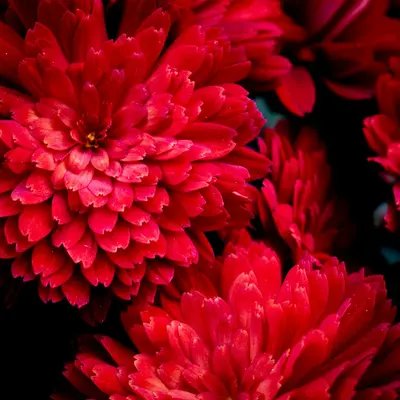
The Azumi series offers 2-3 1/2" pom-pom style blooms in rich jewel tones on sturdy, vigorous plants. Recommended for growing as a spray-type cut flower. Plants yield one cut per plant; each cut is a large spray of stems and flowers. The primary flower will be larger, surrounded by multiple slightly smaller blooms. Alternately, single stems can be harvested, although stem length will be shorter than when harvested as a one-cut spray type. Deep red blooms open with a creamy white center that darkens as blooms mature. Fusarium tolerant.
Harvest
105-120d
Days to harvest
Sun
Full sun to partial shade
Zones
2–11
USDA hardiness
Height
1-3 feet
Planting Timeline
Showing dates for Azumi XL Red in USDA Zone 7
All Zone 7 flower →Zone Map
Click a state to update dates
Azumi XL Red · Zones 2–11
Growing Details
Succession Planting
Azumi XL Red runs 105-120 days to bloom, which means you're committing real estate for a long stretch. If you want continuous cut flowers across the season, start a second tray indoors 3-4 weeks after your first sowing. A first indoor sow in late February followed by a second in mid-to-late March gives you two transplant waves going out in April and May respectively. Don't push direct sowing past early June; plants that go in too late won't accumulate enough warm days to bloom before first frost.
One practical ceiling: asters stall out when temperatures regularly hit 90°F+ for extended stretches while they're sizing up. A very late succession planting risks sitting in that heat window right when it needs to be developing buds, and the blooms suffer for it. Two successions spaced 3-4 weeks apart is usually the right call — enough spread for a solid cutting window without gambling on a third planting that may not pay off.
Complete Growing Guide
The Azumi series offers 2-3 1/2" pom-pom style blooms in rich jewel tones on sturdy, vigorous plants. Recommended for growing as a spray-type cut flower. Plants yield one cut per plant; each cut is a large spray of stems and flowers. The primary flower will be larger, surrounded by multiple slightly smaller blooms. Alternately, single stems can be harvested, although stem length will be shorter than when harvested as a one-cut spray type. Deep red blooms open with a creamy white center that darkens as blooms mature. Fusarium tolerant. According to Johnny's Selected Seeds, Azumi XL Red is 105 - 120 days to maturity, annual, open pollinated. Notable features: Use for Cut Flowers and Bouquets.
Light: Full sun (6 or more hours of direct sunlight a day), Partial Shade (Direct sunlight only part of the day, 2-6 hours). Soil: Clay, High Organic Matter, Loam (Silt), Sand. Soil pH: Acid (<6.0), Neutral (6.0-8.0). Drainage: Good Drainage, Moist. Height: 1 ft. 0 in. - 3 ft. 0 in.. Spread: 1 ft. 0 in. - 1 ft. 6 in.. Spacing: Less than 12 inches. Growth rate: Rapid. Maintenance: Medium. Regions: Coastal, Mountains, Piedmont.
Harvesting
Azumi XL Red reaches harvest at 105 - 120 days from sowing per Johnny's Selected Seeds. Expect 2-3 1/2" at peak. As an annual, harvest continues until frost ends the season.
The fruit is a rough-textured, glandular, purple-mottled cypsela that turns gray with age.
Storage & Preservation
Store fresh cut blooms in a cool location, ideally 65-72°F with moderate humidity. Refrigeration extends vase life to 7-10 days when stems are cut at an angle and placed in clean water with floral preservative. For preservation, air-drying is ideal for pom-pom dahlias—hang bundles upside down in a dark, well-ventilated space for 2-3 weeks. Alternatively, press blooms between parchment paper under heavy weight for 4-6 weeks for decorative keepsakes. Silica gel drying preserves color vibrantly in 3-5 days for craft applications.
History & Origin
Azumi XL Red is open-pollinated, meaning seed saved from healthy plants will produce true-to-type offspring. Listed in the Johnny's Selected Seeds catalog.
Origin: China and Southern Russia
Advantages
- +Stunning deep red blooms with creamy white centers that deepen beautifully
- +Fusarium tolerance reduces disease pressure compared to other aster varieties
- +Vigorous plants produce abundant spray cuts with multiple secondary blooms
- +Pom-pom style flowers ideal for high-end floral design and arrangements
- +Easy to grow with straightforward cultivation requirements for most gardeners
Considerations
- -Requires 105-120 days to maturity, limiting season in short-season climates
- -One primary cut per plant reduces overall yield compared to multi-cut varieties
- -Pom-pom blooms prone to shattering during heavy rain or rough handling
- -Large spray harvests demand sturdy support systems to prevent stem bending
Companion Plants
Marigolds (especially French types like 'Petite Gold') are the most practical companion here. They deter thrips and aphids through scent, and both crops want similar full-sun, regular-moisture conditions — you're not robbing one to feed the other. Sweet alyssum is worth tucking at the bed edges: it stays low, doesn't compete for root space, and draws in parasitic wasps that prey on aphids. Cosmos and zinnias work well in mixed cutting beds alongside Azumi XL Red because they share warm-season timing and none of them are heavy feeders that'll strip the bed mid-season.
Nasturtiums pull double duty — they attract aphids away from your asters (acting as a trap crop) and are easy to yank out and replace if they get colonized. Don't plant them so close that they sprawl into the asters, though; nasturtiums get leggy fast and will flop right over neighboring plants by midsummer.
The three plants to keep well away are black walnut, eucalyptus, and fennel. Black walnut produces juglone, a chemical that leaches from roots and fallen leaves and is broadly toxic — China asters are sensitive enough that even planting within the drip zone of a mature tree is a problem. Eucalyptus releases different allelopathic compounds that suppress nearby growth at the soil level. Fennel is the most common offender in mixed beds because gardeners underestimate how far its root exudates travel; it inhibits germination and stunts neighbors across a wider radius than most people expect.
Plant Together
Marigolds
Repel nematodes and aphids while attracting beneficial insects
Sweet Alyssum
Attracts beneficial predatory insects and provides ground cover
Nasturtiums
Act as trap crops for aphids and cucumber beetles
Petunias
Repel aphids, tomato hornworms, and other garden pests
Lavender
Deters moths, fleas, and mosquitoes while attracting pollinators
Zinnia
Attracts beneficial insects and provides complementary colors
Catmint
Repels ants, aphids, and rodents while attracting beneficial insects
Cosmos
Attracts beneficial insects and provides structural support
Keep Apart
Black Walnut
Produces juglone toxin that inhibits growth of many flowering plants
Eucalyptus
Releases allelopathic compounds that suppress nearby plant growth
Fennel
Inhibits growth of most garden plants through allelopathy
Troubleshooting Azumi XL Red
What you'll see, why it happens, and what to do about it.
Seedlings collapse at soil level, stems pinched and brown at the base, often within the first 2 weeks after germination
Likely Causes
- Damping off — typically Pythium or Rhizoctonia fungi, triggered by overwatering and poor airflow around seedlings
- Starting mix that stays too wet between waterings
What to Do
- 1.Water only when the top of the mix feels dry; asters don't want to sit in wet soil at the seedling stage
- 2.Run a small fan near your trays for 1-2 hours a day to improve surface airflow
- 3.If damping off hits one cell, remove it immediately — those fungi spread fast in a tray
White powdery coating on leaves and stems, usually showing up mid-to-late summer after plants are well established
Likely Causes
- Powdery mildew (Erysiphe cichoracearum) — extremely common on China asters, especially when nights cool down and humidity climbs
- Crowded plants or low-airflow spots in the bed
What to Do
- 1.Space plants at least 10-12 inches apart to let air move between them
- 2.Apply a potassium bicarbonate spray (follow label rate) at first sign — it won't cure existing infection but slows spread
- 3.Pull and trash heavily infected plants; mildew on asters usually isn't worth fighting once it's advanced
Plants wilt suddenly during the day even with adequate soil moisture, then die back from the base; roots look brown and rotted
Likely Causes
- Fusarium wilt (Fusarium oxysporum f. sp. callistephi) — a soil-borne pathogen and the single most serious disease of China asters
- Reusing the same bed for asters year after year
What to Do
- 1.Pull affected plants immediately and bag them — don't compost
- 2.Rotate asters out of any infected bed for at least 4 years; Fusarium persists a long time in soil
- 3.If you're in a known problem area, start plants in fresh sterile mix and consider raised beds with new soil
Flower buds abort or petals are distorted and streaked with pale or dark discoloration; growth looks stunted or puckered
Likely Causes
- Aster yellows — a phytoplasma disease transmitted by the aster leafhopper (Macrosteles quadrilineatus)
- High leafhopper pressure, especially in gardens near weedy field edges
What to Do
- 1.There's no cure — pull and trash any plant showing aster yellows symptoms immediately to reduce the reservoir
- 2.Cover transplants with row cover (Agribon AG-15 or similar) for the first 4-6 weeks to block leafhoppers during peak feeding
- 3.Control weeds around the planting area; aster yellows overwinters in wild hosts like Queen Anne's lace
Frequently Asked Questions
How long do Azumi XL Red cut flowers last in a vase?▼
Is Azumi XL Red a good variety for beginners?▼
Can you grow Azumi XL Red dahlias in containers?▼
When should I plant Azumi XL Red dahlias?▼
How are Azumi XL Red blooms different from other dahlia types?▼
What light conditions do Azumi XL Red dahlias need?▼
Zone-by-Zone Planting Calendar
| Zone | Indoor Start | Transplant | Direct Sow | Harvest |
|---|---|---|---|---|
| Zone 1 | May – June | July – August | July – September | — |
| Zone 2 | April – May | June – July | June – August | — |
| Zone 11 | January – January | January – February | January – March | — |
| Zone 12 | January – January | January – February | January – March | — |
| Zone 13 | January – January | January – February | January – March | — |
| Zone 3 | April – May | June – July | June – August | — |
| Zone 4 | March – April | June – June | June – July | — |
| Zone 5 | March – April | May – June | May – July | — |
| Zone 6 | March – April | May – June | May – July | — |
| Zone 7 | February – March | April – May | April – June | — |
| Zone 8 | February – March | April – May | April – June | — |
| Zone 9 | January – February | March – April | March – May | — |
| Zone 10 | January – January | February – March | February – April | — |
Growing Guides from Wind River Greens
Sources & References
External authority sources used in compiling this guide.
- BreederJohnny's Selected Seeds
See the Methodology page for how this data is sourced, what's AI-assisted, and known limitations.