Dinosaur Gourd
Lagenaria siceraria
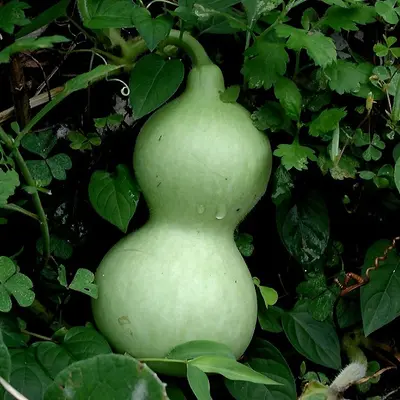
Lustrous green skin with distinct ridges for a unique reptilian appearance. Impressive yields of large, 18-24" long fruits. Can be dried like a bottle gourd. Avg. weight: 3 1/2 lb.
Harvest
125d
Days to harvest
Sun
Full sun
Zones
2–11
USDA hardiness
Height
9-18 inches
Planting Timeline
Showing dates for Dinosaur Gourd in USDA Zone 7
All Zone 7 squash →Zone Map
Click a state to update dates
Dinosaur Gourd · Zones 2–11
Growing Details
Succession Planting
Dinosaur gourd runs 125 days from transplant to harvest and doesn't keep producing the way a pepper or tomato does — you get one set of fruits per plant, per season. Succession planting doesn't apply here. Direct sow once after last frost, give it the full run of the season, and harvest before first frost in fall.
Complete Growing Guide
Lustrous green skin with distinct ridges for a unique reptilian appearance. Impressive yields of large, 18-24" long fruits. Can be dried like a bottle gourd. Avg. weight: 3 1/2 lb. According to Johnny's Selected Seeds, Dinosaur Gourd is 125 days to maturity, annual, open pollinated.
Light: Full sun (6 or more hours of direct sunlight a day). Soil: Clay, High Organic Matter, Loam (Silt), Sand. Soil pH: Acid (<6.0), Alkaline (>8.0), Neutral (6.0-8.0). Drainage: Good Drainage, Moist. Height: 0 ft. 9 in. - 1 ft. 6 in.. Spread: 10 ft. 0 in. - 16 ft. 0 in.. Spacing: 3 feet-6 feet. Growth rate: Rapid. Maintenance: Medium. Propagation: Seed. Regions: Coastal, Mountains, Piedmont.
Harvesting
Dinosaur Gourd reaches harvest at 125 days from sowing per Johnny's Selected Seeds. Expect 18-24" at peak. As an annual, harvest continues until frost ends the season.
Fruit (a pepo to 3 feet long) has a smooth, light green skin when young, but matures to yellow or light brown. Mature fruits take a variety of shapes, including rounded, dumbbell-shaped, bottle-shaped or crookneck-shaped. The fruit is fleshy and dry but not split open.
Color: Cream/Tan. Length: > 3 inches. Width: > 3 inches.
Garden value: Edible, Showy
Harvest time: Summer
Edibility: Seeds, leaves, flowers, and young stems are all edible when the fruit is young. As it ages off the vine, the fruit hardens leaving the seeds inside.
Storage & Preservation
Harvest Dinosaur gourds at full maturity (around 125 days) when the skin has hardened completely and turned deep green with characteristic bumpy texture. Store in a cool, dry location between 50–60°F with moderate humidity, ideally on wooden shelves or racks that allow air circulation. Properly cured gourds keep 6–12 months when stored this way. For longer preservation, allow gourds to cure for 2–3 weeks after harvest in a warm, airy space before moving to cool storage. These thick-walled squashes freeze poorly due to their dense flesh, but can be pressure-canned in cubes if harvested young (60–80 days). Drying sliced flesh yields chewy chips that store well in airtight containers. A key advantage of Dinosaur gourds: their impressive durability makes them ideal for long-term storage without special processing, and the hardened shells can be cleaned and dried further for decorative display or craft use.
History & Origin
Dinosaur Gourd is open-pollinated, meaning seed saved from healthy plants will produce true-to-type offspring. Listed in the Johnny's Selected Seeds catalog.
Origin: Western Tropical Africa to Ethiopia and Tanzania
Advantages
- +Striking reptilian appearance makes it excellent for ornamental and decorative displays.
- +Impressive 18-24 inch fruits provide substantial yields from single plants.
- +Can be dried and preserved like bottle gourds for long-term storage.
- +Long 125-day season allows adequate time for fruit maturation and curing.
Considerations
- -Moderate difficulty rating requires experience with trellising and pest management.
- -Large fruits demand sturdy support structures to prevent vine breakage.
- -Extended growing season limits cultivation in short-season or cool climates.
Companion Plants
Corn, beans, and nasturtiums are the most practical grouping here. Corn gives the long vines a structure to climb and casts afternoon shade that slows soil moisture loss — useful for a crop that needs consistent water across a 125-day run. Beans fix nitrogen at the root zone, quietly replenishing what this heavy feeder pulls down. Nasturtiums work as a trap crop for aphids: they draw the insects off your gourds and onto themselves, at which point you can cut and trash the nasturtium before the population moves back. Marigolds (Tagetes spp.) are worth tucking at the bed edges; their root exudates suppress some nematode populations in the top 6 inches of soil.
Keep potatoes and melons out. Potatoes compete for similar nutrients without offering anything in return, and mixing them with cucurbits complicates your rotation schedule — a 3-year break from cucurbits in a given bed is hard to maintain when you've got two unrelated crops tangled in the same spot. Melons are fellow cucurbits, so planting them adjacent concentrates cucumber beetle populations and undermines any spacing or rotation you'd otherwise use to manage pressure. Fennel is allelopathic to most vegetables and has no place near a squash bed regardless of what else is growing there.
Plant Together
Corn
Provides natural trellis support for climbing gourds and attracts beneficial insects
Beans
Fixes nitrogen in soil which gourds utilize, part of traditional Three Sisters planting
Nasturtiums
Acts as trap crop for squash bugs and cucumber beetles, repels aphids
Marigolds
Deters cucumber beetles, squash bugs, and nematodes with strong scent
Radishes
Repels cucumber beetles and squash vine borers, quick harvest before gourd spreads
Dill
Attracts beneficial predatory insects that control squash pests
Catnip
Strongly repels cucumber beetles, squash bugs, and flea beetles
Sunflowers
Provides shade and wind protection, attracts pollinators essential for fruit set
Keep Apart
Potatoes
Compete for similar soil nutrients and space, both are heavy feeders
Fennel
Inhibits growth of most garden plants including gourds through allelopathic compounds
Sage
Strong allelopathic properties can stunt gourd growth and development
Melons
Increases risk of shared diseases like bacterial wilt and attracts same pest insects
Nutrition Facts
Per 100g serving. % Daily Value based on 2,000 calorie diet. Source: USDA FoodData Central (FDC #168040)
Troubleshooting Dinosaur Gourd
What you'll see, why it happens, and what to do about it.
White powdery coating on leaves, usually appearing mid-season after vines have run several feet
Likely Causes
- Powdery mildew — NC State Extension documents this specifically on Lagenaria siceraria (calabash squash)
- Poor airflow from dense canopy or crowded spacing under 18 inches
- Dry roots combined with humid air, a common late-summer pattern
What to Do
- 1.Thin foliage where vines overlap and airflow is blocked
- 2.Apply a dilute baking soda spray (1 tablespoon per gallon) or a labeled potassium bicarbonate fungicide at first sign — don't wait until half the leaf is coated
- 3.Water at the base, not overhead, and do it in the morning so foliage dries before evening
Holes chewed in leaves and small yellowish-green or striped beetles visible on plants, especially on seedlings under 3 weeks old
Likely Causes
- Striped or spotted cucumber beetles (Acalymma vittatum / Diabrotica undecimpunctata) — NC State Extension notes their eggs overwinter in discarded plant debris and emerge to hit young cucurbits hard
- Late planting into peak beetle pressure, which builds through July
What to Do
- 1.Plant as early as soil allows — NC State Extension recommends timing squash family crops to dodge peak pressure, which intensifies through mid-summer
- 2.Pull all dead vines and debris at season's end and turn the bed to disrupt overwintering eggs
- 3.Rotate out of cucurbits for at least 3 years in that bed; NC State Extension cites this as one of the more effective cultural controls available
Frequently Asked Questions
How long does Dinosaur Gourd take to mature?▼
Can you grow Dinosaur Gourd in containers?▼
Is Dinosaur Gourd good for beginners?▼
When should I plant Dinosaur Gourd?▼
What can you use Dinosaur Gourd for?▼
How far apart should Dinosaur Gourd plants be spaced?▼
Zone-by-Zone Planting Calendar
| Zone | Indoor Start | Transplant | Direct Sow | Harvest |
|---|---|---|---|---|
| Zone 1 | — | — | July – August | December – August |
| Zone 2 | — | — | June – August | November – September |
| Zone 11 | — | — | January – March | June – August |
| Zone 12 | — | — | January – March | June – August |
| Zone 13 | — | — | January – March | June – August |
| Zone 3 | — | — | June – July | November – October |
| Zone 4 | — | — | June – July | October – October |
| Zone 5 | — | — | May – June | October – October |
| Zone 6 | — | — | May – June | October – November |
| Zone 7 | — | — | April – June | September – November |
| Zone 8 | — | — | April – May | September – October |
| Zone 9 | — | — | March – April | August – September |
| Zone 10 | — | — | February – April | July – September |
Growing Guides from Wind River Greens
Sources & References
External authority sources used in compiling this guide.
- BreederJohnny's Selected Seeds
- USDAUSDA FoodData Central
See the Methodology page for how this data is sourced, what's AI-assisted, and known limitations.