Sweet Italian Pepper 'Marconi Rosso'
Capsicum annuum 'Marconi Rosso'
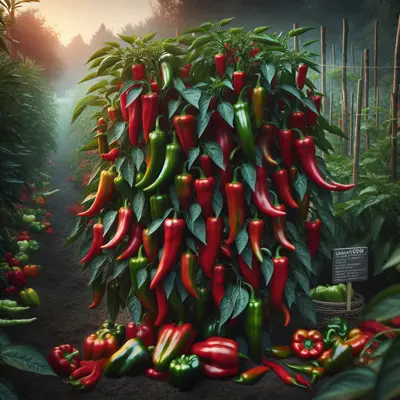
An exceptional Italian heirloom frying pepper renowned for its incredible sweetness and tender flesh when cooked. These long, tapered peppers start green and ripen to a gorgeous deep red, developing an almost candy-like sweetness that makes them irresistible grilled, roasted, or sautéed. A favorite among Italian-American gardeners and chefs who prize authentic flavors in their cooking.
Harvest
80-85d
Days to harvest
Sun
Full sun
Zones
4–11
USDA hardiness
Height
1-3 feet
Planting Timeline
Showing dates for Sweet Italian Pepper 'Marconi Rosso' in USDA Zone 7
All Zone 7 pepper →Zone Map
Click a state to update dates
Sweet Italian Pepper 'Marconi Rosso' · Zones 4–11
Growing Details
Succession Planting
Marconi Rosso is a single-season fruiting pepper that keeps producing from one transplant until frost — no succession planting needed. Set transplants out in April through May (zone 7) after nights hold reliably above 55°F, and that same plant will carry you from July through September. Starting a second round of seedlings indoors to stagger transplants by a few weeks isn't worth the shelf space; one well-timed plant in good soil will outproduce two that went in stressed or too early.
Complete Growing Guide
Marconi Rosso demands patience and warmth more than most peppers—don't rush seedlings outdoors before soil reaches 70°F, as this cultivar sulks in cool conditions and may drop flowers if temperatures dip below 65°F at night. Plant in full sun with rich, well-draining soil amended with compost, spacing plants 18–24 inches apart to prevent the crowding that reduces air circulation and invites powdery mildew, a particular concern for this variety's tender foliage. Unlike heat-loving jalapeños, Marconi Rosso is surprisingly prone to blossom-end rot in inconsistent watering schedules, so maintain even moisture throughout the growing season rather than alternating wet and dry cycles. Watch for spider mites, which exploit stressed plants in hot, dry conditions. The cultivar's long, tapered fruit can become top-heavy as peppers mature to full red; stake individual plants or use tomato cages once fruit sets to prevent branch breakage and improve light penetration, accelerating that candy-like sweetness development by 80–85 days.
Light: Full sun (6 or more hours of direct sunlight a day). Soil: Clay, High Organic Matter, Loam (Silt), Sand. Soil pH: Acid (<6.0), Alkaline (>8.0), Neutral (6.0-8.0). Drainage: Good Drainage. Height: 1 ft. 0 in. - 3 ft. 8 in.. Spread: 0 ft. 6 in. - 1 ft. 0 in.. Spacing: 12 inches-3 feet. Growth rate: Medium. Maintenance: Low. Propagation: Seed. Regions: Coastal, Mountains, Piedmont.
Harvesting
Harvest Marconi Rosso peppers when they reach their full deep red color and characteristic tapered length of 6-8 inches, as the flesh will be sweetest and most tender at this stage. Gently squeeze the pepper to confirm it yields slightly to pressure without being soft, indicating peak ripeness. These peppers can be harvested at the green stage for a milder flavor, but waiting for full red maturity unlocks their signature candy-like sweetness. Practice continuous harvesting throughout the season by removing ripe peppers regularly; this encourages the plant to produce more blooms and extends your yield. A specific timing advantage: pick peppers in early morning when temperatures are coolest, as this helps preserve their delicate cell structure and maximizes storage life. Regular harvesting maintains plant vigor and can produce 8-12 peppers per plant over the season.
Fruits are a non-pulpy berry and vary considerably across cultivars. Some are long, thin, bright red, and spicy; others are thick, large, and sweet-tasting; others still are small and in ornamental shapes and colors, grown as decoration.
Color: Black, Gold/Yellow, Green, Orange, Red/Burgundy. Type: Berry. Length: 1-3 inches. Width: < 1 inch.
Garden value: Edible, Good Dried, Showy
Harvest time: Summer
Edibility: Fruits edible, but spiciness is unpredictable in intensity.
Storage & Preservation
Store freshly harvested Marconi Rosso peppers in the refrigerator at 45–50°F with 90–95% humidity, ideally in a perforated plastic bag or breathable container to prevent moisture buildup while retaining natural humidity. Under these conditions, they'll keep for two to three weeks.
For longer preservation, freezing works well: dice or slice the peppers, spread them on a tray to freeze individually, then transfer to freezer bags for up to eight months. Roasting before freezing concentrates their natural sweetness and works beautifully for later use in soups or Italian dishes. Canning in oil is particularly suited to this variety's culinary profile—roast whole peppers, peel if desired, pack into sterilized jars with garlic and herbs, then cover with olive oil and process according to USDA guidelines for safe preservation.
Drying is also effective: slice lengthwise, dry in a dehydrator or low oven until leathery, and store in airtight containers. These dried peppers rehydrate quickly and intensify in sweetness. Because Marconi Rossos are relatively thick-walled, they dry more slowly than thinner varieties but develop exceptional depth of flavor once preserved.
History & Origin
The Marconi Rosso represents a distinct Italian heirloom pepper type, though its exact origins and breeding history remain incompletely documented in English-language horticultural literature. The pepper belongs to the broader "peperoni lunghi" or long Italian frying pepper tradition cultivated throughout Italy for centuries, particularly in regions like Campania and Piedmont. The Marconi name itself suggests connection to Italian heritage, though specific details about when this particular cultivar was formally named or by which breeder remain unclear. What is well-established is its reputation within Italian-American gardening communities and among seed savers who have maintained this variety through traditional cultivation and seed preservation practices, ensuring its survival as a recognized heirloom type valued for its distinctive sweetness and culinary applications.
Origin: Tropical North and South America
Advantages
- +Exceptional sweetness and fruity flavor make Marconi Rosso superior for cooking.
- +Long, tapered shape is perfect for grilling, roasting, and sautéing whole.
- +Relatively quick maturation in 80-85 days produces abundant harvests mid-season.
- +Authentic Italian heirloom variety appeals to gardeners seeking traditional flavor profiles.
- +Tender flesh when ripe develops almost candy-like sweetness that impresses home cooks.
Considerations
- -Susceptible to multiple serious diseases including bacterial leaf spot and verticillium wilt.
- -Attracts several persistent pests like aphids, thrips, and pepper maggots regularly.
- -Requires consistent care and monitoring to prevent common disease and pest problems.
Companion Plants
Basil, parsley, and marjoram are the trio NC State Extension specifically pairs with roasting peppers like Marconi Rosso — calling it out as a functional Italian-themed grouping, not just a culinary convenience. These herbs top out well under 18 inches, so they don't shade the peppers, and their dense low foliage cuts down on bare-soil splash — which matters because bacterial leaf spot (Xanthomonas campestris pv. vesicatoria) travels exactly that way. Basil may also interfere with aphid host-finding through volatile compounds, though I'd say the real payoff is being able to harvest roasting peppers and a handful of herbs from the same 4-foot bed.
Marigolds (Tagetes spp.) pull their weight through a different mechanism: their roots produce alpha-terthienyl, which suppresses root-knot nematodes in the surrounding soil — a real advantage in any bed that's run nightshades for more than a season. Onions and carrots are safe neighbors because their feeder roots stay shallower than 6 inches while pepper roots work the 6–10 inch zone, so there's no head-to-head competition for calcium or moisture.
Keep brassicas out of this bed entirely. They're heavy calcium feeders with a root profile that overlaps directly with peppers, and mixing them together makes proper nightshade rotation nearly impossible — which is your main line of defense against verticillium wilt. Fennel is allelopathic to most annual vegetables and will visibly stunt pepper growth if planted within 2–3 feet. Black walnut produces juglone throughout its root zone; Capsicum annuum is sensitive to it, so keep any walnut tree at least 50 feet away from your pepper bed.
Plant Together
Basil
Repels aphids, spider mites, and thrips while potentially improving pepper flavor
Tomatoes
Share similar growing requirements and can help shade pepper roots from intense heat
Marigolds
Repel nematodes, aphids, and whiteflies with their strong scent
Oregano
Deters pests like cucumber beetles and provides ground cover to retain soil moisture
Carrots
Help break up compacted soil with their taproots and don't compete for nutrients
Onions
Repel aphids, spider mites, and other pests with sulfur compounds
Parsley
Attracts beneficial insects like hoverflies and parasitic wasps that control pepper pests
Nasturtiums
Act as trap crops for aphids and cucumber beetles while attracting beneficial predators
Keep Apart
Black Walnut
Produces juglone, a chemical toxic to peppers and other nightshade family plants
Fennel
Releases allelopathic compounds that inhibit growth of peppers and most vegetables
Brassicas
Compete heavily for nutrients and may stunt pepper growth due to different soil pH preferences
Nutrition Facts
Per 100g serving. % Daily Value based on 2,000 calorie diet. Source: USDA FoodData Central (FDC #169394)
Pests & Disease Resistance
Resistance
Moderate resistance to common pepper diseases
Common Pests
Aphids, pepper maggot, European corn borer, thrips
Diseases
Bacterial leaf spot, verticillium wilt, tobacco mosaic virus
Troubleshooting Sweet Italian Pepper 'Marconi Rosso'
What you'll see, why it happens, and what to do about it.
Sunken, dark, leathery patch on the bottom or side of the fruit — sometimes with gray or black secondary mold growing in the dead tissue
Likely Causes
- Blossom end rot — a localized calcium deficiency in the developing fruit, often triggered by inconsistent watering
- High ammonium-nitrogen fertilizer pushing rapid growth faster than calcium uptake can keep pace
- Low soil calcium levels
What to Do
- 1.Water consistently — 1 to 1.5 inches per week; let the soil dry unevenly and you'll keep seeing this
- 2.Pull back on high-nitrogen synthetic fertilizers, especially ammonium-based ones, while fruit is setting
- 3.Get a soil test; if calcium is genuinely low, side-dress with gypsum or work lime in before next season (target pH 6.2–7.0)
Small, water-soaked spots on leaves that turn brown with yellow halos, spreading to fruit as raised, scabby lesions
Likely Causes
- Bacterial leaf spot (Xanthomonas campestris pv. vesicatoria) — splashes up from soil in rain or overhead irrigation
- Crowded planting with poor airflow holding moisture on leaf surfaces
What to Do
- 1.Space plants 18–24 inches apart and stake them upright so leaves dry quickly after rain
- 2.Switch to drip irrigation or water at the base only
- 3.Remove and bag (don't compost) heavily infected leaves; rotate this bed out of nightshades for at least 2 seasons
Tiny, pale or silver-streaked leaves with distorted new growth; sticky residue or cast skins on stems and leaf undersides
Likely Causes
- Aphid colonies (including green peach aphid, Myzus persicae) clustering on new growth
- Thrips feeding, which causes stippling and can transmit Tomato spotted wilt virus
What to Do
- 1.Knock aphids off with a firm stream of water — effective on early infestations and costs nothing
- 2.Interplant nasturtiums nearby; they draw in aphid predators like lacewings without competing with pepper roots
- 3.For persistent thrips, apply spinosad (OMRI-listed) in the evening to protect pollinators; repeat every 7 days as needed
Plant wilts suddenly during the day but leaves stay green at first; lower stem shows brown internal discoloration when cut
Likely Causes
- Verticillium wilt (Verticillium dahliae) — soil-borne fungus that persists in beds for years
- Southern bacterial wilt (Ralstonia solanacearum) — also causes rapid collapse and looks nearly identical at first glance
What to Do
- 1.Cut the stem near the base and look at the cross-section — brown or tan vascular streaking points to either pathogen; pull and bag the entire plant, don't compost it
- 2.Rotate nightshades (peppers, tomatoes, eggplant, potatoes) out of that bed for at least 2–3 seasons; follow with beans or another legume, which fix nitrogen and break the soilborne disease cycle per NC State Extension organic management guidance
- 3.There's no in-season cure once a plant is infected — rotation before planting is the only real answer
Frequently Asked Questions
How long does Marconi Rosso take to grow from seed to harvest?▼
Can you grow Marconi Rosso peppers in containers?▼
What does Marconi Rosso taste like compared to bell peppers?▼
Is Marconi Rosso good for beginner gardeners?▼
When should I plant Marconi Rosso seeds?▼
Do Marconi Rosso peppers need full sun to grow well?▼
Zone-by-Zone Planting Calendar
| Zone | Indoor Start | Transplant | Direct Sow | Harvest |
|---|---|---|---|---|
| Zone 3 | April – April | June – July | — | September – October |
| Zone 4 | March – April | June – June | — | September – October |
| Zone 5 | March – March | May – June | — | August – October |
| Zone 6 | March – March | May – June | — | August – October |
| Zone 7 | February – March | April – May | — | July – September |
| Zone 8 | February – February | April – May | — | July – September |
| Zone 9 | January – January | March – April | — | June – August |
| Zone 10 | January – January | February – March | — | May – July |
| Zone 1 | May – May | July – August | — | October – August |
| Zone 2 | April – May | June – July | — | September – September |
| Zone 11 | January – January | January – February | — | April – June |
| Zone 12 | January – January | January – February | — | April – June |
| Zone 13 | January – January | January – February | — | April – June |
Growing Guides from Wind River Greens
Sources & References
External authority sources used in compiling this guide.
See the Methodology page for how this data is sourced, what's AI-assisted, and known limitations.