Boston Pickling
Cucumis sativus 'Boston Pickling'
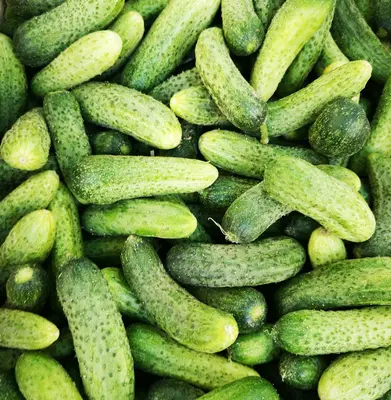
A treasured heirloom from the 1880s that's become the go-to choice for homemade pickles and relishes. These compact, warted fruits have the perfect size and firm texture that pickle enthusiasts demand. Incredibly productive plants will keep you supplied with pickles all season long.
Harvest
50-55d
Days to harvest
Sun
Full sun
Zones
2–11
USDA hardiness
Height
8-18 inches
Planting Timeline
Showing dates for Boston Pickling in USDA Zone 7
All Zone 7 cucumber →Zone Map
Click a state to update dates
Boston Pickling · Zones 2–11
Growing Details
Succession Planting
Boston Pickling matures in 50-55 days, which means you can run two or three plantings in a zone 7 season. Direct sow the first round in mid-May once soil hits 65°F, then sow again every 21 days through mid-July. Stop sowing when daytime highs are consistently above 90°F — pollination drops off and the fruit gets bitter from heat stress (the cucurbitacin issue NC State flags in their FAQ).
A late August sowing can catch a fall crop if downy mildew hasn't moved through yet; in the southeast it usually has by September, so don't count on it. Pull and trash the spent vines as soon as production slows — cucumber beetles overwinter in old cucurbit debris, and leaving it in the bed sets up next year's problem.
Complete Growing Guide
Boston Pickling reaches peak harvest in just 50-55 days, so succession-plant every two weeks if you want continuous pickle production rather than a single glut. This cultivar demands consistent moisture and warm soil—wait until nighttime temperatures reliably stay above 60°F before planting, as cool soil will stunt growth and delay fruiting. The compact 8-18 inch vine is less prone to powdery mildew than sprawling varieties, but keep foliage dry and ensure good air circulation to prevent downy mildew, which thrives in humid conditions. Watch for cucumber beetles and squash bugs, which can defoliate young plants quickly. The key to maximizing productivity: harvest fruits at 6-8 inches long every other day rather than waiting for them to mature fully, as this signals the plant to produce more flowers instead of bolting toward season's end.
Light: Full sun (6 or more hours of direct sunlight a day). Soil: High Organic Matter. Soil pH: Neutral (6.0-8.0). Drainage: Good Drainage, Moist. Height: 0 ft. 8 in. - 1 ft. 6 in.. Spread: 3 ft. 0 in. - 8 ft. 0 in.. Spacing: 12 inches-3 feet. Growth rate: Rapid. Maintenance: Medium. Propagation: Seed. Regions: Coastal, Mountains, Piedmont.
Harvesting
Harvest Boston Pickling cucumbers when they reach 6 to 8 inches long with a deep green color and firm, warted skin that yields slightly to gentle pressure. Pick fruits at this stage before they mature to full size, as younger pickles offer superior crispness and are ideal for whole-fruit preserving. Practice continuous harvesting every two to three days rather than waiting for a single large crop; removing fruits regularly encourages the plant to produce prolifically throughout the season. Check vines in early morning when temperatures are coolest, as this timing preserves firmness and moisture content in the freshly harvested cucumbers.
The "vegetable" is botanically a fruit– it is a pepo, a berry with a hard rind. Long and cylindrical, starting out prickly when young and smoothing out to a bumpy surface as it matures. Length and girth can vary based on cultivar and culinary purpose but grow at least 3 in long. Some varieties are bred to be seedless.
Color: Green. Type: Berry. Length: > 3 inches. Width: 1-3 inches.
Garden value: Edible, Showy
Harvest time: Summer
Edibility: Fruits are commonly eaten raw or pickled. Fresh cucumbers last in the fridge for about a week.
Storage & Preservation
Fresh Boston Pickling cucumbers store best at 50-55°F with high humidity, making them ideal for refrigerator crisper drawer storage. They'll maintain quality for 7-10 days when stored unwashed in perforated plastic bags. For optimal pickling quality, process within 24 hours of harvest.
These cucumbers excel at traditional pickling methods. Their firm texture and small seed cavity make them perfect for dill pickles, bread-and-butter pickles, and relishes. The warted skin holds brine exceptionally well. For quick refrigerator pickles, slice and submerge in vinegar brine — they'll be ready in 24 hours. They also ferment beautifully for traditional sour pickles using the salt-brine lacto-fermentation method. Fresh cucumbers can be frozen for later use in cooked relishes, though they'll lose their crisp texture.
History & Origin
The Boston Pickling cucumber emerged as a commercial variety in the mid-to-late 1800s, coinciding with the expansion of pickle production in New England and beyond. While detailed documentation of its specific breeder remains limited, the variety became associated with Boston's thriving pickle industry during this era, likely developed through selection from existing pickling types already in cultivation. The variety gained prominence through seed catalogs and commercial growers who valued its compact plant habit, productive yields, and fruit characteristics suited to brining. Its establishment as a named heirloom reflects the practical breeding traditions of American gardeners and market growers rather than formal institutional breeding programs, capturing the agricultural innovations that defined late-nineteenth-century vegetable production.
Origin: Himalaya to Northern Thailand
Advantages
- +Heirloom variety perfected over 140 years specifically for pickling excellence
- +Compact warted fruits at ideal size reduce trimming and processing time
- +Incredibly productive plants supply abundant pickles throughout the entire growing season
- +Fast maturation at 50-55 days means quick harvests and succession planting
Considerations
- -Susceptible to multiple mildew diseases requiring preventative fungicide applications
- -Vulnerable to cucumber beetles and pickle worms that damage fruit quality
- -Susceptible to bacterial wilt and cucumber mosaic virus spread by insects
Companion Plants
Radishes are the workhorse here — interplant them at seeding time and let a few bolt. The flowers pull in syrphid flies and parasitic wasps that work on aphids, and the radishes themselves seem to confuse cucumber beetles enough to take some pressure off the cukes. Nasturtiums and marigolds do similar duty as trap and decoy plants; nasturtiums in particular catch aphids that would otherwise pile up on the growing tips. Beans and corn share the old Three Sisters logic — beans fix nitrogen the heavy-feeding cucumbers want, and corn gives the vines something to climb if you're not trellising.
Potatoes are the worst neighbor. Both crops are heavy water and nutrient users with shallow-to-mid root zones, and aphids moving between them can carry cucumber mosaic virus into your cukes. Melons and other cucurbits planted close share every pest and disease on the NC State list — cucumber beetles, squash bugs, downy mildew — so in our zone 7 Georgia garden I keep at least one bed of something unrelated between cucurbit plantings. Strong aromatic herbs like sage are a wash; the allelopathy claims are overstated, but the water competition is real.
Plant Together
Radishes
Repel cucumber beetles and squash bugs while improving soil structure
Marigolds
Deter aphids, whiteflies, and cucumber beetles with their strong scent
Nasturtiums
Act as trap crops for cucumber beetles and squash bugs
Beans
Fix nitrogen in soil and provide beneficial ground cover
Corn
Provides natural trellis support and partial shade
Sunflowers
Attract beneficial insects and provide windbreak protection
Dill
Attracts beneficial insects like predatory wasps that control cucumber pests
Lettuce
Benefits from cucumber's shade and efficient use of garden space
Keep Apart
Aromatic Herbs
Strong herbs like sage can inhibit cucumber growth and development
Potatoes
Compete for nutrients and may increase disease susceptibility
Melons
Cross-pollination concerns and increased competition for space and nutrients
Nutrition Facts
Per 100g serving. % Daily Value based on 2,000 calorie diet. Source: USDA FoodData Central (FDC #169225)
Pests & Disease Resistance
Resistance
Good general disease tolerance but limited specific resistance
Common Pests
Cucumber beetle, squash bug, aphids, pickle worms
Diseases
Powdery mildew, downy mildew, bacterial wilt, cucumber mosaic virus
Troubleshooting Boston Pickling
What you'll see, why it happens, and what to do about it.
Whole plants wilting in mid-June even with regular watering, lower leaves with tan spots between the veins
Likely Causes
- Bacterial wilt (Erwinia tracheiphila), spread by striped and spotted cucumber beetles feeding earlier in the season
- Fusarium or root-zone problem if damage is concentrated in one patch of the bed
What to Do
- 1.Cut a wilted stem and press the cut ends together — if a sticky white string pulls between them, it's bacterial wilt and the plant is done; pull it and trash it (don't compost)
- 2.Control cucumber beetles early with row cover until flowering, then hand-pick at dawn when they're sluggish
- 3.Rotate cucurbits out of that bed for at least three years per NC State's IPM guidance
White powdery patches on upper leaf surfaces starting late July, leaves yellowing and drying
Likely Causes
- Powdery mildew (Podosphaera xanthii), favored by warm days and humid nights
- Overhead watering late in the day keeping foliage wet
What to Do
- 1.Switch to drip or soaker hose; if you must use a sprinkler, water early morning so leaves dry by noon
- 2.Spray with potassium bicarbonate or a 1:9 milk-to-water solution at first sign, repeat weekly
- 3.Strip the worst lower leaves to improve airflow — Boston Pickling is bushy and crowds itself
Misshapen, hooked, or pinched-end fruit; some cukes bitter at the stem end
Likely Causes
- Poor pollination — not enough bee visits during flowering
- Inconsistent watering or heat stress driving up cucurbitacin levels (NC State Extension)
- Low soil fertility, particularly potassium
What to Do
- 1.Keep moisture even — 1 to 1.5 inches per week, mulched, never letting the bed dry out and then flooding it
- 2.Stop spraying anything (even organic) during morning bloom hours so bees can work
- 3.Side-dress with compost or a balanced fertilizer when vines start to run, and peel bitter fruit from the stem end before eating
Small holes chewed into developing fruit, sometimes with a sawdust-like frass at the entry point
Likely Causes
- Pickleworm (Diaphania nitidalis), the southeast's signature late-summer cucurbit pest
- Adult moths laying eggs on blossoms in July and August
What to Do
- 1.Plant early — Boston Pickling's 50-day maturity lets you harvest a full crop before pickleworm pressure peaks in August
- 2.Spray Bt (Bacillus thuringiensis) on blossoms and young fruit weekly once moths are active
- 3.Remove and trash any infested fruit immediately; don't leave culls on the ground
Frequently Asked Questions
How long does Boston Pickling cucumber take to grow?▼
Can you grow Boston Pickling cucumbers in containers?▼
Is Boston Pickling cucumber good for beginners?▼
When should I plant Boston Pickling cucumber seeds?▼
What makes Boston Pickling different from regular cucumbers?▼
Zone-by-Zone Planting Calendar
| Zone | Indoor Start | Transplant | Direct Sow | Harvest |
|---|---|---|---|---|
| Zone 1 | June – June | July – August | July – September | September – August |
| Zone 2 | May – June | July – July | July – August | September – September |
| Zone 11 | January – January | February – February | February – March | April – May |
| Zone 12 | January – January | February – February | February – March | April – May |
| Zone 13 | January – January | February – February | February – March | April – May |
| Zone 3 | May – May | June – July | June – August | August – October |
| Zone 4 | April – May | June – June | June – July | August – October |
| Zone 5 | April – April | May – June | May – July | August – September |
| Zone 6 | April – April | May – June | May – July | July – September |
| Zone 7 | March – April | May – May | May – June | July – August |
| Zone 8 | March – March | April – May | April – June | June – August |
| Zone 9 | February – February | March – April | March – May | May – July |
| Zone 10 | January – February | March – March | March – April | May – June |
Growing Guides from Wind River Greens
Sources & References
External authority sources used in compiling this guide.
See the Methodology page for how this data is sourced, what's AI-assisted, and known limitations.