Purplette
Allium cepa
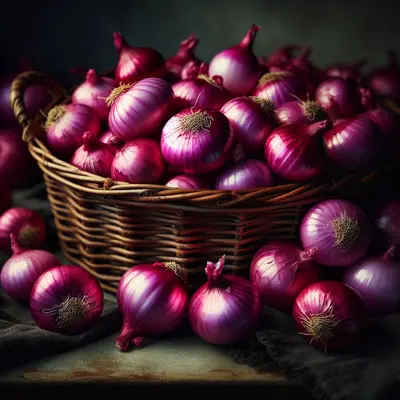
These flavorful specialty onions mature early and hold well. Purplette is a glossy rich burgundy, transforming to a nice pastel pink when cooked or pickled. Can be harvested at golf ball size or very young as baby bunching onions with purple pearl ends. Best at 40° latitude and higher.
Harvest
60d
Days to harvest
Sun
Full sun
Zones
5–10
USDA hardiness
Height
12-18 inches
Planting Timeline
Showing dates for Purplette in USDA Zone 7
All Zone 7 allium →Zone Map
Click a state to update dates
Purplette · Zones 5–10
Growing Details
Succession Planting
Purplette is a pull-once crop — it doesn't keep producing after harvest — so if you want a steady supply, you need to stagger your sowings. Direct sow every 14–21 days from March 1 through early May. Stop once daytime highs are reliably above 80°F; heat pushes onions to bolt and the bulbs turn pithy before they're worth pulling.
If your fall stays mild, a late-summer sowing around August 15–September 1 will give you an October–November harvest. The bulbs run smaller in fall, but cooler temps actually deepen the purple pigmentation that makes this variety worth the bother in the first place.
Complete Growing Guide
These flavorful specialty onions mature early and hold well. Purplette is a glossy rich burgundy, transforming to a nice pastel pink when cooked or pickled. Can be harvested at golf ball size or very young as baby bunching onions with purple pearl ends. Best at 40° latitude and higher. According to Johnny's Selected Seeds, Purplette is 60 days to maturity, open pollinated.
Light: Full sun (6 or more hours of direct sunlight a day). Soil: High Organic Matter, Loam (Silt), Sand. Soil pH: Alkaline (>8.0), Neutral (6.0-8.0). Drainage: Good Drainage, Moist. Height: 1 ft. 0 in. - 1 ft. 6 in.. Spread: 0 ft. 6 in. - 1 ft. 0 in.. Spacing: Less than 12 inches, 12 inches-3 feet. Maintenance: Medium. Regions: Coastal, Mountains, Piedmont.
Harvesting
Purplette reaches harvest at 60 days from sowing per Johnny's Selected Seeds.
Flowers wither and convert to bulblets
Type: Capsule.
Harvest time: Summer
Edibility: The bulb and tops are edible raw or cooked. However, the plant also has poisonous characteristics as noted in the "Poisonous to Humans" section of this record. Toxicity can depend on the age of the person or animal, the age of the plant, the part of the plant ingested, how much is ingested, whether the person or animal has sensitivities or allergies, whether it's eaten raw or cooked, and so forth. Consult with a medical professional for further details.
Storage & Preservation
Fresh Purplette onions store best unwashed in a cool, dry, well-ventilated area at 32-40°F with 65-70% humidity. Properly cured bulbs keep 2-4 months in ideal conditions, though their thin skin makes them less suitable for long-term storage than traditional onions.
For peak flavor, use within 6-8 weeks of harvest. Store in mesh bags or on slatted trays, never in plastic. Keep away from potatoes, which release gases that cause onions to sprout.
Pickling is Purplette's crown jewel—their size and mild flavor make perfect cocktail garnishes. Quick-pickle whole bulbs in vinegar brine, or ferment them for complex flavor development. They also freeze well when diced after blanching for 2-3 minutes, maintaining texture better than most onion varieties. Dehydrate thin slices at 135°F for concentrated flavor chips.
History & Origin
Purplette is open-pollinated, meaning seed saved from healthy plants will produce true-to-type offspring. Listed in the Johnny's Selected Seeds catalog.
Origin: Central Asia and central Persia
Advantages
- +Early maturity at 60 days makes Purplette ideal for quick harvests
- +Sweet and mild flavor with minimal bite appeals to most palates
- +Dual-harvest capability allows golf ball onions or baby bunching onion production
- +Striking burgundy color transforms to pastel pink when cooked or pickled
- +Excellent storage potential means extended shelf life after harvest
Considerations
- -Purple blotch and downy mildew diseases require vigilant monitoring and management
- -Performs best only at 40° latitude and higher limits regional growing
- -Susceptible to onion thrips, aphids, and cutworms requiring pest control measures
Companion Plants
Carrots and Purplette sit well together because their root depths don't compete much, and the sulfur compounds alliums release help suppress carrot fly (Psila rosae) — a real mechanism, not garden mythology. Marigolds (Tagetes spp.) earn a spot nearby for a different reason: their root secretions discourage soil nematodes that would otherwise work through allium bulbs. Lettuce fills the gaps between rows without a fight — shallow roots, fast turnover, out of the ground before the onions need the space.
Beans and peas are the ones to plant on the far side of the garden. Alliums inhibit the Rhizobium bacteria that legumes need to fix nitrogen, which means your bean yield drops and the relationship sours both ways. Asparagus has a similar problem in reverse — it releases compounds that stunt onion growth. Keep those beds at least 3–4 feet apart, or better, separated by an entirely different crop.
Plant Together
Roses
Alliums repel aphids, thrips, and other pests that commonly attack roses
Tomatoes
Alliums deter hornworms and aphids while potentially improving tomato flavor
Carrots
Alliums repel carrot flies and root maggots that damage carrot crops
Cabbage
Strong allium scent deters cabbage worms, aphids, and flea beetles
Lettuce
Alliums provide pest protection without competing for nutrients in shallow soil
Peppers
Allium compounds repel aphids and may reduce fungal diseases around peppers
Strawberries
Alliums deter slugs, aphids, and nematodes that commonly damage strawberry plants
Marigolds
Both plants repel similar pests, creating a strong protective barrier in garden beds
Keep Apart
Beans
Alliums can inhibit nitrogen fixation by beneficial bacteria in bean root nodules
Peas
Allium compounds may interfere with the symbiotic relationship between peas and nitrogen-fixing bacteria
Asparagus
Alliums can stunt asparagus growth and reduce spear production through root competition
Nutrition Facts
Per 100g serving. % Daily Value based on 2,000 calorie diet. Source: USDA FoodData Central (FDC #170000)
Pests & Disease Resistance
Resistance
Good general disease resistance
Common Pests
Onion thrips, aphids, cutworms
Diseases
Purple blotch, downy mildew, neck rot
Troubleshooting Purplette
What you'll see, why it happens, and what to do about it.
Silvery streaking or stippling on leaves, tips dying back, plants look stunted around day 30–45
Likely Causes
- Onion thrips (Thrips tabaci) — tiny, nearly invisible insects that rasp the leaf surface and suck out cell contents
- Dry conditions, which favor thrips population explosions
What to Do
- 1.Spray leaves with insecticidal soap, getting into the leaf folds where thrips hide — repeat every 5–7 days for 3 weeks
- 2.Keep soil consistently moist at 1 inch per week; stressed plants are more susceptible
- 3.Remove and trash heavily infested outer leaves to knock the population down fast
Pale green to yellow patches on upper leaf surfaces with a purplish-gray fuzzy growth on the undersides, usually in cool wet weather
Likely Causes
- Downy mildew (Peronospora destructor) — airborne spores that thrive when temps sit between 40–60°F and humidity is high
- Dense planting at less than 1 inch spacing that traps moisture between leaves
What to Do
- 1.Thin plants to at least 1–2 inches apart to open up airflow
- 2.Avoid overhead watering in the evening; switch to morning irrigation so leaves dry before nightfall
- 3.Pull and trash affected plants — don't compost them — and rotate alliums out of that bed for at least 2 seasons
Frequently Asked Questions
How long does Purplette onion take to grow?▼
Can you grow Purplette onions in containers?▼
Is Purplette onion good for beginners?▼
What does Purplette onion taste like?▼
When should I plant Purplette onion seeds?▼
Can I save seeds from Purplette onions?▼
Zone-by-Zone Planting Calendar
| Zone | Indoor Start | Transplant | Direct Sow | Harvest |
|---|---|---|---|---|
| Zone 1 | — | — | June – July | August – September |
| Zone 2 | — | — | May – July | July – September |
| Zone 11 | — | — | January – February | February – December |
| Zone 12 | — | — | January – February | February – December |
| Zone 13 | — | — | January – February | February – December |
| Zone 3 | — | — | May – June | July – October |
| Zone 4 | — | — | April – June | June – October |
| Zone 5 | — | — | April – May | June – November |
| Zone 6 | — | — | April – May | June – November |
| Zone 7 | — | — | March – May | May – November |
| Zone 8 | — | — | March – April | May – December |
| Zone 9 | — | — | February – March | April – December |
| Zone 10 | — | — | January – March | March – December |
Growing Guides from Wind River Greens
Sources & References
External authority sources used in compiling this guide.
- BreederJohnny's Selected Seeds
- USDAUSDA FoodData Central
See the Methodology page for how this data is sourced, what's AI-assisted, and known limitations.