Early Jersey Wakefield Cabbage
Brassica oleracea var. capitata 'Early Jersey Wakefield'
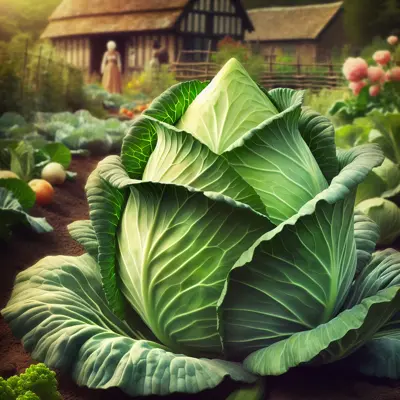
A treasured heirloom dating back to the 1840s, this variety produces compact, conical heads that are perfect for small gardens and early harvests. Known for its sweet, tender leaves and reliable performance, it's an excellent choice for gardeners wanting to try a piece of American agricultural history. The pointed heads are distinctively attractive and space-efficient.
Harvest
63-75d
Days to harvest
Sun
Full sun to partial shade
Zones
6–9
USDA hardiness
Height
10-24 inches
Planting Timeline
Showing dates for Early Jersey Wakefield Cabbage in USDA Zone 7
All Zone 7 brassica →Zone Map
Click a state to update dates
Early Jersey Wakefield Cabbage · Zones 6–9
Growing Details
Succession Planting
Early Jersey Wakefield stops forming tight heads once daytime temps push consistently above 75–80°F, so you get two realistic planting windows per year rather than a rolling weekly cadence. Start seeds indoors in February or early March, transplant out in April, and plan for a May–June harvest. Then start a second round of transplants in late July or early August for fall — at 63–75 days to maturity, that puts harvest in the October–November window, well ahead of hard frost.
For the fall round, the UGA Vegetable Garden Calendar recommends treating seed before planting to guard against seed-corn maggots and damping off, which are more of a problem when soil is still warm and wet in late summer. Don't try to squeeze a planting in between those two windows — heads won't form properly in the heat and you'll spend the whole time feeding cabbage loopers (Trichoplusia ni) for nothing.
Complete Growing Guide
This heirloom cultivar thrives with spring or fall planting, preferring soil temperatures between 45-75°F for consistent germination and head formation within its 63-75 day window. Unlike larger cabbage varieties, Early Jersey Wakefield's compact conical heads mature quickly and are prone to splitting if watered inconsistently after heading begins, so establish steady moisture rather than alternating wet and dry cycles. The pointed shape makes it less susceptible to clubroot than round-headed types, but remains vulnerable to cabbage moths and loopers—use floating row covers at transplanting to prevent larval damage during the critical first four weeks. This variety rarely bolts in cool seasons but may struggle in intense summer heat, making spring planting in cold climates and fall planting in warm regions ideal. Plant seedlings 12-15 inches apart to maximize the space-efficient growth habit, and harvest heads while still dense and firm, before they become overmature and woody.
Light: Full sun (6 or more hours of direct sunlight a day), Partial Shade (Direct sunlight only part of the day, 2-6 hours). Soil: Clay, Loam (Silt), Sand. Soil pH: Acid (<6.0), Neutral (6.0-8.0). Drainage: Good Drainage, Moist. Height: 0 ft. 10 in. - 2 ft. 0 in.. Spread: 1 ft. 0 in. - 2 ft. 0 in.. Spacing: 12 inches-3 feet. Growth rate: Medium. Maintenance: Medium. Propagation: Seed, Stem Cutting. Regions: Coastal, Mountains, Piedmont.
Harvesting
Harvest Early Jersey Wakefield cabbage when the pointed heads feel firm and dense to gentle pressure, typically reaching 3–5 inches in diameter with a pale to medium green color. The conical shape should be well-defined and compact, signaling peak maturity around 63–75 days from transplanting. Cut heads at the base with a sharp knife in early morning when temperatures are coolest to maximize crispness and sweetness. For continuous harvests, pick outer leaves once plants are established, or remove entire heads for a single bulk harvest. A crucial timing tip: gather heads promptly after they firm up, as this early variety tends to split or bolt quickly in warm weather, reducing the narrow window for peak quality.
The fruits dry and split when ripe.
Color: Brown/Copper, Green. Type: Siliqua. Length: > 3 inches.
Garden value: Edible
Harvest time: Fall, Summer
Edibility: The foliage is edible raw or cooked but when cooked can emit an unpleasant odor.
Storage & Preservation
Fresh Early Jersey Wakefield heads store best in the refrigerator at 32-40°F with high humidity, lasting 2-4 weeks when wrapped loosely in perforated plastic bags. Their compact, dense structure makes them excellent keepers compared to looser cabbage varieties.
For longer preservation, Early Jersey Wakefield excels at fermentation – its sweet, tender leaves create exceptional sauerkraut with a milder flavor than larger storage varieties. Chop and salt at 2% by weight, then ferment in jars for 3-4 weeks.
This variety also freezes well when blanched. Core and chop heads, blanch in boiling water for 90 seconds, then ice bath and freeze in portions. The tender leaves break down nicely in soups and stir-fries after freezing. Avoid dehydrating Jersey Wakefield as its high moisture content and delicate texture don't lend themselves well to drying methods.
History & Origin
This heirloom variety emerged in the mid-nineteenth century as part of American vegetable breeding efforts, though specific breeder attribution remains unclear in historical records. The "Jersey Wakefield" designation references its association with New Jersey growing regions and early commercial cultivation, where it became a staple among market gardeners seeking reliable, early-maturing cabbage. The variety's pointed-head form was likely selected from European cabbage stock through repeated seed saving and selection for compact shape and earliness. By the 1840s, it had become sufficiently established that seed companies were actively marketing it, cementing its place in American agricultural heritage. The "Early" prefix reflects its comparative earliness compared to later-season storage varieties, making it valued for spring and early summer harvests.
Origin: W. Europe
Advantages
- +Compact conical heads fit perfectly in small garden spaces efficiently
- +Sweet and tender leaves make it superior to modern cabbage varieties
- +Reliable 63-75 day harvest provides early season production for home gardeners
- +Heirloom variety offers authentic American agricultural history and unique pointed appearance
- +Space-efficient design produces quality heads without requiring extensive garden real estate
Considerations
- -Highly susceptible to clubroot and fusarium yellows in infected soil
- -Vulnerable to multiple common pests including cabbage worms and root maggots
- -Smaller head size means lower total yield compared to modern hybrid cabbages
Companion Plants
Onions and celery are the most practical neighbors for Early Jersey Wakefield. Both are thought to confuse or deter cabbage worms and aphids through scent — the reasoning, consistent with NC State Extension's IPM guidance on interplanting, is that mixing unrelated plants dilutes the odor signal that draws pests to a solid block of brassicas. Drop onion sets between your cabbage at the standard 12–15 inch spacing and you've done it without adding any extra bed space. Thyme at the bed edge works on the same principle and doesn't compete hard for root room. Marigolds show up on every companion list, but NC State Extension is upfront that the evidence for them as insect repellants is thin — plant them if you want the color, just don't count on them.
Tomatoes are the one neighbor worth actively avoiding. They're heavy feeders that want the same calcium and consistent moisture as cabbage, and putting them in the same bed means both crops come up short. Strawberries cause a different problem — they spread horizontally by runner and can crowd out cabbage roots before heads size up. Pole beans fix nitrogen at a rate that pushes the soft, lush leaf growth that aphids prefer, so keep those on the other side of the garden.
Plant Together
Dill
Attracts beneficial wasps that prey on cabbage worms and aphids
Onions
Strong scent deters cabbage moths, aphids, and other brassica pests
Marigolds
Repel nematodes and various flying insects that attack cabbage
Nasturtiums
Act as trap crop for aphids and flea beetles, drawing pests away from cabbage
Celery
Repels cabbage white butterflies and improves soil moisture retention
Lettuce
Provides ground cover, conserves soil moisture, and doesn't compete for nutrients
Spinach
Compatible root systems and harvested before cabbage needs full space
Thyme
Deters cabbage worms and flea beetles with strong aromatic oils
Keep Apart
Tomatoes
Compete for similar nutrients and may stunt cabbage growth
Strawberries
Both are heavy feeders that compete for nutrients, reducing yields
Pole Beans
Can shade cabbage and their nitrogen fixation may cause excessive leaf growth over head formation
Nutrition Facts
Per 100g serving. % Daily Value based on 2,000 calorie diet. Source: USDA FoodData Central (FDC #169975)
Pests & Disease Resistance
Resistance
Good cold tolerance but limited disease resistance
Common Pests
Cabbage worms, aphids, flea beetles, cabbage loopers, root maggots
Diseases
Clubroot, black rot, fusarium yellows, downy mildew
Troubleshooting Early Jersey Wakefield Cabbage
What you'll see, why it happens, and what to do about it.
Leaves riddled with small, scattered holes — looks like someone took a hole punch to the younger leaves
Likely Causes
- Flea beetles — tiny, jumping beetles that chew shotgun-pattern holes, worst on seedlings under 4 inches tall
- Transplants or direct-sown seedlings stressed by cold soil or drought, which slows the growth that lets plants outpace the damage
What to Do
- 1.Cover transplants immediately at planting with row cover (Agribon AG-19 or similar) and seal the edges — flea beetles find plants by smell and the physical barrier breaks that up
- 2.Side-dress with a balanced nitrogen fertilizer and water it in to push growth past the vulnerable seedling stage as fast as possible
- 3.Remove row cover once heads start to form and daytime temps stay above 50°F consistently
Plants wilting and stunted, with yellowing lower leaves; roots pulled up show swollen, club-shaped galls instead of normal root structure
Likely Causes
- Clubroot (Plasmodiophora brassicae) — a soil-borne pathogen that persists in soil for 20 years or more
- Low soil pH (below 6.0) and wet, poorly drained beds, both of which favor spore germination
What to Do
- 1.Pull and bag the entire plant — roots and all — and trash it; do not compost
- 2.Raise soil pH to 6.8–7.2 with agricultural lime before the next planting; NC State Extension notes that higher pH suppresses Plasmodiophora brassicae spore activity
- 3.Rotate this bed out of all brassicas (cabbage, broccoli, kale, collards, mustard) for a minimum of 4 years
V-shaped yellow lesions on outer leaves starting at the leaf margins, with darkened veins visible inside the yellow area; heads may rot from the inside out
Likely Causes
- Black rot (Xanthomonas campestris pv. campestris) — a bacterial disease spread by infected seed, contaminated soil, or rain splash
- Overhead irrigation or heavy rain that keeps foliage wet for extended periods
What to Do
- 1.Remove affected leaves immediately and dispose of them in the trash, not the compost pile
- 2.Switch to drip irrigation or water at the base of plants to keep foliage dry
- 3.Start with certified disease-free seed next season — black rot is frequently seed-borne, and Early Jersey Wakefield's heirloom status means you won't get disease-resistant genetics as a fallback
Frequently Asked Questions
How long does Early Jersey Wakefield cabbage take to grow?▼
Can you grow Early Jersey Wakefield cabbage in containers?▼
What does Early Jersey Wakefield cabbage taste like?▼
When should I plant Early Jersey Wakefield cabbage?▼
Is Early Jersey Wakefield good for beginners?▼
Early Jersey Wakefield vs regular cabbage - what's the difference?▼
Zone-by-Zone Planting Calendar
| Zone | Indoor Start | Transplant | Direct Sow | Harvest |
|---|---|---|---|---|
| Zone 3 | March – April | May – June | May – June | July – October |
| Zone 4 | March – April | May – June | April – June | July – October |
| Zone 5 | February – March | April – May | April – May | June – November |
| Zone 6 | February – March | April – May | April – May | June – November |
| Zone 7 | February – March | April – May | March – May | May – November |
| Zone 8 | January – February | March – April | March – April | May – December |
| Zone 9 | January – January | February – March | February – March | April – December |
| Zone 10 | January – January | February – March | January – March | March – December |
| Zone 1 | April – May | June – July | June – July | August – September |
| Zone 2 | April – May | June – July | May – July | July – September |
| Zone 11 | January – January | January – February | January – February | February – December |
| Zone 12 | January – January | January – February | January – February | February – December |
| Zone 13 | January – January | January – February | January – February | February – December |
Growing Guides from Wind River Greens
Sources & References
External authority sources used in compiling this guide.
See the Methodology page for how this data is sourced, what's AI-assisted, and known limitations.