Buttercup Squash
Cucurbita maxima
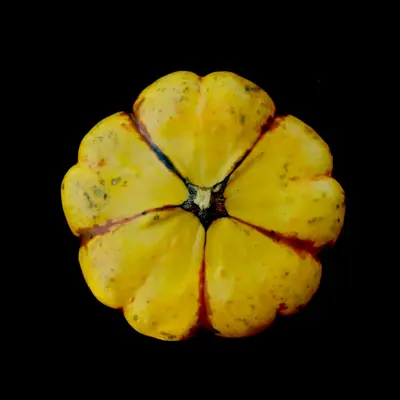
Buttercup Squash is a heirloom winter squash with distinctive dark green skin and a characteristic ridged button on the bottom end. It reaches maturity in approximately 115 days and produces medium-sized fruits weighing 2-4 pounds. The flesh is vibrant orange, sweet, and creamy with rich flavor notes reminiscent of sweet potato and honey. This variety excels in roasting, pies, and purees, delivering consistent, buttery results that make it a favorite for autumn cooking.
Harvest
115d
Days to harvest
Sun
Full sun
Zones
3–11
USDA hardiness
Difficulty
Moderate
Planting Timeline
Showing dates for Buttercup Squash in USDA Zone 7
All Zone 7 squash →Zone Map
Click a state to update dates
Buttercup Squash · Zones 3–11
Growing Details
Succession Planting
Buttercup is a 115-day crop, so you don't succession-plant it the way you would lettuce or radishes — one planting per season is what you get. Direct sow from late April through early June in zone 7, but NC State Extension IPM is clear that earlier is better: seeds in the ground as soon as conditions allow gives vines the best shot at maturing before squash vine borers peak in July and before fall disease pressure builds. A June sowing is the latest you can reasonably push and still hit a September–October harvest before frost.
If you want to spread out curing and storage work rather than deal with 40 squash ripening on the same week, put in two beds 2–3 weeks apart — late April and mid-May. That's about the practical limit; a third sowing in early June risks running into both borer pressure and early frost on the back end.
Complete Growing Guide
With a 115-day maturity, plant Buttercup Squash seeds directly in warm soil (70°F+) only after your last frost date, as they're sensitive to cold and will rot if planted too early. This cultivar thrives in full sun with rich, well-draining soil amended with compost—essential for developing its creamy, honey-sweet flesh. Unlike smaller squash varieties, Buttercup produces vigorous vines requiring 50–100 square feet of space; crowding invites powdery mildew, its primary disease concern, so ensure good air circulation and avoid overhead watering. The flat, wheel-like fruits are prone to sunscald on the bottom, so mulch around plants heavily to insulate developing squashes. Harvest when the skin is deep red-orange and resistant to fingernail puncture, typically in early fall, and cure fruits in a warm (75–80°F), dry location for two weeks to extend storage life to three months.
Light: Full sun (6 or more hours of direct sunlight a day). Soil: High Organic Matter, Loam (Silt). Soil pH: Neutral (6.0-8.0). Drainage: Good Drainage, Moist. Spacing: 12 inches-3 feet. Growth rate: Rapid. Maintenance: Medium. Propagation: Seed. Regions: Coastal, Mountains, Piedmont.
Harvesting
Harvest Buttercup Squash when the skin develops a deep, vivid red color with minimal green patches and the characteristic flat, cheese-wheel shape reaches 10-15 pounds. The skin should feel hard and resist fingernail puncture; gently press the blossom end, which should yield no give. Cut the fruit from the vine with a 2-inch stem attached rather than pulling it off. Unlike summer squash, Buttercup is a single-harvest crop—pick all mature fruits before the first frost, as the 115-day maturity window means most fruits will ripen simultaneously in early fall. A key timing tip: harvest in the morning after any dew has dried, as wet skin is more prone to rot during storage and curing.
Soft or hard-shelled berries called pepos come in a variety of colors, shapes, and sizes and are harvested in the fall. The stems of the fruits generally have a soft corky texture compared to other species.
Color: Blue, Cream/Tan, Gold/Yellow, Gray/Silver, Orange, Pink, Red/Burgundy, Variegated, White. Type: Berry. Length: > 3 inches. Width: > 3 inches.
Garden value: Edible, Long-lasting, Showy
Harvest time: Fall
Storage & Preservation
Buttercup squash stores exceptionally well in cool, dry conditions between 50–60°F with moderate humidity. Keep fruits in a single layer on shelves or in boxes, avoiding stacking, and they'll keep for 2–3 months. Cure freshly harvested squash at 80°F for 10 days before storage to harden the skin and extend longevity.
For preservation, freezing works beautifully: roast halves face-down until tender, scoop the flesh, cool completely, then freeze in airtight containers or bags for up to eight months. The naturally sweet, dense flesh also freezes well as puree, ideal for pies and baking. Canning as puree requires pressure canning due to low acidity. Dried squash chips make decent snacks but lose the creamy texture that makes this variety special.
A practical tip: the smaller, flatter shape of buttercup squash makes it easier to halve and roast than larger winter squash varieties, reducing prep time for batch processing.
History & Origin
The Buttercup Squash, also known as Rouge vif d'Etampes or Cinderella squash, originates from France, where its distinctive flat, ribbed form and vivid red-orange coloring made it a staple of European heirloom gardens. The variety belongs to the Cucurbita maxima species, which encompasses winter squashes developed across multiple continents. While specific breeder attribution and exact development dates remain poorly documented, the French heritage designation "Rouge vif d'Etampes" suggests this cultivar was established in or around the Étampes region of France, likely through generations of farmer seed-saving and selection. The variety entered North American cultivation through seed preservation networks and heirloom seed companies in the late twentieth century, where it gained recognition for both ornamental appeal and culinary merit.
Origin: Central and South America
Advantages
- +Stunning flat, red cheese-wheel shape makes it ideal for fall decorative displays.
- +Sweet, creamy flesh with honey and sweet potato notes excels in pies.
- +Medium 10-15 lb size is manageable for most home gardeners and kitchens.
- +Moderately sweet flavor profile appeals to both cooking and eating fresh.
Considerations
- -Long 115-day growing season requires commitment in shorter climate zones.
- -Susceptible to multiple serious pests including squash bugs and vine borers.
- -Vulnerable to bacterial wilt, downy mildew, and black rot diseases.
Companion Plants
Nasturtiums and marigolds carry most of the weight here. Nasturtiums act as a trap crop, drawing aphids and cucumber beetles away from the squash — and cucumber beetles are a serious problem for Buttercup specifically, since they vector bacterial wilt as they feed. NC State Extension recommends crop rotation and resistant varieties like Blue Hubbard to manage cucumber beetles over the long term, but a dense nasturtium planting along the bed edge gives you a same-season buffer. Marigolds (Tagetes spp.) release thiophenes from their roots that suppress soil nematodes — slow payoff, but real, especially in a bed you've been cropping for several years. Beans pull their weight by fixing nitrogen that heavy-feeding Cucurbita maxima burns through fast, particularly once fruit set kicks in around day 60–70.
Potatoes are the pairing to avoid. Both crops share susceptibility to overlapping soil-borne pathogens, and tucking them close together makes rotation — your best multi-year disease management tool — nearly impossible to execute cleanly. Fennel is broadly allelopathic and suppresses most vegetable neighbors without offering anything back; there's no practical reason to site it within the squash bed.
Plant Together
Nasturtiums
Trap crop for squash bugs and cucumber beetles, repels aphids
Marigolds
Repel cucumber beetles, squash bugs, and nematodes with their strong scent
Radishes
Deter squash vine borers and cucumber beetles, mature quickly before squash spreads
Beans
Fix nitrogen in soil to feed heavy-feeding squash plants
Corn
Provides natural trellis support and shade, part of Three Sisters planting
Catnip
Repels squash bugs, cucumber beetles, and other common squash pests
Dill
Attracts beneficial insects like predatory wasps that control squash pests
Sunflowers
Attract pollinators essential for squash fruit production and provide windbreak
Keep Apart
Potatoes
Compete for space and nutrients, both are heavy feeders requiring similar soil resources
Brassicas
Cabbage family plants can stunt squash growth and attract flea beetles
Fennel
Allelopathic properties inhibit growth of squash and most other garden plants
Nutrition Facts
Per 100g serving. % Daily Value based on 2,000 calorie diet. Source: USDA FoodData Central (FDC #168040)
Pests & Disease Resistance
Resistance
Good resistance to powdery mildew and mosaic virus
Common Pests
Squash bugs, cucumber beetles, squash vine borers
Diseases
Bacterial wilt, downy mildew, black rot
Troubleshooting Buttercup Squash
What you'll see, why it happens, and what to do about it.
Vines wilting suddenly and collapsing, even when soil is moist — often with sawdust-like frass at the base of the stem
Likely Causes
- Squash vine borer (Melittia cucurbitae) — larvae tunnel into the stem just above the soil line and eat it from the inside
- Late planting that puts tender vines in the ground after adult borers begin laying eggs in July
What to Do
- 1.Split the stem lengthwise where you see frass, extract the larva by hand, then mound damp soil over the wound — the vine can re-root if you catch it early
- 2.Plant seeds as early as your last frost allows so vines are past their most vulnerable stage before July egg-laying peaks, per NC State Extension IPM guidelines
- 3.Next season, use row cover from germination through early flowering, removing it only to allow pollination
Yellow angular patches on upper leaf surface, with grayish-purple fuzz on the underside — spreading fast across the planting in humid weather
Likely Causes
- Downy mildew (Pseudoperonospora cubensis) — a water mold that spreads rapidly in wet, humid conditions and can appear at different times each season
- Dense planting at less than 48-inch spacing that restricts airflow between vines
What to Do
- 1.Remove and bag the worst-affected leaves immediately — don't compost them
- 2.Give plants their full 48–72 inches of spacing and avoid overhead irrigation; water at the base in the morning so foliage dries before evening
- 3.NC State Extension notes that downy mildew on cucurbits should be monitored closely because it shows up unpredictably each year — check your county's disease forecasting alerts if available
Frequently Asked Questions
How long does buttercup squash take to grow?▼
Can you grow buttercup squash in containers?▼
What does buttercup squash taste like?▼
When should I plant buttercup squash seeds?▼
Is buttercup squash good for beginners?▼
How do you know when buttercup squash is ripe?▼
Zone-by-Zone Planting Calendar
| Zone | Indoor Start | Transplant | Direct Sow | Harvest |
|---|---|---|---|---|
| Zone 3 | — | — | June – July | October – October |
| Zone 4 | — | — | June – July | October – October |
| Zone 5 | — | — | May – June | October – October |
| Zone 6 | — | — | May – June | September – November |
| Zone 7 | — | — | April – June | September – October |
| Zone 8 | — | — | April – May | August – October |
| Zone 9 | — | — | March – April | July – September |
| Zone 10 | — | — | February – April | July – August |
| Zone 1 | — | — | July – August | November – August |
| Zone 2 | — | — | June – August | November – September |
| Zone 11 | — | — | January – March | June – July |
| Zone 12 | — | — | January – March | June – July |
| Zone 13 | — | — | January – March | June – July |
Growing Guides from Wind River Greens
Sources & References
External authority sources used in compiling this guide.
See the Methodology page for how this data is sourced, what's AI-assisted, and known limitations.