Red Oak
Lactuca sativa
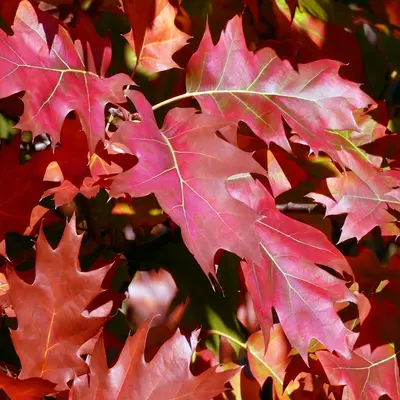
Red Oak is a large, deciduous shade tree valued for its rapid growth and stunning foliage. Mature trees reach 60-80 feet tall with a broad, rounded crown featuring deeply lobed leaves that turn vibrant red and crimson in fall. This hardy native species thrives in well-drained, acidic to neutral soil and adapts well to various growing conditions, making it an excellent choice for landscapes. Red Oak provides excellent shade within 4-6+ hours of sunlight. Its dense canopy and striking seasonal colors make it a preferred ornamental shade tree, though it requires monitoring for common pests like gypsy moths and oak borers.
Harvest
47d
Days to harvest
Sun
Full sun to partial shade
Zones
2–11
USDA hardiness
Height
6-12 inches
Planting Timeline
Showing dates for Red Oak in USDA Zone 7
All Zone 7 shade-tree →Zone Map
Click a state to update dates
Red Oak · Zones 2–11
Growing Details
Complete Growing Guide
Red Oak's 47-day maturity makes it ideal for succession planting every two weeks from spring through early fall, allowing you to harvest before summer heat triggers bolting. This cultivar performs best in consistently cool conditions between 60–70°F; plant in early spring or late summer rather than mid-summer to avoid premature flowering. Red Oak exhibits excellent head formation reliability compared to other red butterheads, but monitor for tipburn in low-calcium soils by maintaining even moisture and mulching to regulate temperature fluctuations. The variety shows good disease resistance when given adequate spacing for airflow, reducing fungal pressure. For best results, direct seed or transplant seedlings into rich, well-draining soil amended with compost, and provide afternoon shade in hot climates to extend the harvest window and preserve the distinctive color contrast between outer red leaves and creamy green centers.
Light: Full sun (6 or more hours of direct sunlight a day), Partial Shade (Direct sunlight only part of the day, 2-6 hours). Soil: High Organic Matter. Soil pH: Neutral (6.0-8.0). Drainage: Good Drainage, Moist. Height: 0 ft. 6 in. - 1 ft. 0 in.. Spread: 0 ft. 6 in. - 1 ft. 0 in.. Spacing: Less than 12 inches. Growth rate: Rapid. Maintenance: Medium. Propagation: Seed. Regions: Coastal, Mountains, Piedmont.
Harvesting
Red Oak reaches peak harvest readiness when the heads display their characteristic deep red coloring with contrasting bright green centers and feel firm to the touch without excessive softness. At 6-12 inches in height, gently squeeze the head near the base—a properly mature head will have a slight give but remain structurally sound. For continuous harvests, pick outer leaves individually as they develop, or cut entire heads at soil level for single-harvest operations. Time your cutting for early morning when heads are fully hydrated and crisp, which maximizes both texture and shelf life. This cultivar's reliable heading tendency ensures most plants reach harvestable maturity simultaneously, making it ideal for succession planting or bulk harvesting schedules.
Tiny seeds with a dandelion-like tuft (pappus) to aid in wind dispersal.
Color: Brown/Copper. Type: Achene. Length: < 1 inch. Width: < 1 inch.
Harvest time: Summer
Edibility: Leaves can be used raw or cooked in salads, sandwiches, and other dishes. Head lettuce can be stored for 2-3 weeks while leaf and butterhead store for 1-2 weeks.
Storage & Preservation
Red Oak lettuce should be stored in the refrigerator in a sealed plastic bag or container, ideally at 32–40°F with 90–95% humidity. It will keep fresh for 5–7 days when properly refrigerated. For preservation, consider blanching and freezing whole leaves or chopped pieces in airtight containers for up to 3 months, though texture will soften. Alternatively, dry leaves slowly at low temperature (95–105°F) for use in teas or culinary applications. A third method is lacto-fermentation: layer chopped Red Oak with salt in a jar, keep submerged under brine, and ferment at room temperature for 1–4 weeks for a tangy preserved product.
History & Origin
Red Oak represents a modern butterhead lettuce selection developed within commercial seed breeding programs focused on red-leafed cultivars. While specific breeder attribution and introduction year are not well documented in readily available sources, this variety belongs to the lineage of improved red butterhead lettuces that gained prominence in the late 20th century. The utility patent designation (MT0-30) indicates proprietary breeding work, suggesting development by a major seed company rather than a university or heritage tradition. Red Oak exemplifies contemporary breeding priorities toward reliable heading ability, aesthetic appeal with contrasting coloration, and commercial production stability in the butterhead class.
Origin: Mediterranean to Siberia
Advantages
- +Beautiful dark red heads with striking green centers provide excellent visual appeal
- +Excellent flavor and texture make it a superior culinary choice for salads
- +Surest heading variety ensures reliable, consistent lettuce formation for growers
- +Fast 47-day maturity allows quick harvests and multiple plantings per season
- +Easy difficulty level makes it suitable for beginner and experienced gardeners
Considerations
- -Vulnerable to oak wilt disease which can severely damage or kill plants
- -Susceptible to powdery mildew in humid conditions requiring preventative management
- -Multiple pest pressures including gypsy moths, scale insects, and oak borers present challenges
Companion Plants
Wild ginger, hostas, ferns, and astilbe all work well beneath a red oak because they're genuinely built for the conditions the tree creates — acidic soil in the pH 4.5–6.0 range, dry summer shade, and competition from surface roots that makes loose, amended beds impractical. You don't have to fight the tree to grow these plants; they've spent a long time in exactly this kind of understory. Trillium and wild columbine fill the same niche and get their growing done in early spring, before the canopy closes up and cuts light levels sharply.
Black walnut needs to stay at least 50 feet away — it produces juglone, a root-zone toxin that affects a broad range of plants, and younger oaks still putting down roots are more exposed to it than established ones. Roses and tomatoes fail here for a plainer reason: both want 6-plus hours of direct sun, consistent fertility, and a soil pH above 6.0 — conditions a mature red oak actively works against within its canopy footprint.
Plant Together
Wild Ginger
Thrives in the acidic soil created by oak leaf litter and provides ground cover
Hostas
Tolerates shade well and benefits from the filtered light under oak canopy
Ferns
Natural woodland companions that thrive in the dappled shade and acidic conditions
Azaleas
Acid-loving shrubs that flourish in the acidic soil created by decomposing oak leaves
Coral Bells
Shade-tolerant perennial that adds color while benefiting from oak's protective canopy
Astilbe
Enjoys the moist, shaded conditions and acidic soil beneath oak trees
Trillium
Native woodland wildflower that naturally grows in oak forest ecosystems
Wild Columbine
Native perennial adapted to woodland conditions and partial shade
Keep Apart
Black Walnut
Releases juglone which can stress oak trees and compete for similar nutrients
Tomatoes
Cannot tolerate the dense shade and acidic soil conditions under oak trees
Roses
Struggle in acidic soil and compete poorly with oak's extensive root system
Pests & Disease Resistance
Resistance
Downy Mildew (EU) races 16-26, 32 (High); Downy Mildew (US) races 5-9 (High); Lettuce Leaf Aphid Nasonovia ribisnigri (High); Lettuce Mosaic Virus (Intermediate)
Common Pests
Gypsy moths, scale insects, oak borers
Diseases
Oak wilt, anthracnose, powdery mildew
Troubleshooting Red Oak
What you'll see, why it happens, and what to do about it.
Leaves with irregular brown or tan patches that follow the veins, appearing in spring after a wet stretch
Likely Causes
- Anthracnose (Discula quercina) — a fungal disease that thrives in cool, wet spring conditions
- Late frost damage, which produces similar discoloration on newly emerged leaves
What to Do
- 1.Rake and dispose of fallen leaves in autumn — don't compost them, the spores overwinter in leaf litter
- 2.Avoid overhead irrigation near the canopy if you're supplementing water on young trees
- 3.If the tree is under 5 years old, a single preventive copper fungicide application at bud break can reduce severity
Wilting that spreads rapidly from one branch to adjacent branches, with brown streaking visible in the sapwood when you cut into an affected limb
Likely Causes
- Oak wilt (Bretziella fagacearum) — a vascular fungus spread by sap beetles and through root grafts between neighboring oaks
- Wounds made between April and July are especially vulnerable, as sap beetle activity peaks during that window
What to Do
- 1.Do not prune oaks between April 1 and July 31 — that's the primary infection route
- 2.If oak wilt is confirmed by a lab, sever root grafts with a vibratory plow 50–100 feet out from the infected tree to stop spread to neighbors
- 3.Remove and destroy (burn or chip off-site) any confirmed infected trees promptly; there is no cure once the disease is systemic
Sawdust-like frass at the base of the trunk or oozing sap with small entry holes in the bark, on trees already showing crown dieback
Likely Causes
- Oak borers — most commonly the red oak borer (Enaphalodes rufulus) or two-lined chestnut borer (Agrilus bilineatus) — which target trees under stress
- Prior defoliation by gypsy moths (Lymantria dispar) or multi-year drought weakens trees and draws borer activity
What to Do
- 1.Address the underlying stress first: water young trees deeply (20–30 gallons per week) during drought, and lay 3–4 inches of mulch out to the dripline to hold soil moisture
- 2.Avoid trunk wounds from mowers and string trimmers — a single gash is enough to invite secondary borers into a stressed tree
- 3.Soil-applied imidacloprid can protect high-value trees, but NC State Extension advises it works best as a preventive measure before infestation, not after