Mexican Sunflower
Tithonia rotundifolia
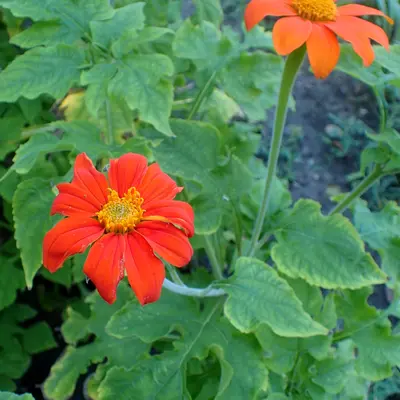
Blooms midsummer until first hard freeze, providing bright 3-3 1/2" flowers well into fall. Most plants produce orange, with a small percentage producing red or yellow blooms. Vigorous and full plant habit. Performs well in hot, dry climates. Native to Central America and Mexico. Attracts Beneficial Insects: Nectar plant and habitat for bees and butterflies.
Harvest
85-90d
Days to harvest
Sun
Full sun
Zones
1–11
USDA hardiness
Height
3-6 feet
Planting Timeline
Showing dates for Mexican Sunflower in USDA Zone 7
All Zone 7 flower →Zone Map
Click a state to update dates
Mexican Sunflower · Zones 1–11
Growing Details
Succession Planting
Direct sow or transplant every 3–4 weeks from April through early June in zone 7, stopping once daytime highs are consistently cracking 90°F — germination turns erratic past that point and seedlings don't get their footing before the real heat arrives. A late-April sowing and a late-May sowing will usually give you two distinct flush periods, keeping pollinators and cut-flower harvests going from midsummer through first frost.
Complete Growing Guide
Light: Full sun (6 or more hours of direct sunlight a day). Soil: Clay, Loam (Silt), Sand, Shallow Rocky. Drainage: Good Drainage. Height: 3 ft. 0 in. - 6 ft. 0 in.. Spread: 2 ft. 0 in. - 3 ft. 0 in.. Growth rate: Rapid. Maintenance: Low.
Harvesting
The fruits are brown achenes, in a round spiky mass.
Color: Brown/Copper. Type: Achene. Length: < 1 inch. Width: < 1 inch.
Storage & Preservation
Mexican Sunflower blooms are best enjoyed fresh and should be stored in a cool location away from direct sunlight. For cut flowers, place stems in clean water at room temperature (65-72°F) and change water every 2-3 days; they'll last 7-10 days. For preservation, air-dry flower heads in a dark, well-ventilated space for 2-3 weeks to create long-lasting dried arrangements. Alternatively, press individual flowers between parchment paper under heavy weight for 7-10 days for botanical preservation. Silica gel drying is also effective, preserving color better than air-drying—bury flowers for 3-5 days. Store dried flowers in airtight containers away from moisture and sunlight.
History & Origin
Mexican Sunflower is open-pollinated, meaning seed saved from healthy plants will produce true-to-type offspring. Listed in the Johnny's Selected Seeds catalog.
Origin: Mexico and Central America
Advantages
- +Attracts: Butterflies, Hummingbirds, Pollinators, Songbirds
- +Fast-growing
- +Low maintenance
Companion Plants
In our zone 7 Georgia garden, Mexican Sunflower does real work planted near tomatoes, beans, and cucumbers — at up to 6 feet tall it cuts wind off shorter crops, and the dense orange blooms draw parasitic wasps and predatory beetles that put a dent in aphid and caterpillar populations nearby. Marigolds, zinnias, and cosmos fit naturally in the same row because they share full-sun, low-water needs without crowding the root zone. Skip fennel — it releases allelopathic compounds that suppress germination in many annuals — and give black walnut a wide berth, since juglone leaches far enough through the soil to stunt Tithonia even when the tree looks distant.
Plant Together
Marigolds
Repel nematodes and aphids while attracting beneficial insects
Zinnias
Create pollinator corridors and share similar growing conditions
Cosmos
Attract beneficial insects and complement tall growth habit
Nasturtiums
Act as trap crop for aphids and cucumber beetles
Beans
Fix nitrogen in soil while benefiting from sunflower's tall structure for support
Cucumber
Benefit from partial shade provided by tall sunflower stems
Lettuce
Thrives in partial shade created by sunflower's large leaves
Tomatoes
Mexican sunflowers attract pollinators that benefit tomato fruit set
Keep Apart
Black Walnut
Produces juglone toxin that inhibits growth of most garden plants
Fennel
Releases allelopathic compounds that stunt growth of nearby plants
Sunflowers
Compete for similar nutrients and may exhibit allelopathic effects on each other
Troubleshooting Mexican Sunflower
What you'll see, why it happens, and what to do about it.
Seedlings or young transplants wilting and collapsing at soil level, stem pinched or rotted at the base
Likely Causes
- Damping off (Pythium or Rhizoctonia spp.) — fungal rot triggered by cold, wet, poorly-drained soil
- Overwatering before roots are established
What to Do
- 1.Pull and discard affected seedlings — they won't recover
- 2.Let the top inch of soil dry out between waterings; Mexican Sunflower hates wet feet at any stage
- 3.Start seeds in a sterile seed-starting mix, not garden soil, and make sure trays drain freely
Leaves stippled silver-gray or bronzed, with fine webbing on the undersides during hot, dry stretches
Likely Causes
- Two-spotted spider mite (Tetranychus urticae) — populations explode on stressed plants in temps above 90°F
- Drought stress making foliage more susceptible
What to Do
- 1.Hit the undersides of leaves with a strong stream of water from a hose — knocks mites off and they rarely climb back
- 2.Apply insecticidal soap or neem oil in the evening (not midday) on a 5–7 day interval until pressure drops
- 3.Water the root zone deeply once a week during dry spells so the plant isn't already stressed going into heat
Frequently Asked Questions
How long do Mexican Sunflower blooms last?▼
Can you grow Mexican Sunflower in containers?▼
Is Mexican Sunflower easy for beginners?▼
When should I plant Mexican Sunflower?▼
What colors do Mexican Sunflower blooms come in?▼
Do Mexican Sunflowers attract pollinators?▼
Zone-by-Zone Planting Calendar
| Zone | Indoor Start | Transplant | Direct Sow | Harvest |
|---|---|---|---|---|
| Zone 3 | April – May | June – July | June – August | — |
| Zone 4 | March – April | June – June | June – July | — |
| Zone 5 | March – April | May – June | May – July | — |
| Zone 6 | March – April | May – June | May – July | — |
| Zone 7 | February – March | April – May | April – June | — |
| Zone 8 | February – March | April – May | April – June | — |
| Zone 9 | January – February | March – April | March – May | — |
| Zone 10 | January – January | February – March | February – April | — |
| Zone 1 | May – June | July – August | July – September | — |
| Zone 2 | April – May | June – July | June – August | — |
| Zone 11 | January – January | January – February | January – March | — |
| Zone 12 | January – January | January – February | January – March | — |
| Zone 13 | January – January | January – February | January – March | — |
Growing Guides from Wind River Greens
Sources & References
External authority sources used in compiling this guide.
- ExtensionNC State Extension
- BreederJohnny's Selected Seeds
See the Methodology page for how this data is sourced, what's AI-assisted, and known limitations.